Yielding to the Trend: How the 10-Year Treasury is Dictating the 2025 Year-End Swing Trading Playbook
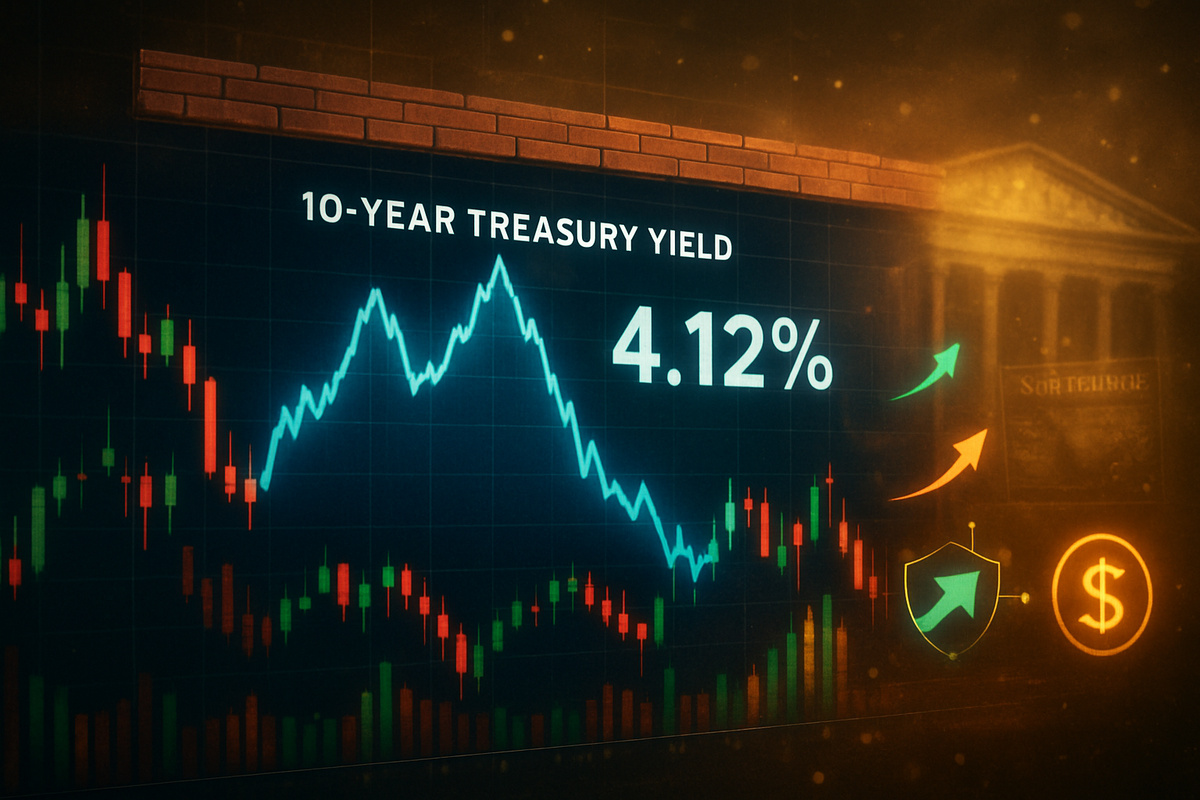
As the final weeks of 2025 unfold, the financial markets are being steered by a familiar but increasingly volatile hand: the U.S. Treasury yield curve. Following the Federal Reserve’s mid-December interest rate decision, swing traders have shifted their focus away from traditional earnings metrics toward the daily fluctuations of the 10-year Treasury yield, which has become the ultimate "risk-on/risk-off" barometer. With the 10-year yield currently hovering around 4.12% after a retreat from monthly highs, the market is caught in a delicate balance between a year-end "Santa Claus Rally" and the looming technical resistance of a multi-year "brick wall."
The immediate implications are significant for income-sensitive assets and high-dividend vehicles like the Invesco Zacks Multi-Asset Income ETF (NYSE Arca: CVY). As yields soften, these "yield proxy" stocks are seeing a surge in interest from swing traders looking to capitalize on the widening spread between equity dividends and the risk-free rate. However, with the CBOE Volatility Index (INDEXCBOE: VIX) spiking nearly 10% in the last week, the path forward is anything but a straight line, forcing traders to tighten their stop-losses and refine their entry plans based on the 4.10% yield threshold.
The December Pivot: A Cautious Cut and a Yield Retreat
The current market environment was set in motion on December 10, 2025, when the Federal Open Market Committee (FOMC) concluded its final meeting of the year with a 25-basis-point rate cut. This move brought the federal funds rate target range to 3.50%–3.75%. While the cut was widely expected, the internal dissent within the Fed—one member calling for a larger 50-bps cut and two others advocating for a pause—sent a ripple of uncertainty through the bond market. Chair Jerome Powell’s "cautiously dovish" tone suggested that while the easing cycle remains intact, the Fed is prepared to pivot back to a "wait-and-see" approach in early 2026.
Following the announcement, the 10-year Treasury yield, which had peaked at 4.20% earlier in the month, began a slow descent toward its current level of 4.12%. This movement was further accelerated by a cooler-than-expected November CPI report, which pegged annual inflation at 2.7%. For swing traders, this retreat in yields provided the necessary oxygen for a mid-month recovery in equities. The timeline of the past two weeks shows a clear correlation: as the 10-year yield hit its 4.20% resistance, equity selling pressure peaked, creating a "buy-the-dip" opportunity that many institutional desks were waiting for.
Winners and Losers in the Yield-Driven Rotation
The primary beneficiary of this yield stabilization has been the Invesco Zacks Multi-Asset Income ETF (NYSE Arca: CVY). Because CVY is heavily weighted toward Real Estate Investment Trusts (REITs), Master Limited Partnerships (MLPs), and financial stocks, its price action is inversely correlated with Treasury yields. Currently trading near $27.13, CVY has found strong support at its 50-day moving average of $26.60. Swing traders are eyeing a potential breakout toward $27.50 if yields continue to drift lower, viewing the ETF as a safer alternative to the high-multiple tech sector.
Conversely, the "Magnificent 7" tech giants—including the likes of Microsoft (NASDAQ: MSFT) and Apple (NASDAQ: AAPL)—have faced headwinds. While these companies remain profitable, their valuations are highly sensitive to the "terminal rate" expectations for 2026. As the Fed signals a slower pace of cuts for the coming year, capital has begun to rotate out of these overextended growth names and into "left-behind" sectors like Industrials and Mid-Caps. The SPDR S&P 500 ETF Trust (NYSE Arca: SPY) has reflected this tug-of-war, struggling to break through a technical resistance line that connects back to the 2021 market highs.
The "Great Rotation" and the Return of Volatility
The wider significance of this trend lies in what analysts are calling the "Great Rotation" of late 2025. For the first time in years, the market is moving away from a "growth at any price" mentality toward an "income and value" framework. This shift is a direct result of the 10-year yield remaining structurally higher than it was during the post-pandemic era. The yield curve’s current "bull steepening"—where short-term rates fall faster than long-term ones—suggests that while the immediate threat of a recession has faded, the market is bracing for a "higher-for-longer" reality regarding long-term borrowing costs.
This transition has not been smooth. The VIX’s recent climb to 17.62 indicates that investors are increasingly buying downside protection (put options) to hedge against potential policy shifts in 2026, including new tariff discussions and fiscal spending debates. Historically, periods where the S&P 500 tests multi-year resistance while yields are in a state of flux lead to "choppy" trading environments. This mirrors the market behavior seen in late 2018, where a hawkish-leaning Fed and rising yields led to a sharp year-end correction before a recovery in the following quarter.
Looking Ahead: The 4.10% Threshold and the Santa Rally
In the short term, the market’s direction will likely be determined by whether the 10-year yield can break below the 4.10% mark. A daily close below this level would likely trigger a wave of algorithmic buying, potentially fueling a "Santa Claus Rally" that carries the S&P 500 to new record highs before January 1st. Swing traders are currently setting their entry plans around this signal, with many looking to add to positions in CVY and other income-producing assets if the yield retreat sustains its momentum.
However, the long-term challenge remains the Fed's 2026 outlook. If inflation remains sticky at 2.7% or higher, the Fed may be forced to pause its easing cycle sooner than the market expects. This would create a "ceiling" for equity valuations and could lead to a strategic pivot where traders favor cash and short-duration bonds over equities. Investors should prepare for a scenario where volatility remains the "new normal," requiring a more active management style than the passive "buy-and-hold" strategies that dominated the previous decade.
Final Thoughts for the Strategic Investor
The relationship between Treasury yields and swing trading has reached a fever pitch as 2025 draws to a close. The recent 25-bps cut by the Fed has provided a temporary reprieve, but the underlying tension in the bond market suggests that the era of easy gains may be transitioning into an era of tactical execution. The key takeaway for investors is that the 10-year Treasury yield is no longer just a background metric; it is the primary driver of sector rotation and market volatility.
Moving forward, the market will likely remain sensitive to any data that challenges the Fed’s "cautiously dovish" narrative. Investors should keep a close watch on the $26.60 support level for CVY and the 4.25% resistance level for the 10-year yield. As we enter 2026, the ability to navigate these yield-driven swings will separate the winners from the losers in an increasingly complex financial landscape.
This content is intended for informational purposes only and is not financial advice.