Yield Shock: 10-Year Treasury Hits 4.35% as March Jobs 'Surprise' Redefines the Fed’s Path
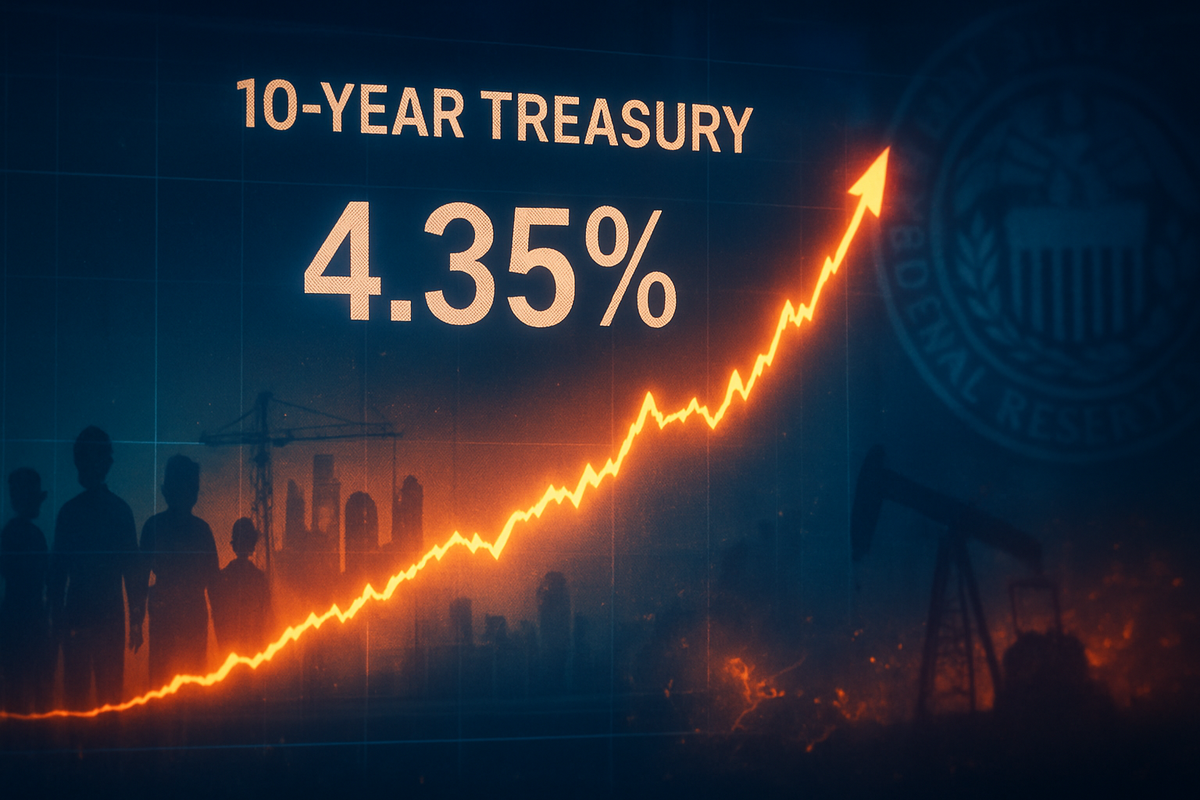
Global financial markets were sent into a tailspin this week as the 10-year Treasury yield surged to a multi-month high of 4.35% following a blockbuster March employment report that shattered consensus estimates. The sudden move in fixed income has forced a massive recalibration of equity valuations, particularly in the high-growth technology sector, as investors grapple with the reality of "higher-for-longer" interest rates in an economy that refuses to cool down.
The spike reflects a growing consensus that the Federal Reserve is unlikely to provide the relief markets have been seeking. According to the CME FedWatch Tool, there is now a staggering 94.8% probability that the Fed will hold interest rates steady at its upcoming meeting in late April. This sentiment shift comes at a delicate time when geopolitical tensions in the Middle East and a structural shift in the "neutral" rate of the economy are fundamentally altering the investment landscape for the remainder of 2026.
The Jobs Surprise and the Yield Spike
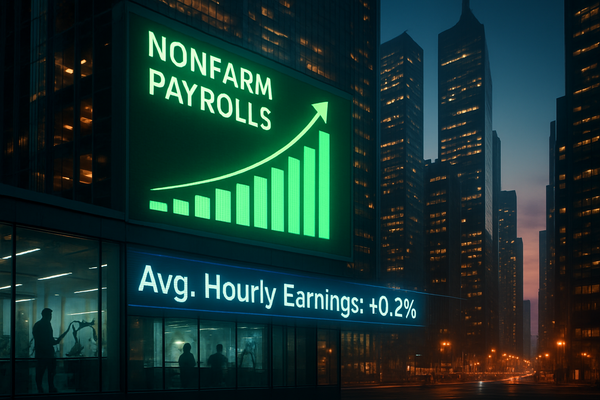
The volatility began on Friday, April 3, 2026, when the Bureau of Labor Statistics released its March non-farm payrolls data. While analysts had braced for a modest gain of just 60,000 jobs—following a sluggish February—the economy instead added a surprising 178,000 positions. This "V-shaped" hiring recovery caught the market off-guard, pushing the unemployment rate down to 4.3%. Within minutes of the release, the 10-year Treasury yield, a global benchmark for borrowing costs, spiked from 4.31% to an intraday high of 4.37%, before settling at 4.35% as the week drew to a close on April 6.
Adding fuel to the fire was a simultaneous surge in energy prices. West Texas Intermediate (WTI) crude oil topped $110 per barrel as geopolitical instability, specifically the "Operation Epic Fury" conflict involving Iran, stoked fears of supply disruptions in the Strait of Hormuz. The combination of a resilient labor market and rising energy-driven inflation has effectively neutralized the case for immediate rate cuts. Market participants who had expected the Fed to begin a loosening cycle by early summer have now moved to the sidelines, with traders pricing out nearly all remaining cuts for the 2026 calendar year.
The timeline of this yield surge is also tethered to the massive fiscal issuance resulting from the "One Big Beautiful Bill Act" (OBBBA), which has flooded the market with new Treasury supply. As the government continues to fund domestic manufacturing and defense initiatives, the "crowding out" effect has placed structural upward pressure on long-dated yields, making the 4.35% level feel less like a temporary spike and more like a "new nominal" baseline for the current era.
Winners and Losers: A Fractured Equity Market
The sudden ascent of the 10-year yield has created a "fractured" market, clearly dividing the corporate landscape into winners who can withstand higher costs and losers whose valuations are anchored to low-rate assumptions.
In the "win" column, major financial institutions like JPMorgan Chase & Co. (NYSE:JPM) and Goldman Sachs Group Inc. (NYSE:GS) saw immediate benefits. A steepening yield curve typically allows banks to expand their net interest margins (NIMs), charging more for long-term loans while keeping short-term deposit costs relatively stable. Similarly, the aerospace and defense sector has seen a flurry of activity; the iShares U.S. Aerospace & Defense ETF (BATS:ITA) reached multi-month highs as defense contractors benefit from both the increased fiscal spending and the escalating tensions in the Middle East. Perhaps most surprisingly, NVIDIA Corporation (NASDAQ:NVDA) remained resilient. While most growth stocks suffered, NVIDIA’s dominance in AI architecture and its triple-digit revenue growth have made it "yield-resistant," as investors prioritize its earnings power over the rising discount rate.
Conversely, the "SaaSPocalypse" deepened for many in the software sector. High-valuation firms like Microsoft Corp. (NASDAQ:MSFT), Salesforce Inc. (NYSE:CRM), and Oracle Corp. (NYSE:ORCL) were hit hard as the 4.35% yield increased the discount rate applied to their future cash flows. These companies are facing a dual threat: rising capital costs and the potential for AI to disrupt their traditional subscription models. The transportation sector also felt the burn; United Airlines Holdings Inc. (NASDAQ:UAL) and Carnival Corp. (NYSE:CCL) saw their shares tumble as surging jet fuel costs and the prospect of higher interest rates on consumer debt threatened to dampen discretionary travel spending. Tesla Inc. (NASDAQ:TSLA) was also a notable laggard, as high auto loan rates continue to weigh on electric vehicle demand.
The Higher "Neutral" Rate: A New Economic Baseline
This event is not merely a short-term reaction to a single jobs report; it signifies a broader industry shift toward a higher structural neutral rate, often referred to as $r^*$. For years, the market operated under the assumption that the "neutral" rate—the rate that neither stimulates nor restricts growth—was somewhere near 2%. However, the latest data suggests that the U.S. economy, fueled by AI-driven productivity gains and massive infrastructure spending, can now sustain much higher interest rates without falling into recession.
Federal Reserve officials and independent researchers, including those at the Cleveland Fed, have begun revising their long-run estimates. Some models now place the neutral rate as high as 3.6%, a significant departure from the post-2008 era of near-zero rates. This shift suggests that the 4.35% yield on the 10-year Treasury is not an anomaly but a reflection of an economy that has "reset" its baseline.
Historical comparisons are being drawn to the late 1990s, a period where high productivity and strong fiscal spending allowed the 10-year yield to remain consistently above 5% while the stock market thrived. However, the modern caveat is the level of national debt. With the OBBBA driving record Treasury issuance, the "fiscal dominance" of the current market means that the Fed's ability to lower rates is increasingly constrained by the need to maintain an attractive yield for global buyers of U.S. debt. This creates a feedback loop where the economy's strength actually prevents the very rate cuts that many investors have been betting on.
What Comes Next: Navigating the April Fed Hold
Looking ahead, the immediate focus is on the April 29-30 FOMC meeting. With a 94.8% probability of a hold, the market has already accepted that the Fed's target range will remain at 4.25%–4.50%. The real question is the tone of the post-meeting statement. If Chairman Powell acknowledges that the "neutral rate" has indeed shifted higher, we could see a permanent re-rating of equity multiples across the S&P 500.
In the short term, companies will likely pivot their strategies toward "capital discipline" and debt reduction. We may see a slowdown in stock buybacks as corporations prioritize maintaining healthy balance sheets in a high-interest-rate environment. For the tech sector, the challenge will be proving that AI implementations can deliver enough efficiency to offset the higher cost of capital.
Market opportunities may emerge in "old economy" sectors that have been neglected for a decade. Infrastructure, commodities, and domestic manufacturing could see sustained interest as the U.S. economy moves away from a service-and-software-only focus toward the tangible investment boom defined by 2026's industrial policies. However, the risk of a "policy error" remains high. If the Fed stays too restrictive for too long while energy prices remain at $110+, the risk of "stagflation"—low growth combined with high inflation—could return to the forefront of investor concerns.
A New Era for Investors
The spike to a 4.35% yield and the 178,000-job surprise represent a definitive turning point for the 2026 market. The "higher-for-longer" narrative has transitioned from a cautionary tale to a structural reality. Investors must now navigate a landscape where the cost of money is no longer a tailwind but a persistent hurdle. The overwhelming probability of a Fed hold in April confirms that the central bank is in no rush to intervene, choosing instead to let the economy's internal strength—and its inflationary pressures—play out.
Moving forward, the market's performance will likely be dictated by earnings quality rather than multiple expansion. The era of "cheap money" is firmly in the rearview mirror, replaced by an environment of fiscal dominance and geopolitical volatility. Investors should keep a close watch on the next round of inflation data and the Treasury's quarterly refunding announcements, which will signal how much more supply the market must absorb.
In summary, the April yield shock is a wake-up call. While the economy remains resilient, the price of that resilience is a more expensive financial system. Success in the coming months will belong to those who can adapt to this "New Nominal," focusing on companies with high margins, low leverage, and the ability to pass on rising costs in a world that is no longer waiting for the Fed to save the day.
This content is intended for informational purposes only and is not financial advice.