World Bank Forecasts Global Commodity Prices to Hit Six-Year Low in 2026 amid Oil Glut
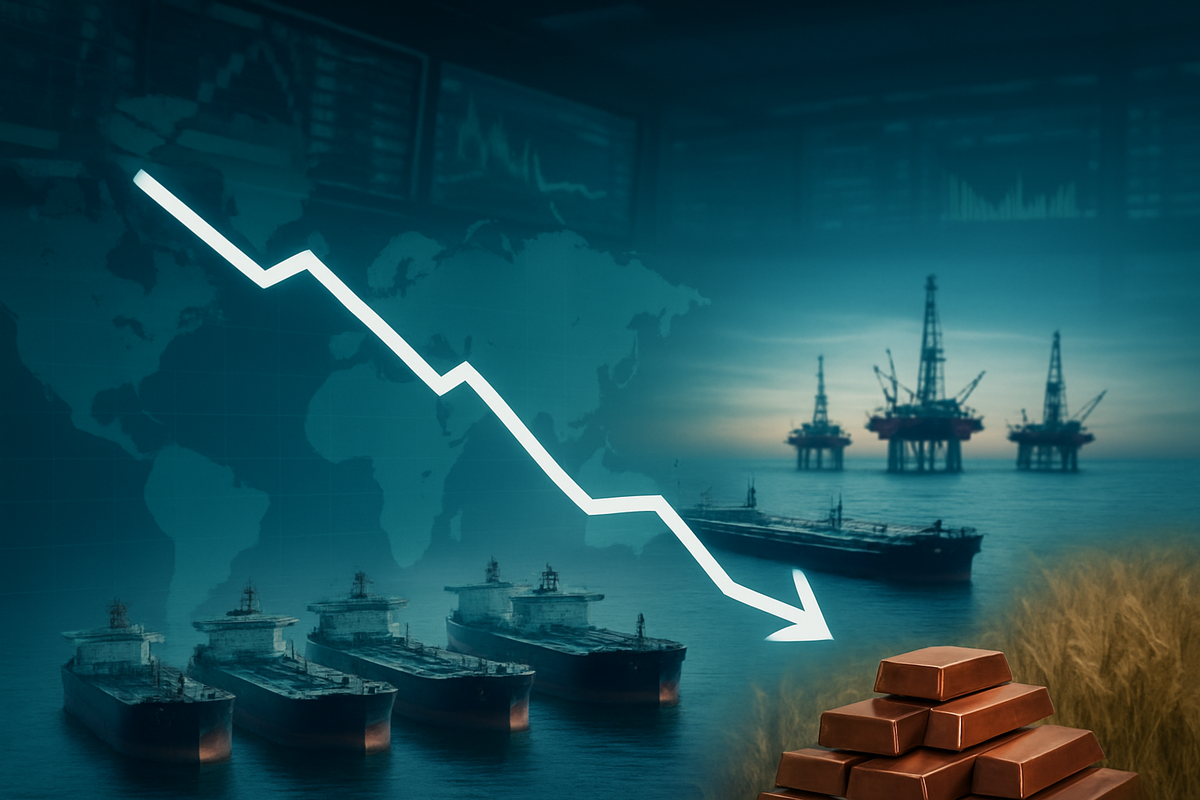
WASHINGTON, D.C. — Global commodity prices are poised to retreat to their lowest levels in six years by the end of 2026, marking a significant structural shift in the global economy. According to the World Bank’s latest Commodity Markets Outlook, prices are expected to decline for the fourth consecutive year, driven by a massive global oil surplus and a persistent slowdown in industrial demand from major economies. This cooling of raw material costs offers a potential reprieve for global inflation but signals a challenging environment for resource-exporting nations and energy majors.
While immediate geopolitical volatility in the Middle East has recently injected a "war premium" into energy markets, the World Bank suggests these spikes will be short-lived. The sheer volume of oversupply—led by record production in the Americas—is creating a formidable buffer that is expected to keep a firm lid on prices, effectively neutralizing the impact of localized supply disruptions unless a catastrophic escalation occurs in the Strait of Hormuz.
A Structural Shift: The Road to the 2026 Price Floor
The projected decline is the result of a multi-year cooling period following the record price spikes of 2022. The World Bank estimates that aggregate commodity prices will drop by approximately 7% in both 2025 and 2026. By the time this cycle reaches its trough later this year, the overall index will have hit its lowest point since the height of the 2020 pandemic lockdowns. The primary catalyst is an unprecedented global oil surplus, forecasted to reach 1.2 million barrels per day (mb/d)—a level 65% higher than the previous record surplus seen during the pandemic.
This surplus is not an accident of timing but the result of a decade of investment coming to fruition in non-OPEC+ nations. The United States, Guyana, Brazil, and Canada have aggressively expanded their production capacities, while global demand growth has hit a wall. China, formerly the insatiable engine of global commodity consumption, is undergoing a painful structural transition as its property sector continues to shrink, drastically reducing demand for steel and industrial energy. Simultaneously, the accelerating adoption of electric vehicles (EVs) and increased fuel efficiency in the West have begun to permanently erode the long-term demand curve for crude oil.
The Corporate Divide: Winners and Losers in a Deflationary Cycle
The projected plunge in Brent Crude—forecast to average $60 per barrel by the end of 2026—creates a stark divide among public companies. Major oil producers such as ExxonMobil (NYSE:XOM), Chevron (NYSE:CVX), and Shell (NYSE:SHEL) are facing a period of tightened margins. While these firms have high-graded their portfolios to remain profitable even at lower prices, the "easy money" of the post-pandemic era is clearly over. Many of these firms are now pivoting toward share buybacks and diversifying into low-carbon technologies to maintain investor interest in a lower-yield environment.
Conversely, the decline in energy and raw material costs is a massive tailwind for sectors with high input expenses. The airline industry, represented by giants like Delta Air Lines (NYSE:DAL) and United Airlines (NASDAQ:UAL), stands to benefit significantly from lower jet fuel costs, which typically account for nearly a third of their operating expenses. Similarly, consumer packaged goods companies like Procter & Gamble (NYSE:PG) and logistics leaders like FedEx (NYSE:FDX) are expected to see margin expansion as the costs of plastic resins, packaging, and transportation fuel continue to slide.
Beyond Oil: The Broader Significance of the Commodity Slump
The World Bank’s report highlights a significant divergence between energy and the metals required for the green energy transition. While construction-reliant metals like iron ore are suffering from China’s real estate woes, "green" metals like copper and aluminum remain relatively resilient. Companies like Freeport-McMoRan (NYSE:FCX) are finding support for their stock prices despite the broader commodity slump, as the global push for electrification maintains a floor under copper prices. This indicates that the current commodity downturn is not a universal decline but a "great rebalancing" away from fossil fuels toward transitional materials.
Furthermore, the easing of agricultural prices—projected to drop nearly 6% in 2025 and remain stable through 2026—is a critical development for global food security. Improved harvests in key regions and lower fertilizer costs have brought relief to the food price index. However, this poses a challenge for agricultural equipment manufacturers like Deere & Company (NYSE:DE), as lower crop prices often lead to reduced capital expenditures by farmers, potentially slowing sales of high-tech tractors and combines over the next 18 months.
Strategic Pivots: Navigating a Lower-for-Longer Environment
As we move toward the 2026 price floor, companies and governments alike are being forced to adapt. For resource-dependent emerging markets, the World Bank warns of "fiscal stress," urging these nations to diversify their economies away from oil and mineral exports. In the corporate world, the focus has shifted from "securing supply at any cost" to "operational efficiency and cost discipline." Strategic pivots are already visible; many mining and energy firms are stalling new high-cost projects, choosing instead to optimize existing assets to weather the low-price environment.
Short-term volatility remains the largest wildcard. While the oil surplus acts as a buffer, any escalation in the Middle East that directly targets production infrastructure could trigger violent, albeit temporary, price swings. Investors should expect a "sawtooth" pattern in the markets: a general downward trend punctuated by sharp, news-driven rallies. The long-term trajectory, however, remains clear—the era of commodity-driven inflation is taking a back seat to a period of abundance and surplus.
Summary and Outlook for Investors
The World Bank’s forecast for a six-year low in commodity prices by late 2026 marks the end of the post-pandemic inflationary shock. Driven by a historic oil glut and China’s cooling economy, this trend is set to redefine market leadership. While energy producers face headwinds, the broader market—particularly transport, manufacturing, and consumer goods—is entering a period of lower input costs that could support a "soft landing" for the global economy.
Moving forward, investors should closely monitor OPEC+ production decisions and the pace of the EV transition, as these will be the primary levers for oil prices. Additionally, the divergence between fossil fuels and transition metals offers a clear roadmap for long-term positioning. As we navigate the remainder of 2026, the focus will remain on whether the global surplus can truly withstand the persistent geopolitical tremors of a fragmented world.
This content is intended for informational purposes only and is not financial advice.