Wingstop Wings Its Way Toward Recovery: Citi Issues 'Buy' Rating Following Early 2026 Sector Selloff
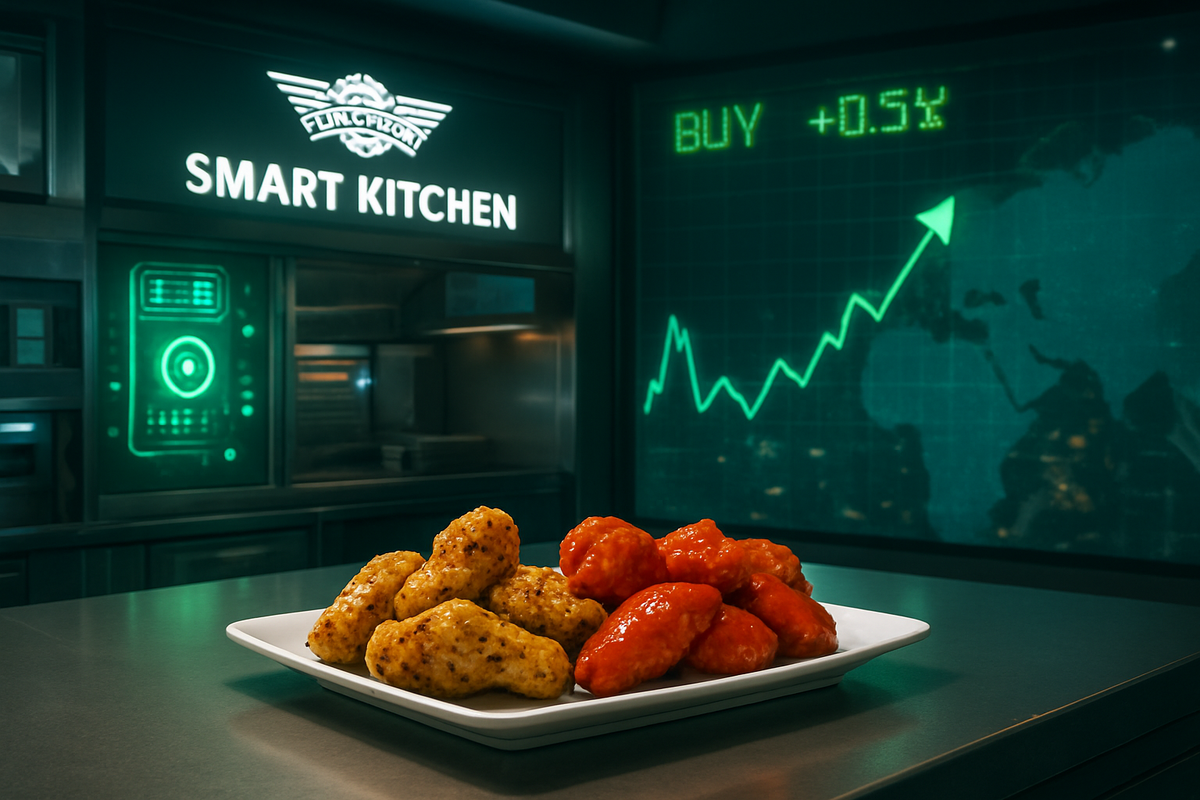
In a bold move that underscores the perceived durability of the fast-casual dining sector, Citi Research has officially upgraded Wingstop (NASDAQ: WING) to a "Buy" rating, signaling a potential turning point for the Dallas-based wing specialist. The upgrade follows a punishing first quarter for the stock, which saw shares tumble nearly 40% as investors fretted over cooling same-store sales and a broader "inflation fatigue" that gripped the middle-income consumer base.
The pivot by Citi analysts, which includes a newly minted price target of $230.00, suggests that the recent market "reset" has created a highly attractive entry point for a company that remains a growth powerhouse. With Wingstop’s aggressive international expansion and a suite of "self-help" technological catalysts on the horizon, the firm believes the brand is uniquely positioned to lead a second-half recovery in the restaurant industry.
A Technical Rebound in the Making
The early months of 2026 were far from kind to Wingstop. After reaching record highs in 2025, the stock faced a perfect storm of slowing domestic growth and macroeconomic headwinds. The decline reached a nadir in early April 2026, when shares hit a 52-week low of approximately $144.68. This slide was largely attributed to a disappointing Q4 2025 performance, where domestic same-store sales dipped into negative territory for the first time in years, falling -5.8%. Investors, once enamored with the "chicken sandwich surge," began to fear that the brand had reached a domestic plateau.
However, Citi Research views this pullback not as a structural failure, but as a temporary valuation correction. Analysts point to the nationwide completion of the Wingstop Smart Kitchen technology rollout as a primary driver for margin expansion in the coming quarters. Furthermore, the scheduled full-scale launch of the "Club Wingstop" loyalty program by the end of June 2026 is expected to reinvigorate guest frequency. By leveraging a data-driven approach to customer retention, Citi projects that Wingstop will see a meaningful inflection in sales by the third and fourth quarters of 2026.
The timeline of this upgrade is particularly critical. It comes just weeks before Wingstop is slated to report its Q1 2026 earnings on April 29. Citi’s proactive stance suggests a confidence that the worst of the sales contraction is now in the rearview mirror. The firm’s analysts highlighted that with the stock trading near 10-year lows in terms of price-to-earnings and price-to-sales ratios, the risk/reward profile now heavily favors the bulls, offering an implied upside of nearly 40% from the current trading range.
Sector Winners and Losers: The Fast-Casual Divide
While Wingstop captures the current spotlight, the broader fast-casual landscape is being carved into distinct camps of winners and losers. Chipotle Mexican Grill (NYSE: CMG) continues to be the "gold standard" of the industry, but even it has not been immune to the 2026 volatility, seeing a 12% year-to-date decline. Despite this, Chipotle's focus on automation and high-speed throughput keeps it in the "winner" circle, as it remains a preferred choice for consumers seeking value-per-calorie in a high-cost environment.
Conversely, Shake Shack (NYSE: SHAK) has emerged as a surprising outperformer in early 2026. By leaning into its "Core Shack" profitability strategy and aggressively rolling out kiosks to combat rising labor costs, Shake Shack reported a 21.9% revenue increase in its latest cycle, with restaurant-level margins climbing to 22.7%. This suggests that brands with a strong physical presence and an optimized "dine-in-plus-digital" model are currently weathering the storm better than those solely dependent on high-fee delivery platforms.
The "losers" in this environment are primarily the legacy casual dining chains and mid-tier delivery-centric brands that lack the digital sophistication of a Wingstop or the brand loyalty of a Chipotle. As consumers shift their spending toward "value-format" grocers like Aldi or high-efficiency fast-casual outlets, the traditional "sit-down" model is facing a liquidity crunch. Wingstop's ability to maintain a capital-light, high-margin franchise model—boasting a net margin of approximately 25% in 2025—gives it a significant defensive moat that its peers struggle to replicate.
Resilience Through Unit Growth and Innovation
The resilience of Wingstop is rooted in its unrelenting development engine. Even as stock prices fluctuated, the company’s expansion strategy remained steadfast, with a 2026 global unit growth target of 15% to 16%. This is a significant acceleration from its historical long-term algorithm of 10%. As of April 2026, Wingstop has surpassed the 3,056-location milestone, with eyes firmly set on a terminal goal of 10,000+ restaurants globally. The focus has shifted significantly toward international markets, with master franchise agreements in the U.K., South Korea, and India providing a low-risk pathway to global dominance.
This trend mirrors broader industry shifts where technological integration is no longer a luxury but a survival requirement. The "Smart Kitchen" model pioneered by Wingstop—which uses AI-driven logistics to optimize wing fry-times and delivery windows—sets a historical precedent similar to the "Domino’s Turnaround" of the early 2010s. By transforming from a food company into a "tech-enabled logistics company that sells wings," Wingstop is attempting to insulate itself from the traditional labor and commodity cycles that plague its competitors.
Regulatory and policy implications also loom over the sector. As labor costs continue to rise under new state-level mandates, the shift toward automation seen at Wingstop and Shake Shack is becoming the industry standard. This technological arms race has created a barrier to entry for smaller players, further consolidating market share among the top-tier fast-casual operators who can afford the initial R&D expenditure.
The Road to Q4: What Comes Next?
Looking ahead, the next several months will be a proving ground for the Citi thesis. Short-term, the market will be hyper-focused on the April 29 earnings call. If Wingstop can show even a modest stabilization in domestic same-store sales, it could trigger a massive short-covering rally. The long-term possibility of a $230 share price depends largely on the successful activation of the "Club Wingstop" loyalty program. If the brand can convert its massive digital audience—which accounts for over 65% of its sales—into a recurring, high-frequency "club" member base, the revenue predictability will skyrocket.
Strategically, Wingstop may need to pivot its marketing to emphasize value as "inflation fatigue" persists. While it has traditionally been a "treat" or "special occasion" brand, the introduction of more budget-friendly bundle deals could help it capture a larger share of the everyday lunch and dinner market. The challenge will be maintaining its premium brand perception while competing with the aggressive discounting seen at traditional fast-food giants.
Potential scenarios range from a rapid V-shaped recovery if the Smart Kitchen efficiencies hit the bottom line early, to a prolonged U-shaped stabilization if international growth faces geopolitical friction. However, with a fresh $300 million share buyback authorization in place, the company has the financial firepower to support its stock price while it executes its 10,000-unit vision.
Investor Wrap-Up: Monitoring the Flight Path
In summary, the Citi Research upgrade is a signal to the market that the "Wingstop reset" may have reached its conclusion. The key takeaways for investors are the company’s robust unit growth targets, its tech-forward operational model, and a valuation that has finally become disconnected from its fundamental long-term earnings power. While the early 2026 selloff was painful, it has arguably washed out the "weak hands," leaving a leaner, more focused company ready for its next leg of growth.
The market moving forward will likely be characterized by a "flight to quality," where cash-flow-positive, high-margin operators like Wingstop and Chipotle are rewarded over speculative growth plays. Investors should keep a close eye on the Q1 earnings report and, more importantly, the sequential trend in same-store sales throughout the summer months. If the loyalty program and Smart Kitchen initiatives deliver as promised, Wingstop may not just recover—it may soar to new heights by the end of 2026.
This content is intended for informational purposes only and is not financial advice.