Wind at Their Backs: Dominion Energy Restarts Virginia Offshore Project After Federal Halt Overruled
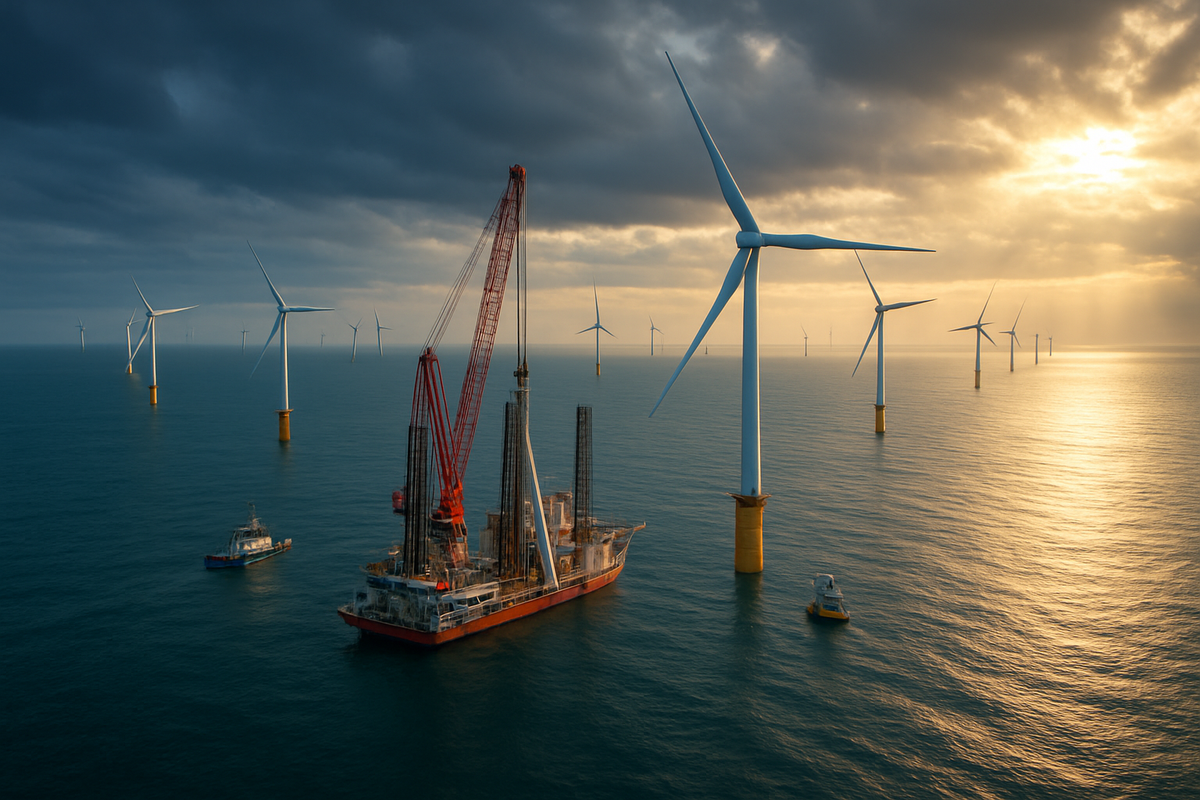
RICHMOND, VA — In a landmark victory for the U.S. renewable energy sector, Dominion Energy (NYSE: D) has officially resumed construction on its flagship Coastal Virginia Offshore Wind (CVOW) project following a high-stakes legal battle with the federal government. On Friday, January 16, 2026, U.S. District Court Judge Jamar K. Walker granted a preliminary injunction that effectively neutralized a "stop-work order" issued by federal regulators in late December. The decision allows the $11.2 billion project—the largest of its kind in the United States—to move forward as it enters a critical final phase of construction, narrowly avoiding a delay that threatened to derail Virginia’s clean energy timeline.
The resumption of work on the 2.6-gigawatt project marks a pivotal moment for the utility industry and offshore wind developers, who have faced a turbulent 18 months characterized by regulatory uncertainty and legal challenges. With the federal halt now lifted, Dominion Energy is racing to maintain its late 2026 commissioning goal, a target that remains the linchpin of the company’s long-term decarbonization strategy. The market has reacted with cautious optimism, as investors weigh the relief of the project's restart against the lingering risks of a shifting federal regulatory landscape.
The Legal Tug-of-War: From Shutdown to Restart
The crisis began in late December 2025, when a newly aggressive federal administration issued an eleventh-hour stop-work order on CVOW and several other major East Coast wind farms. The administration cited "national security risks" and potential radar interference with military surveillance as the primary reasons for the suspension. This move blindsided industry leaders, as the CVOW project had already undergone a decade of rigorous reviews, including extensive coordination with the Department of Defense. Dominion Energy (NYSE: D) immediately filed suit, characterizing the halt as "arbitrary and illegal" and noting that the project was already 60% to 70% complete.
The timeline leading to this moment was fraught with tension. Throughout 2024 and 2025, the offshore wind sector had been battling a wave of litigation from conservation groups and interest groups regarding the North Atlantic Right Whale. While the courts had largely sided with developers on those environmental issues, the "national security" justification for the December halt represented a new and more formidable obstacle. However, in his January 16 ruling, Judge Walker found that the federal government had failed to provide sufficient evidence that the project posed an immediate threat that outweighed the economic and contractual harm of a construction pause.
The immediate implications of the restart are profound. Before the injunction, Dominion reported that the federal halt was costing the company roughly $5 million per day in idling fees, vessel contracts, and logistics management. By securing the right to resume work today, January 19, 2026, Dominion avoids the catastrophic scenario of losing its window for the 2026 installation season—a delay that could have pushed the project’s completion into 2028 and added billions to its total cost.
Corporate Impact: Winners and Losers in the Atlantic
Dominion Energy (NYSE: D) stands as the primary beneficiary of the court's decision. The CVOW project is central to the company’s "regulated-utility" growth model, providing a stable, rate-based return on investment that has been a major draw for utility-sector investors. The lifting of the halt stabilizes the stock’s outlook, which had faced downward pressure in late 2025 as analysts feared a massive write-down.
Beyond the lead developer, the resumption is a massive relief for the supply chain. Siemens Energy (OTC: SMNEY), the parent company of turbine manufacturer Siemens Gamesa, had already staged many of the 176 massive SG 14-222 DD turbines for transport. Any prolonged delay would have created a bottleneck at European and American ports, potentially impacting Siemens Energy’s global margins. Similarly, the Belgian marine operator Deme Group (Euronext: DEME) can now proceed with its installation schedule. Deme’s heavy-lift vessel, the Orion, was at risk of being redeployed to international contracts if the Virginia project remained stalled, which would have left Dominion without the specialized equipment needed to finish the job.
Conversely, the events of the past month have highlighted the vulnerability of developers with less robust legal and financial backing. While Dominion successfully fought the halt, other smaller players in the sector may find it harder to absorb the legal costs and idling fees associated with federal interference. However, peer companies like Ørsted (OTC: DNNGY), which is developing Revolution Wind, and Equinor (NYSE: EQNR), partner on the Empire Wind project, also secured similar injunctions this week. This coordinated judicial pushback suggests that the "losers" in this scenario are likely the groups and political entities that sought to use regulatory maneuvers to permanently stall the transition to offshore wind.
Broader Industry Trends and Regulatory Precedents
The resolution of the CVOW halt fits into a broader trend of 2026 being a "breakout year" for the U.S. offshore wind industry. After the supply chain shocks of 2023 and the policy shifts of late 2025, the sector has demonstrated remarkable legal and political resilience. The judicial rejection of the "national security" pretext sets a significant precedent, signaling to the market that once a project has reached the construction phase and cleared initial federal reviews, administrative attempts to reverse course must meet a very high burden of proof.
This event also highlights the growing divide between federal and state-level energy policies. While the federal executive branch attempted to pause construction, state leadership in Virginia, across both parties, remained largely supportive of CVOW due to its role in regional energy reliability and job creation. This state-level "backstop" is becoming a critical feature of the renewable energy market, providing a layer of security for long-term infrastructure projects even when federal winds shift.
Comparisons are already being drawn to the historical build-out of the U.S. interstate highway system or the early days of nuclear power, where legal challenges were common but ultimately failed to stop the momentum of essential infrastructure. For the offshore wind sector, the January 2026 injunctions represent a "coming of age" moment where the industry successfully defended its right to exist against peak regulatory pressure.
Looking Ahead: The Road to Commissioning
The immediate priority for Dominion Energy is the mobilization of the installation fleet. With the Orion and other specialized vessels back in action, the focus shifts to the installation of the remaining monopile foundations and the complex task of turbine integration. The short-term challenge remains the weather and the narrow seasonal windows available for offshore work in the Atlantic. Any further disruptions, whether from extreme weather or renewed legal appeals, could still squeeze the timeline.
Long-term, the market will be watching for the successful delivery of the first electrons to the Virginia grid, expected later this year. This milestone will be the ultimate proof of concept for large-scale offshore wind in the U.S. Strategic pivots may still be required, particularly in how developers structure their federal permits to be "litigation-proof" from the outset. We may see future projects seeking even more explicit national security clearances early in the process to avoid the kind of "radar interference" claims that nearly derailed CVOW.
Wrap-Up and Investor Outlook
The resumption of the Coastal Virginia Offshore Wind project is a watershed moment for Dominion Energy and the broader renewable energy market. It underscores the high stakes of the "green transition" and the legal complexities that come with multi-billion-dollar infrastructure. The key takeaway for the market is that the U.S. judicial system currently provides a robust check on administrative attempts to halt energy projects that are already deep into their construction phase.
Moving forward, the market for utility stocks like Dominion Energy (NYSE: D) and its peers will likely remain sensitive to "headline risk" regarding federal policy. However, the successful restart of CVOW provides a blueprint for how developers can navigate such challenges. Investors should watch closely for the completion of turbine installations in the second and third quarters of 2026, as well as any appellate court decisions that could challenge Judge Walker’s injunction. For now, the wind is once again at Dominion's back, and the path to a cleaner Virginia power grid looks clearer than it has in months.
This content is intended for informational purposes only and is not financial advice.