U.S. Consumer Confidence Hits 91.8 in March 2026: Analyzing the Surprising Rise and the Hidden Recession Signal
On March 31, 2026, the Conference Board released its latest Consumer Confidence Index, revealing a surprising headline increase to 91.8, up from February’s revised 90.5. While the modest uptick initially calmed a jittery Wall Street, the internal data points to a growing "schizophrenia" within the American psyche. Households are reporting current job stability and wage growth, but their outlook for the future has reached a level of pessimism rarely seen outside of a major economic contraction.
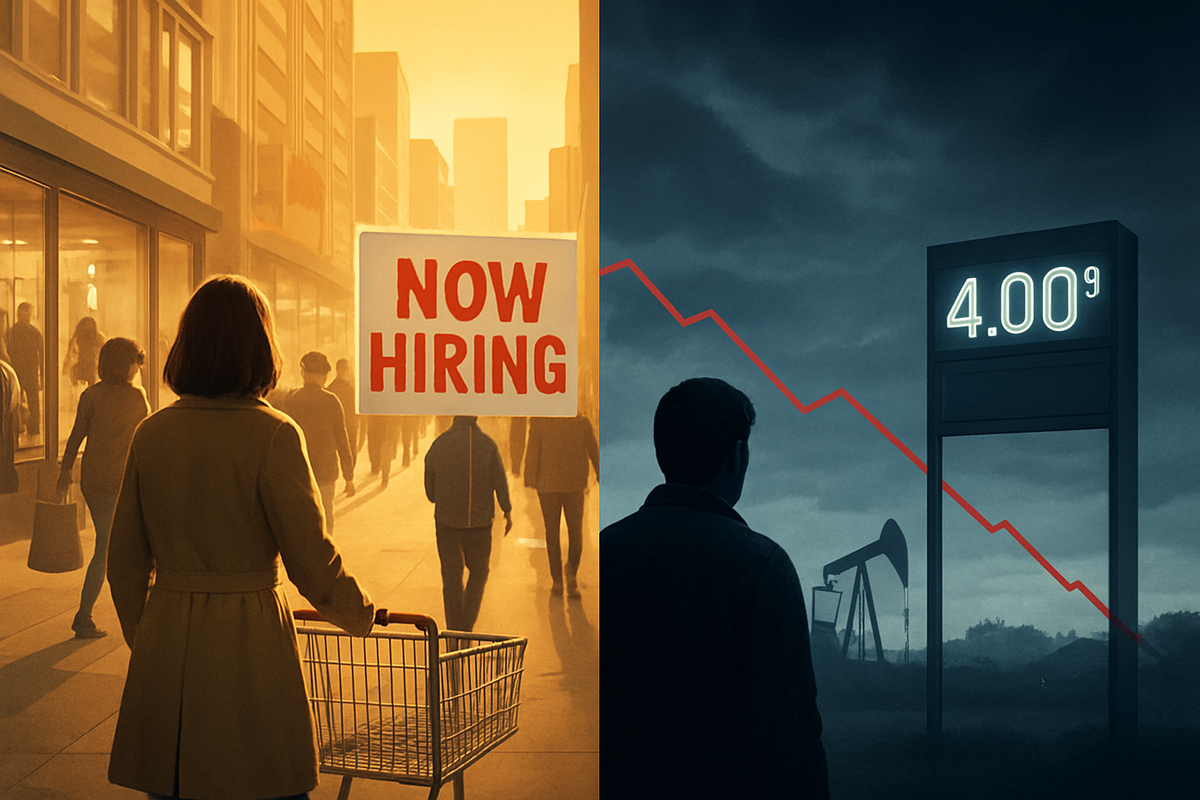
The report highlights a staggering gap between the Present Situation Index, which surged to 123.3, and the Expectations Index, which dipped to a precarious 70.9. This divergence suggests that while the economy is functioning well in the "here and now," the shadow of geopolitical instability and persistent energy costs is weighing heavily on the long-term outlook of the American consumer.
A Tale of Two Indices: Resilience Today, Fear Tomorrow
The March data release represents the culmination of a volatile first quarter in 2026. Following a January characterized by renewed Middle East tensions and a spike in global crude prices, the headline confidence figure was expected to drift lower. Instead, a resilient labor market—where unemployment remains near historic lows—pushed the Present Situation Index to 123.3, a 4.6-point jump from the previous month. Consumers surveyed indicated that jobs are still "plentiful," and for many, the immediate threat of a layoff has not yet materialized.
However, the timeline leading up to this report has been marred by a "tax at the pump." Gasoline prices across the U.S. have climbed toward $4.00 per gallon, driven by oil prices hovering between $110 and $120 per barrel. This energy shock, coupled with the cumulative impact of "higher-for-longer" interest rates from the Federal Reserve, has hammered the Expectations Index. At 70.9, this metric has now remained below the critical 80-point threshold for 14 consecutive months. Historically, a prolonged period below 80 is a nearly infallible predictor of a recession within the next six to twelve months, signaling that consumers are beginning to retrench in anticipation of a downturn.
Winners and Losers in a Bifurcated Economy
The stock market’s reaction to the March 31 report has been decidedly "K-shaped," as investors weigh the strength of the current labor market against the darkening horizon. Value-oriented retailers are emerging as the primary beneficiaries of this environment. Walmart Inc. (NYSE:WMT) and Costco Wholesale Corp. (NASDAQ:COST) have seen increased foot traffic as middle-income households "trade down" from premium grocers to secure better pricing on essentials. Conversely, Target Corp. (NYSE:TGT) has struggled to maintain its premium-discretionary appeal, as its core customers pull back on non-essential home decor and apparel in response to rising utility and fuel costs.
The energy sector remains a rare bright spot for growth-hungry investors. Exxon Mobil Corp. (NYSE:XOM) and Chevron Corp. (NYSE:CVX) have capitalized on the supply-side shocks that are depressing consumer expectations, turning high pump prices into record quarterly margins. Meanwhile, the transport and leisure sectors are bearing the brunt of the "Expectations Gap." Delta Air Lines, Inc. (NYSE:DAL) and United Airlines Holdings, Inc. (NASDAQ:UAL) have faced selling pressure as the double-whammy of surging jet fuel prices and a decline in future travel bookings—indicated by the low Expectations Index—threatens summer profitability.
The Significance of the 'Expectations Gap'
The current divergence between the Present Situation and Expectations indices is one of the widest on record. This phenomenon typically occurs in the late stages of a business cycle, where the momentum of the current economy masks underlying structural rot. In 1990, 2001, and 2007, similar gaps preceded market corrections. The fact that the Expectations Index is languishing at 70.9 suggests that the Federal Reserve's battle against inflation is far from over. With "sticky" inflation tracking between 3.2% and 3.4%, the Fed is trapped: cutting rates to boost expectations could reignite energy-driven inflation, while keeping them high risks turning the consumer's fear into a self-fulfilling prophecy.
Furthermore, this event fits into a broader trend of "stagflationary" anxiety. While the 2024-2025 period was marked by hopes of a "soft landing," the March 2026 data suggests the plane is still circling the runway with low fuel. The policy implications are significant; the White House and Congress may face increased pressure to address energy costs through strategic reserve releases or tax incentives, though such moves are often seen as temporary fixes for deep-seated macroeconomic shifts.
What Lies Ahead: A Defensive Pivot
In the short term, market participants should prepare for a defensive shift in equity portfolios. The persistence of the Expectations Index below 80 will likely lead to a "wait-and-see" approach from the Federal Reserve during their next meeting. If the labor market finally begins to soften—a move that would bring the Present Situation Index down to meet Expectations—the transition into a formal recession could be rapid. Strategic pivots will be required for companies like Amazon.com, Inc. (NASDAQ:AMZN), which must balance its high-margin cloud services against a potentially slowing e-commerce segment as households prioritize "needs" over "wants."
Market opportunities may emerge in "defensive tech" and healthcare, sectors that are less sensitive to the consumer's mood. However, the primary challenge for the remainder of 2026 will be the "Expectations Trap." If consumers believe a recession is coming, they spend less; if they spend less, the recession arrives. Breaking this cycle will require either a significant de-escalation in global energy prices or a decisive pivot in monetary policy that restores confidence in future purchasing power.
Closing Thoughts for Investors
The March 2026 Consumer Confidence report is a stark reminder that the "headline" economy rarely tells the full story. While a 91.8 reading suggests stability, the 70.9 Expectations Index is a siren song for the cautious investor. The American consumer is currently running on the fumes of a strong labor market, but their eyes are fixed on the exit sign. The resilience of the Present Situation Index provides a temporary buffer for the markets, but it is a lagging indicator that may give way if the "higher-for-longer" interest rate environment finally bites into employment.
Moving forward, investors should watch the upcoming Q1 earnings calls for mentions of "demand destruction" and "inventory buildup." If the divergence between today’s reality and tomorrow’s fear continues to widen, the "soft landing" of 2026 may prove to be the most elusive goal in modern economic history. For now, the strategy remains clear: prioritize cash flow, favor defensive staples, and keep a wary eye on the 80-point threshold.
This content is intended for informational purposes only and is not financial advice.