Tightrope in the Trenches: JBS Greeley Strike Pauses as High-Stakes Negotiations Resume Amidst Supply Chain Fragility
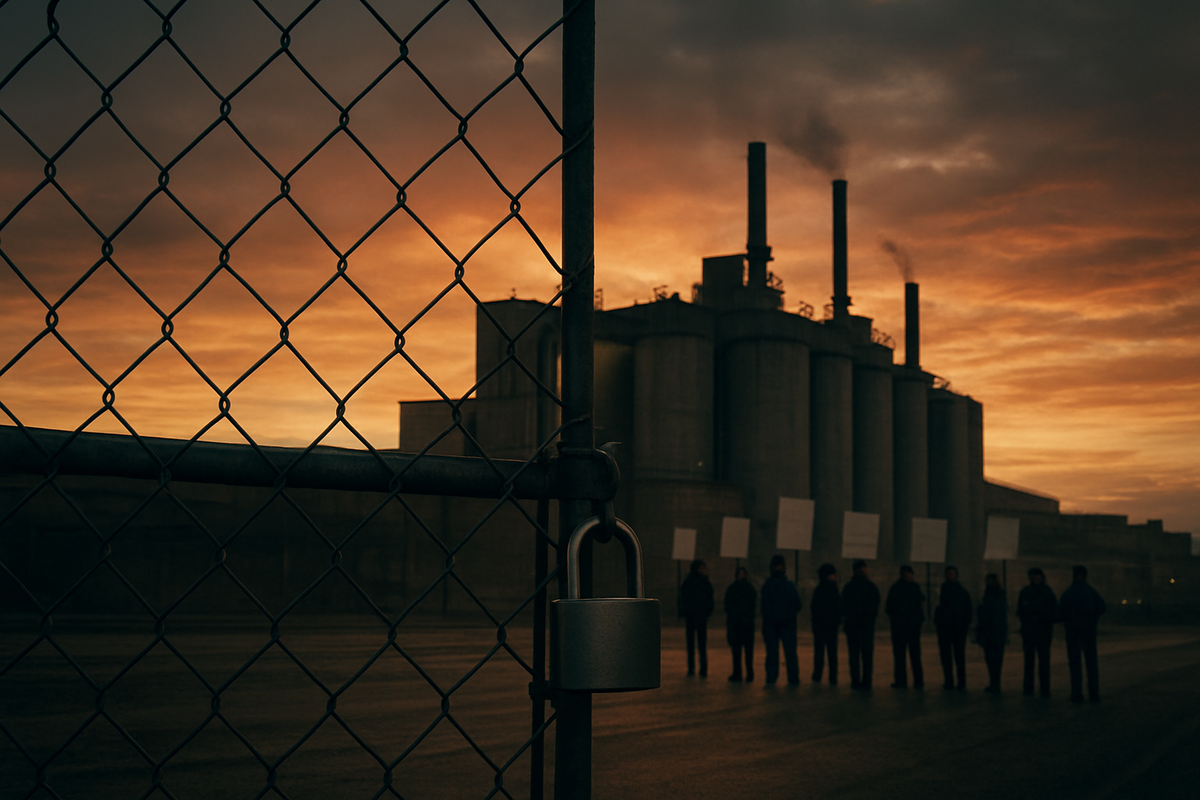
GREELEY, CO — On this morning of April 9, 2026, the industrial landscape of Northern Colorado remains on a knife-edge. After a historic three-week walkout that crippled one of the nation’s largest protein processing facilities, the workforce at the JBS S.A. (OTC: JBSAY) beef plant in Greeley has returned to the production floor—but the peace is fragile. Formal negotiations between JBS management and the United Food and Commercial Workers (UFCW) Local 7 are resuming today, serving as a critical deadline that will determine whether the domestic beef supply chain recovers or plunges back into a state of paralysis.
The immediate implications are stark: with the Greeley plant accounting for roughly 5% to 8% of total U.S. beef slaughter capacity, any further work stoppage threatens to exacerbate a market already reeling from a 75-year low in the national cattle herd. As of today, wholesale beef prices have seen a regional spike of nearly 15 cents per pound, and retail consumers are beginning to feel the squeeze at the grocery aisle. For JBS, the stakes extend beyond the picket line to the very core of its operating margins, which are being squeezed by record-high input costs and a labor force that refuses to accept wage increases that trail the 4.1% national inflation rate.
The Three-Week Stand: A Timeline of Unrest
The current crisis traces its roots back to July 2025, when the previous collective bargaining agreement between JBS and UFCW Local 7 expired. For eight months, the facility’s 3,800 workers operated under a series of contract extensions, even as negotiations grew increasingly adversarial. The tension reached a breaking point in February 2026, when union members voted with a staggering 99% majority to authorize an Unfair Labor Practice (ULP) strike. On March 16, 2026, the workers finally walked off the job, marking the first major strike at a U.S. beef slaughterhouse since the mid-1980s.
During the three-week hiatus that ended just two days ago, the Greeley facility—which typically processes 5,000 to 6,000 head of cattle per day—was reported to be almost completely idle. JBS was forced into a logistical defensive, diverting thousands of cattle to its other facilities in Grand Island, Nebraska, and Cactus, Texas. This tactical retreat significantly increased transportation overhead and placed immense strain on the sister plants, creating a ripple effect of inefficiency throughout the company’s North American operations.
Key stakeholders, including Colorado Governor Jared Polis and federal agricultural mediators, have been monitoring the situation closely. The union's grievances go beyond simple hourly pay; they include allegations of "regressive bargaining" and a controversial policy where workers were charged for essential Personal Protective Equipment (PPE). For many on the line, the strike was a battle for dignity and safety following a period of intense production speeds and safety failures that have plagued the industry since the early 2020s.
Winners and Losers: The Economic Fallout of the Squeeze
The primary "loser" in this conflict is undoubtedly JBS S.A. (OTC: JBSAY), which faces a double-edged sword: losing market share during the stoppage while simultaneously seeing its cost of goods sold (COGS) skyrocket due to the cattle shortage. Investors have kept a nervous eye on the stock, which has seen heightened volatility as the company attempts to balance labor peace with the necessity of protecting margins in a high-cost environment.
Conversely, competitors such as Tyson Foods, Inc. (NYSE: TSN) and Hormel Foods (NYSE: HRL) find themselves in a complex position. While they may capture short-term market share from JBS's inability to fulfill certain retail contracts, they are not immune to the labor militancy sweeping the sector. A lucrative win for UFCW Local 7 in Greeley would almost certainly embolden unions at Tyson and National Beef facilities, leading to a broader reset of labor costs across the entire meatpacking industry.
On the retail front, giants like Walmart (NYSE: WMT) and The Kroger Co. (NYSE: KR) are forced to navigate supply gaps and rising costs. While these massive retailers have the scale to absorb some price shocks, the prolonged nature of the JBS dispute is forcing them to pass costs onto a consumer base already fatigued by years of food inflation. For the consumer, the "winner" is nonexistent, as the strike only serves to tighten the supply of a commodity that was already becoming a luxury.
A Symptom of a Strained Industry
The labor unrest in Greeley is not an isolated event; it is a symptom of a broader structural shift in the American agricultural industry. This event fits into a trend of increased labor leverage in the post-pandemic era, where the "essential worker" status has evolved into a demand for equitable profit sharing. Furthermore, the timing is catastrophic. With the U.S. cattle herd at its lowest point in seven decades due to persistent droughts in the West and high liquidation rates, processors are fighting over a dwindling supply of animals.
Historically, this level of labor unrest mirrors the 1985 Hormel strike, but the modern context is far more volatile. In 2026, the meat supply chain is more consolidated than it was forty years ago, meaning a disruption at a single mega-plant like Greeley has disproportionate effects on national food security. Regulators in Washington are already taking note, with renewed calls for antitrust investigations into the "Big Four" meatpackers, arguing that such extreme consolidation creates a fragile system where a local labor dispute can threaten the national dinner table.
The Path Forward: Scenarios and Strategic Pivots
As negotiations resume today, two primary scenarios emerge. In the first, JBS concedes to a contract that includes meaningful wage adjustments tied to inflation and the elimination of PPE fees. This would likely stabilize production in the short term but would require the company to find internal efficiencies or accelerate the adoption of automation to offset higher labor costs. We may see a strategic pivot toward "dark plants," where robotics handle more of the high-risk butchery, reducing the company's reliance on human labor over the next decade.
In the second, more pessimistic scenario, the talks fail, and the union resumes the strike by mid-April. This would likely lead to a protracted legal battle and potentially federal intervention under the Taft-Hartley Act, should the administration deem the beef shortage a national emergency. Such a move would be politically risky but might be seen as necessary to prevent a total collapse of the protein supply chain ahead of the summer grilling season.
Conclusion: A Market in Transition
The JBS Greeley strike is a watershed moment for the meatpacking industry. It highlights the collision of three powerful forces: a shrinking biological supply of cattle, a rejuvenated and militant labor movement, and an inflationary environment that makes compromise expensive. The key takeaway for investors is that the era of cheap, reliable labor in the meat industry has likely come to an end.
Moving forward, the market will be characterized by higher baseline costs for processors and a greater emphasis on facility resilience. Investors should watch the April 9–10 negotiation outcomes as a primary indicator of JBS’s near-term profitability. Beyond that, the focus must shift to how these companies invest in automation and how they manage the ongoing cattle shortage. The meat supply chain is currently in a state of high-tensile stress; whether it bends or breaks will depend on the signatures at the bottom of the next contract in Greeley.
This content is intended for informational purposes only and is not financial advice.