The Ubiquitous Revolution: IoT's Continuous Surge Reshapes Industries and Environments
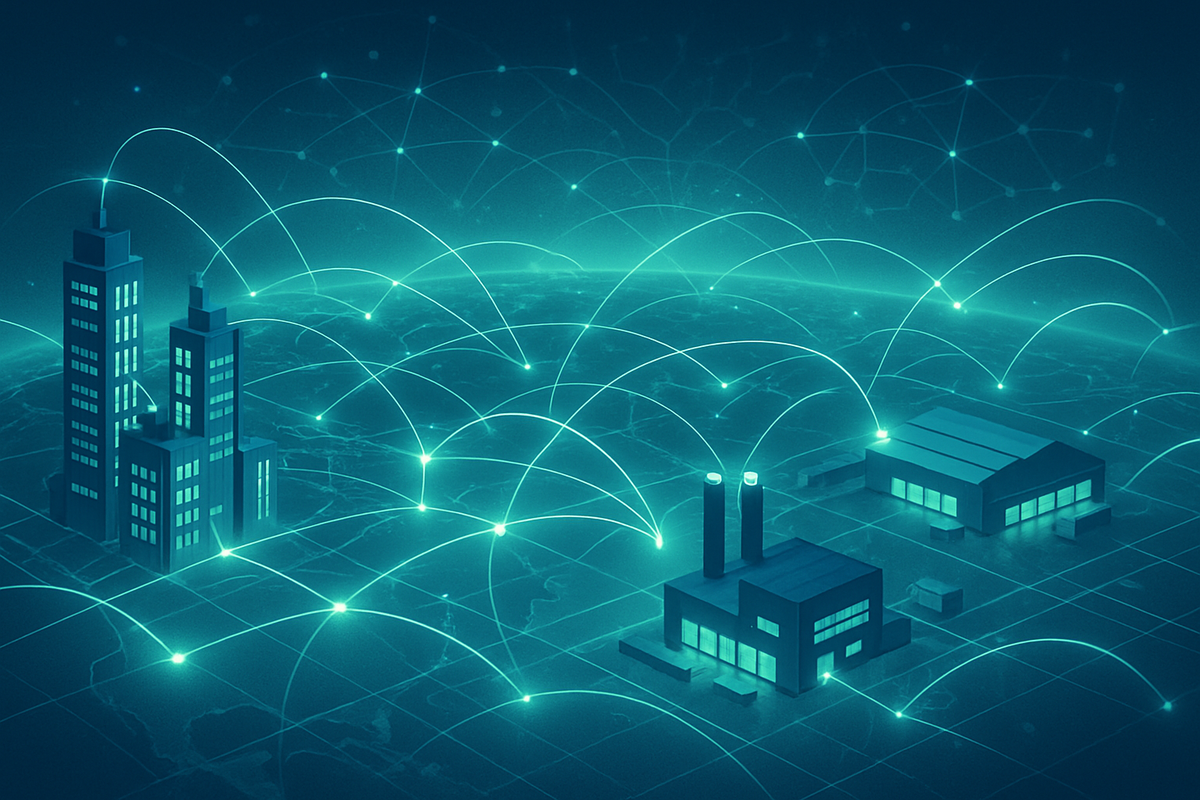
The Internet of Things (IoT) is not merely expanding; it is undergoing a continuous, transformative surge, integrating billions of connected devices and sensors into the fabric of our world. This relentless advancement is fundamentally reshaping how we interact with our environments, from the intricate ecosystems of smart cities to the precision-driven operations of industrial complexes. The immediate implication is a future where efficiency, intelligence, and data-driven decision-making are not just aspirations but inherent characteristics of our connected reality.
This pervasive integration is unlocking unprecedented levels of operational efficiency, offering industries the power to automate processes, predict failures, and optimize resource allocation with real-time insights. Simultaneously, it is empowering smarter environments, turning passive spaces into responsive, intelligent entities that enhance convenience, safety, and sustainability. The IoT's trajectory suggests a future where every object, every process, and every decision is informed by a vast, interconnected web of data, driving innovation and creating value across an ever-widening spectrum of applications.
What Happened: The Unstoppable March of Connectivity
The past few years have witnessed an exponential growth in IoT deployments, moving beyond niche applications to become a foundational technology across virtually every sector. What started with rudimentary connected devices has evolved into sophisticated ecosystems powered by advanced sensors, robust connectivity options, and intelligent platforms. This continuous expansion is driven by several key factors: the decreasing cost of sensors, the proliferation of high-speed, low-latency networks like 5G, and the increasing demand for automation and real-time data analytics.
Key developments include the maturation of Industrial IoT (IIoT), which is revolutionizing manufacturing, logistics, and supply chain management. Companies are leveraging IIoT for predictive maintenance, real-time asset tracking, and optimizing production lines, leading to significant cost reductions and efficiency gains. Concurrently, smart city initiatives are gaining momentum globally, employing IoT solutions for intelligent traffic management, optimized energy grids, efficient waste collection, and enhanced public safety. The integration of Artificial Intelligence (AI) and Machine Learning (ML) with IoT, often termed AIoT, is a particularly significant development, enabling devices to not only collect data but also to analyze and act upon it autonomously, fostering a new era of proactive intelligence.
How the IoT Revolution Might Affect the Market
The continuous expansion of IoT presents a significant market reordering, creating substantial opportunities for some companies while posing challenges for others. The sheer scale of connected devices—projected to exceed 40 billion by 2030—translates into a massive market for hardware, software, services, and infrastructure.
Potential Winners:
- Chipmakers and Sensor Manufacturers: Companies like Intel (NASDAQ: INTC), Qualcomm (NASDAQ: QCOM), NVIDIA (NASDAQ: NVDA), and STMicroelectronics (NYSE: STM) are poised to benefit immensely from the demand for low-power, high-performance processors and specialized sensors. Their continued innovation in edge AI capabilities and miniaturization will be crucial.
- Cloud and IoT Platform Providers: Hyperscale cloud providers such as Amazon (NASDAQ: AMZN) with AWS IoT, Microsoft (NASDAQ: MSFT) with Azure IoT, and Google (NASDAQ: GOOGL) with Google Cloud IoT are central to the IoT ecosystem, offering scalable infrastructure for data storage, processing, and analytics. Their platforms are critical for managing vast fleets of devices and extracting actionable insights.
- Connectivity Providers: Telecommunications giants like Verizon (NYSE: VZ), AT&T (NYSE: T), and T-Mobile (NASDAQ: TMUS) are crucial for providing the 5G and LPWAN (Low-Power Wide-Area Network) connectivity that underpins many IoT applications. Network equipment providers such as Ericsson (NASDAQ: ERIC) and Nokia (NYSE: NOK) will also see increased demand for their infrastructure.
- Industrial Automation and Software Specialists: Companies like Siemens (ETR: SIE), Honeywell (NASDAQ: HON), and Johnson Controls (NYSE: JCI) are leveraging IoT to enhance their offerings in industrial automation, smart buildings, and energy management. Their expertise in integrating IoT into complex operational technology (OT) environments is invaluable.
- Cybersecurity Firms: As the number of connected devices grows, so does the attack surface. Cybersecurity companies specializing in IoT security will see increased demand for solutions that protect devices, networks, and data from vulnerabilities. Cisco (NASDAQ: CSCO), already a leader in networking and security, is well-positioned in this space.
Potential Losers:
- Companies Resistant to Digital Transformation: Businesses that fail to embrace IoT and digital transformation risk being left behind. Traditional industries clinging to outdated operational models will struggle to compete with more efficient, data-driven counterparts.
- Legacy Hardware Providers: Manufacturers of non-connected or "dumb" devices may see their market share erode as smart, connected alternatives become the norm. The pressure to integrate IoT capabilities into their product lines will be immense.
- Insecure IoT Solution Providers: With increasing regulatory scrutiny and consumer awareness of data privacy and security, companies offering insecure or poorly designed IoT solutions will face significant reputational and financial risks.
Broader Implications: A Paradigm Shift Across Industries
The pervasive expansion of IoT signifies a paradigm shift that transcends mere technological advancement, ushering in broader implications for industry structures, regulatory landscapes, and societal norms. This event is not an isolated incident but a continuation of a fundamental trend towards hyper-connectivity and intelligence.
The integration of IoT with other emerging technologies like AI, edge computing, and digital twins is creating a synergistic effect, amplifying its impact. For instance, edge computing, which processes data closer to its source, is crucial for real-time decision-making in autonomous vehicles and critical industrial applications, reducing latency and reliance on centralized cloud infrastructure. Digital twins, virtual replicas of physical assets, systems, or processes, allow for sophisticated simulation, analysis, and optimization, enabling predictive maintenance and proactive problem-solving without disrupting real-world operations. This convergence is accelerating the pace of innovation and creating entirely new business models.
Regulatory bodies are increasingly grappling with the implications of widespread IoT adoption, particularly concerning data privacy, security, and ethical AI use. The sheer volume of personal and operational data collected by IoT devices raises significant concerns about how this data is stored, processed, and shared. Governments worldwide are beginning to enact stricter data protection laws, which could impact how IoT solutions are designed and deployed. Furthermore, the potential for IoT devices to be used for surveillance or to create single points of failure in critical infrastructure presents complex policy challenges that require careful consideration. Historically, similar technological shifts, such as the rise of the internet itself, have necessitated new legal frameworks and industry standards, and IoT is no different. Companies that proactively address these regulatory and ethical considerations will gain a competitive advantage and build greater trust with consumers and stakeholders.
What Readers Should Pay Attention to Next
As the IoT landscape continues its dynamic evolution, several key areas warrant close attention from investors, businesses, and consumers alike. In the short term, the accelerating adoption of 5G networks will unlock new capabilities for IoT, particularly in applications requiring high bandwidth and ultra-low latency, such as autonomous systems and enhanced remote operations. Watching the rollout and practical applications of 5G-enabled IoT will provide critical insights into immediate market opportunities. Furthermore, the ongoing development of AIoT, where artificial intelligence is embedded directly into IoT devices, will lead to more intelligent, self-optimizing systems. The advancements in generative AI are also expected to play a crucial role in processing and utilizing the massive data generated by IoT devices, creating new analytical capabilities and automation possibilities.
Looking further ahead, the long-term possibilities are even more profound. The concept of "hyper-personalization," driven by emotion-aware devices and integrated biometric ecosystems, could redefine user experiences across various sectors, from retail to healthcare. Strategic pivots will be essential for companies to remain competitive; those that can seamlessly integrate IoT into their core offerings, rather than treating it as an add-on, will thrive. This includes not only technology providers but also traditional industries that must adapt their operational models. Emerging market opportunities will include specialized IoT solutions for niche industries, advanced analytics services, and robust cybersecurity offerings tailored to the unique challenges of connected environments. Potential scenarios range from highly integrated, fully autonomous smart cities to entirely new forms of human-machine interaction, driven by ever-smarter and more ubiquitous IoT deployments.
Conclusion: The Dawn of a Truly Connected Era
The continuous expansion and advancements in the Internet of Things represent a monumental shift towards a truly connected and intelligent world. The research underscores that IoT is no longer a futuristic concept but a present-day reality, profoundly impacting how industries operate, how cities function, and how individuals live. The key takeaways from this ongoing revolution are clear: efficiency, data-driven decision-making, and smarter environments are becoming the new benchmarks for progress.
Moving forward, the market will continue to be shaped by the interplay of technological innovation, strategic corporate investments, and evolving regulatory frameworks. Investors should closely monitor companies that are at the forefront of IoT development, particularly those excelling in AIoT, edge computing, 5G integration, and robust cybersecurity solutions. The ability of companies to not only deploy IoT devices but also to effectively manage, analyze, and secure the vast amounts of data they generate will be a critical determinant of success. The lasting impact of IoT will be its capacity to create a more responsive, optimized, and sustainable world, demanding continuous adaptation and foresight from all stakeholders in the coming months and years.