The Swoosh Stumbles: Why Nike is the Anchor Dragging Down a Record-Breaking Dow
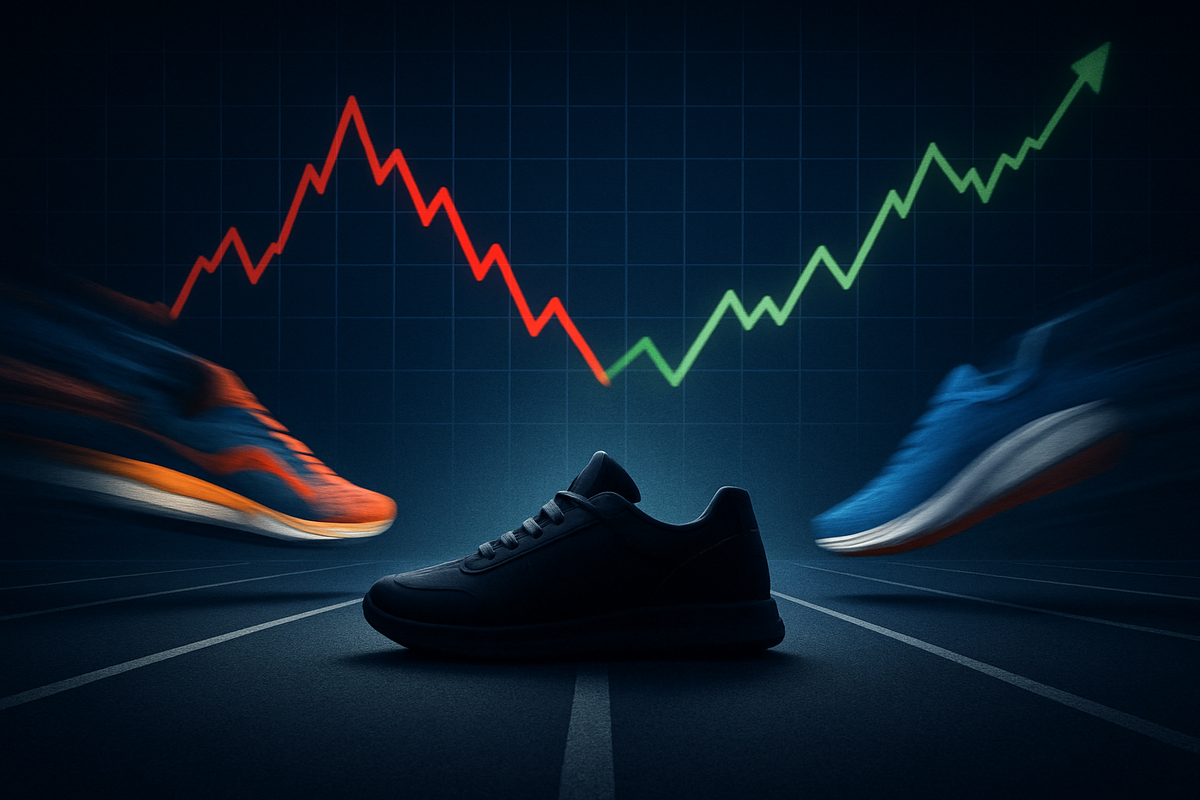
On a day when the broader markets are flirting with historic highs, a familiar icon is notably absent from the celebration. As of December 19, 2025, Nike Inc. (NYSE: NKE) has once again found itself in the crosshairs of a punishing market reaction, following a fiscal second-quarter earnings report that underscored the grueling nature of its ongoing turnaround. While the S&P 500 has surged over 15% year-to-date, Nike shares have plummeted 10% today alone, falling toward a multi-year low of $59.00 and wiping out billions in market capitalization.
The immediate implications are stark: Nike, once the undisputed king of the Dow Jones Industrial Average (INDEXDJX: .DJI), has become a significant weight on the price-weighted index. Today’s double-digit slide stripped approximately 41 points from the Dow, highlighting a divergence between the booming tech and financial sectors and a consumer discretionary giant that has lost its footing. For investors, the question is no longer just about when Nike will recover, but whether the brand’s core identity can survive a transition that is proving far more "non-linear" than Wall Street had hoped.
The Innovation Gap and the Leadership Pivot
The roots of Nike’s current malaise can be traced back to the "Consumer Direct Acceleration" (CDA) strategy spearheaded by former CEO John Donahoe. Under Donahoe’s leadership, Nike prioritized its digital ecosystem and direct-to-consumer (DTC) sales, effectively severing ties with thousands of independent wholesale partners. While this move initially boosted margins during the pandemic-era e-commerce boom, it ultimately created a vacuum on retail shelves that hungrier competitors were all too happy to fill. By the time Elliott Hill was brought out of retirement to take the helm in October 2024, the brand was suffering from a profound "innovation gap."
The timeline of this decline is a cautionary tale of over-reliance on past success. Throughout 2024 and 2025, Nike leaned heavily on "lifestyle" franchises—specifically the Air Force 1, Dunk, and Jordan 1—to meet quarterly revenue targets. This strategy led to market oversaturation and "brand fatigue." While Nike was busy releasing its hundredth colorway of a 40-year-old sneaker, its R&D pipeline appeared to have stalled. The key players in this drama, including Hill and CFO Matthew Friend, have spent much of 2025 managing expectations, admitting that recapturing the "soul" of Beaverton is a multi-year project that requires rebuilding wholesale relationships from scratch.
The New Guard: Winners and Losers in the Performance Race
As Nike retreated from the shelves of local running shops and major retailers, specialized brands seized the narrative. Deckers Outdoor Corp (NYSE: DECK), the parent company of Hoka, has been the primary beneficiary. Hoka’s maximalist cushioning and performance-first marketing allowed it to capture a double-digit share of the running market by late 2025. Similarly, On Holding AG (NYSE: ONON) has utilized a community-centric approach to build a loyal following that Nike once owned. These challenger brands are no longer niche players; they are the new standard for the "serious runner" demographic.
The losers in this shift extend beyond Nike itself. Retailers like Foot Locker (NYSE: FL), which saw their allocations slashed during the Donahoe era, have had to navigate a period of intense volatility. While Foot Locker is now seeing a return of Nike product under Hill’s new "balanced omnichannel" strategy, the damage to consumer foot traffic has been lasting. Conversely, Amazon.com Inc. (NASDAQ: AMZN) stands as a strategic winner; Nike’s 2025 return to the platform—after a high-profile exit in 2019—signals a desperate need for the very distribution channels it once shunned.
A Price-Weighted Drag on the Dow
Nike’s struggles have broader implications for the structure of the market itself. Because the Dow Jones Industrial Average is a price-weighted index, Nike’s share price decline has a disproportionate impact on the index compared to its total market cap. With a divisor currently hovering around 0.162, every $1 move in Nike stock results in a 6.17-point swing for the Dow. Today’s $6.60 drop acted as a significant anchor, preventing the Dow from keeping pace with the market-cap-weighted S&P 500.
This event fits into a wider industry trend: the "death of the DTC-only dream." Nike’s failed experiment has served as a warning to other consumer brands that physical retail presence and wholesale partnerships are essential for brand discovery and scale. Historically, Nike’s dominance was built on being everywhere the consumer was. By trying to control the entire value chain, they inadvertently made themselves invisible to a new generation of shoppers who discover brands through curated retail experiences rather than targeted social media ads.
The Long Road to Beaverton’s Recovery
Looking ahead, the short-term outlook for Nike remains clouded by macroeconomic headwinds and the slow pace of product innovation. Elliott Hill’s strategic pivot back to wholesale is a necessary step, but it is not an overnight fix. Retailers who were burned by Nike’s previous exit may be slow to re-allocate prime shelf space, especially when Hoka and On are delivering high sell-through rates. Investors should expect 2026 to be another "reset year" as the company clears out excess inventory of its legacy lifestyle models to make room for a new generation of performance tech.
Potential scenarios include a further contraction in market share before the brand finds its floor. However, the "Hill Era" is focused on a return to Nike’s roots: sports and performance. If the company can deliver a breakthrough cushioning technology or a cultural "must-have" silhouette by the 2026 World Cup, it may finally break the cycle of underperformance. The challenge will be doing so while navigating a complex geopolitical environment, particularly with new U.S. tariffs impacting footwear imports in late 2025.
Final Thoughts: A Canary in the Consumer Coal Mine
The story of Nike in 2025 is a reminder that even the most powerful brands are not immune to strategic hubris. The company’s underperformance is a clear signal that the consumer discretionary sector is undergoing a massive shift in loyalty. For the Dow, Nike remains a "canary in the coal mine," reflecting the health of global consumer spending and the risks of a shifting retail landscape.
Investors should watch for three key indicators in the coming months: the pace of inventory liquidation in the Jordan brand, the growth rates of Hoka and On as they reach maturity, and any signs of a recovery in the Chinese market, which remains a massive drag on Nike’s top line. While the Swoosh is down, it is far from out, but the path back to the top of the Dow will require more than just a new CEO—it will require a return to the innovation that made Nike a household name in the first place.
This content is intended for informational purposes only and is not financial advice.