The Silver Divergence: Why the "Devil's Metal" is Failing the Safe Haven Test Amid Middle East Turmoil
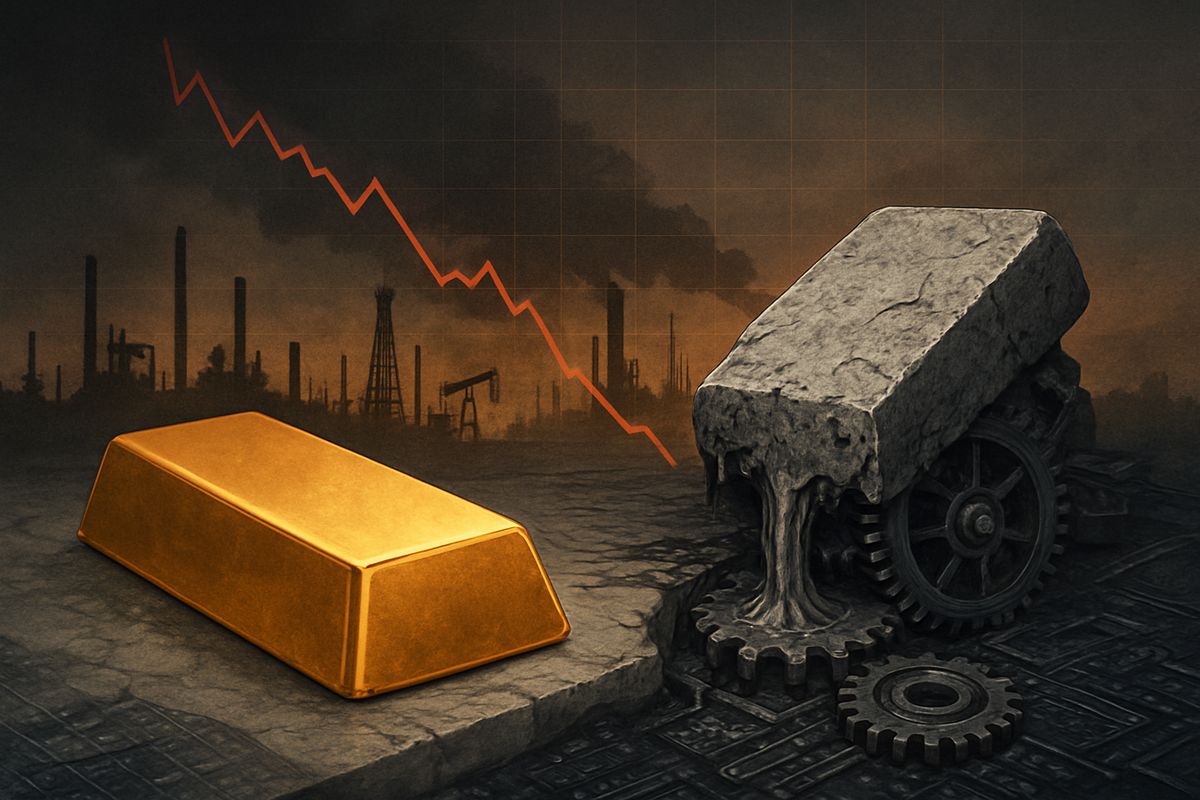
As of April 1, 2026, the global commodities market is witnessing a stark and painful divergence between the world’s two primary precious metals. While gold has retreated roughly 12% from its historic highs of $5,595 per ounce reached in late January, silver has suffered a much more catastrophic correction, plunging 23.5% since the onset of the latest Middle East conflict. This performance gap has left investors questioning silver's long-standing reputation as "poor man’s gold" and a reliable safe-haven asset.
The discrepancy stems from silver’s "dual identity" as both a monetary metal and a critical industrial commodity. While gold has managed to retain a baseline of support due to central bank buying and institutional hedging, silver has been re-rated by the market as a distressed industrial asset. The widening conflict in the Middle East has not only increased geopolitical risk but has also sparked a severe energy crisis that is directly throttling the manufacturing engines of East Asia—specifically the semiconductor and photovoltaic sectors that silver relies on for over 60% of its annual demand.
The Cracks in the Silver Shield: A Timeline of the Slump
The descent began in earnest following the escalation of the U.S.-Israel-Iran conflict on February 28, 2026. Prior to this, silver had been the darling of the 2025 bull market, surging on the back of a massive short squeeze and the rapid expansion of Artificial Intelligence (AI) infrastructure. At its peak on January 29, 2026, silver traded at an eye-watering $121 per ounce. However, as the Strait of Hormuz—a transit point for 20% of the world’s oil and LNG—became a combat zone, the narrative shifted from "monetary hedge" to "industrial liability."
By early March 2026, the "liquidity flush" was in full swing. Institutional players, faced with margin calls as equity markets wobbled, began selling their most liquid winners. Gold (NYSEARCA: GLD) served its purpose, falling to approximately $4,680 per ounce as investors converted holdings to cash. But silver (NYSEARCA: SLV) fell much harder, dropping to the $70–$74 range. This 23.5% slump was exacerbated by a strengthening U.S. Dollar and a sudden realization: the industrial demand that justified silver's triple-digit price tag was under immediate threat from soaring energy costs and supply chain bottlenecks in China.
The initial market reaction was one of shock. Traditionally, silver outperforms gold in a bull market and underperforms in a bear market, but the magnitude of this 2-to-1 downside ratio has caught even seasoned analysts off guard. The key stakeholders—ranging from primary silver miners in Mexico to tech giants in Silicon Valley—are now bracing for a prolonged period of volatility as the energy shock ripples through the global economy.
Winners and Losers in a Distressed Market
The primary victims of this divergence are the silver miners, who have seen their valuations crater alongside the spot price. Pan American Silver Corp (NYSE: PAAS) and First Majestic Silver Corp (NYSE: AG) have both reported significant hits to their market capitalization as the cost of energy—a major input for mining operations—rises while their end-product loses value. Wheaton Precious Metals Corp (NYSE: WPM), a streaming company, has fared slightly better due to its diversified portfolio, but it remains tethered to the broader silver malaise.
On the industrial side, the semiconductor giants are in a precarious position. Companies like Intel Corp (NASDAQ: INTC) and Taiwan Semiconductor Manufacturing Company (NYSE: TSM) are facing a "double whammy." The Middle East conflict has disrupted the supply of specialty gases like helium and hydrogen—essential for chip fabrication—sourced from Qatar. This has led to production halts in major fabs. While lower silver prices would typically be a boon for manufacturers, the lack of energy and raw materials means they cannot capitalize on the cheaper metal.
Conversely, some "safe-haven" miners with operations strictly in low-risk jurisdictions, such as Hecla Mining (NYSE: HL), which operates primarily in the U.S. and Canada, may eventually see a flight to quality. If the conflict persists, investors may favor producers who are not only insulated from Middle Eastern energy logistics but are also shielded from the geopolitical instability affecting mines in South America and Africa.
The Industrial Drag: A Canary in the Global Coal Mine
The current underperformance of silver serves as a stark reminder of its sensitivity to the global business cycle. Unlike gold, which is almost entirely held as a store of value, silver is the lifeblood of the "Green Revolution." In China, the world's largest producer of solar panels, companies like Longi Green Energy are struggling with skyrocketing electricity costs. Silver is a key component in the conductive pastes used in solar cells; if the solar rollout slows due to regional energy disruptions, silver’s primary growth engine stalls.
This event mirrors historical precedents, such as the 2008 financial crisis and the 2020 pandemic lockdowns, where silver initially lagged gold significantly as industrial demand projections were slashed. However, the 2026 scenario is unique because of the AI component. High-performance computing and data center infrastructure, spearheaded by NVIDIA (NASDAQ: NVDA) and Microsoft (NASDAQ: MSFT), require massive amounts of silver for high-speed connectors and efficient power distribution. The current "chip crunch" caused by helium shortages is temporarily decoupling silver from the AI hype cycle.
Regulatory and policy implications are also surfacing. Governments in the West are now looking at the strategic necessity of silver stockpiles, much like the Strategic Petroleum Reserve. The realization that a conflict in the Middle East can derail the production of solar panels and AI chips because of a "gas-to-metal" supply chain failure is prompting a re-evaluation of how critical minerals are managed.
What Lies Ahead: Pivot or Perish?
In the short term, silver's path is inextricably linked to the price of oil and the stability of the Strait of Hormuz. Should energy prices stabilize, we could see a "relief rally" in silver as the industrial sector resumes production and seeks to lock in lower prices for the metal. Analysts suggest that a strategic pivot for silver investors may involve focusing on "silver-plus" plays—companies that offer exposure to the metal but have diversified revenue streams in gold or base metals to weather the industrial downturn.
Long-term, the structural deficit in silver remains a compelling story. The world has faced six consecutive years of silver supply deficits as of 2026. This fundamental tightness suggests that once the geopolitical dust settles, silver could potentially outpace gold again. However, the "industrial output limits" currently in place serve as a ceiling for the time being. Investors should watch for any signs of China stabilizing its energy inputs or a breakthrough in semiconductor gas sourcing as the primary catalysts for a silver recovery.
Navigating the Volatility
The silver-gold divergence of early 2026 is a masterclass in the complexities of modern commodity markets. It highlights that in a world of interconnected supply chains, even a "precious" metal is not immune to the realities of industrial logistics and energy availability. The key takeaway for the market is that silver is no longer just a hedge against inflation; it is a high-beta bet on global technological advancement.
Moving forward, the market will likely remain bifurcated. Gold will act as the anchor of stability, while silver will act as the volatile indicator of manufacturing health. Investors should keep a close eye on China’s Manufacturing PMI and the Brent Crude oil index as leading indicators for silver’s next move. While the current 23.5% slump is painful, it may eventually represent a generational buying opportunity—provided the global manufacturing engine can find a way to restart in the face of persistent regional conflict.
This content is intended for informational purposes only and is not financial advice.