The Return of the Titan: Q1 2026 Sees Historic Surge in $10B+ Megadeals

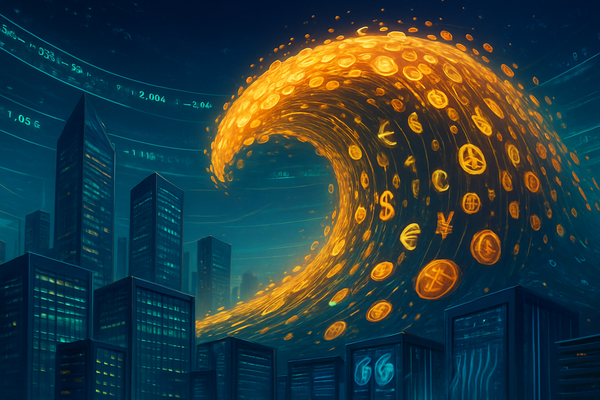
The first quarter of 2026 has officially marked the end of the corporate "wait-and-see" era, as a historic wave of consolidation swept through the global markets. Following years of cautious maneuvering amidst fluctuating interest rates and regulatory headwinds, the floodgates have opened, revealing a corporate landscape hungry for scale, resilience, and technological dominance. In a staggering display of "animal spirits," Q1 2026 recorded 12 massive "megadeals" valued at over $10 billion each, signaling a total return of corporate confidence and a structural shift in how the world’s largest entities compete.
This surge, characterized by analysts as the "Innovation Supercycle," represents more than just a recovery; it is a fundamental realignment. With total deal volume for the quarter reaching heights not seen since the pre-inflationary peaks of the early 2020s, the focus has pivoted toward "capability-driven" acquisitions. Nowhere is this more evident than in the technology and banking sectors, where the race for AI infrastructure and digital-first financial services has forced the hands of even the most conservative boards.
The Breaking of the Liquidity Logjam
The narrative of Q1 2026 was defined by a series of blockbuster announcements that reshaped entire industries. At the forefront was the monumental $111 billion merger of Paramount Skydance and Warner Bros. Discovery (NASDAQ: WBD), creating a media "Super-Streamer" designed to challenge the established dominance of Netflix. This deal followed a tense bidding war that saw several tech giants pull back, eventually allowing the newly formed entity to consolidate a vast library of intellectual property under a single banner.
The timeline leading to this explosion of activity began in late 2025, as interest rates finally settled into a "neutral corridor" of 3.50% to 3.75%. This stability provided Chief Financial Officers with the predictability needed to model long-term debt, effectively unlocking a $3.2 trillion "wall of capital" in private equity dry powder that had been sidelined for years. The momentum culminated in February 2026 with the finalized take-private of Electronic Arts (NASDAQ: EA) for $56.6 billion by a consortium including Silver Lake, the largest private equity buyout in history.
In the banking sector, the theme was "consolidation for scale." Banco Santander (NYSE: SAN) made waves with its $12.2 billion acquisition of Webster Financial (NYSE: WBS), a move intended to bolster its footprint in the lucrative mid-Atlantic market. This was mirrored in the tech-banking crossover space, where Capital One (NYSE: COF) integrated specialized fintech platforms to pivot toward an "Active Fee" model, moving away from the interest-dependent revenue streams that dominated the previous two years.
Identifying the Victors and the Vanquished
The primary winners of this megadeal surge are undoubtedly the global investment banks. Firms like Goldman Sachs (NYSE: GS), Morgan Stanley (NYSE: MS), and JPMorgan Chase & Co. (NYSE: JPM) have seen a massive resurgence in advisory fees, reversing a two-year slump in investment banking revenue. These institutions have not only facilitated the financing of these deals but have also acted as strategic architects for the complex cross-border consolidations seen in the food and beverage sector, such as the $65 billion tie-up between McCormick & Company (NYSE: MKC) and Unilever (NYSE: UL).
Technology giants with massive cash reserves have also emerged as winners, using the quarter to secure the "compute layer" of the future. Nvidia (NASDAQ: NVDA) and Amazon (NASDAQ: AMZN) were key players in the $122 billion infrastructure restructuring of OpenAI, ensuring their hardware and cloud services remain the foundational utilities for the AI era. These companies are no longer just service providers; they are becoming the gatekeepers of the global digital economy.
Conversely, the "losers" in this new landscape appear to be mid-tier players and regional banks that lack the capital to participate in the consolidation race. As the market bifurcates into a "K-shaped" recovery, smaller firms are finding themselves squeezed by the rising costs of energy and compute resources. For these companies, the choice is increasingly "sell or starve," as they struggle to compete with the "Super-Conglomerates" that can leverage economies of scale to weather geopolitical shocks and energy transitions.
A Structural Shift in Global Competition
The wider significance of this Q1 surge lies in a shift in regulatory and geopolitical philosophy. For the first time in years, the regulatory environment in the U.S. and Europe has shown signs of a "pro-business but protectionist" pivot. In February 2026, a Texas federal court vacated burdensome HSR (Hart-Scott-Rodino) rules, significantly easing the administrative filing burden for merging parties and providing a green light for the 12 megadeals that defined the quarter.
In Europe, the European Commission has begun to recalibrate its merger guidelines following the landmark Draghi Report. The new focus is on fostering "European Champions" and prioritizing "sovereign resilience" over traditional, narrow competition metrics. This shift suggests that regulators are now more concerned with ensuring domestic companies have the scale to compete with U.S. and Chinese giants than they are with preventing market concentration.
This event fits into a broader industry trend where M&A is no longer just about horizontal growth, but about securing vertical supply chains. Whether it is a bank acquiring a fintech for its data processing capabilities or a tech giant acquiring a gaming studio for its content, the goal is the same: total ecosystem control. The "Orbital Intelligence" merger of SpaceX and xAI—though involving private entities—sets a precedent for integrating aerospace infrastructure with artificial intelligence, a trend that public competitors will be forced to chase in the coming years.
The Road Ahead: Momentum or Overheating?
As we move into the second quarter of 2026, the question is whether this momentum is sustainable or if the market is showing signs of overheating. In the short term, the "deal backlog" remains significant, with several rumored $20 billion+ transactions in the biotech and renewable energy sectors expected to be announced before summer. The strategic pivot required for many firms now is one of integration; the challenge shifts from "buying" to "building" a cohesive culture and operational flow within these new mega-entities.
Market opportunities will likely emerge in the "synergy play" space. Investors will be looking for companies that can successfully trim the fat from these massive acquisitions to deliver on the promised earnings-per-share (EPS) growth. However, challenges remain—specifically the potential for renewed inflationary pressure if these massive capital outlays lead to a spike in corporate spending. If the Federal Reserve senses the economy is running too hot, the "neutral corridor" for interest rates could be threatened, potentially cooling the M&A market by late 2026.
Navigating the New Corporate Order
The first quarter of 2026 will be remembered as the moment the global corporate machine restarted its engines. The 12 megadeals valued at over $10 billion have set a high bar for the rest of the year, signaling that the era of defensive posturing is over. The market is now entering a phase of aggressive consolidation, where scale is viewed as the ultimate hedge against a volatile geopolitical and technological landscape.
For investors, the key takeaway is that "size matters" once again. The move toward "Super-Streamers," "Super-Banks," and "AI Utilities" suggests that the companies winning today are those that can control the entire value chain. Moving forward, the market should watch for the successful integration of these Q1 deals and the potential for a "second wave" of mid-market acquisitions as smaller players attempt to band together to survive.
As the second quarter unfolds, all eyes will be on the "wall of capital" held by private equity and the regulatory reactions to these new corporate titans. The surge of Q1 2026 was not just a flurry of activity; it was a declaration of intent for the next decade of global commerce.
This content is intended for informational purposes only and is not financial advice