The Great SEC Pivot: Paul Atkins Leads a New Era of Financial Innovation and Crypto Expansion
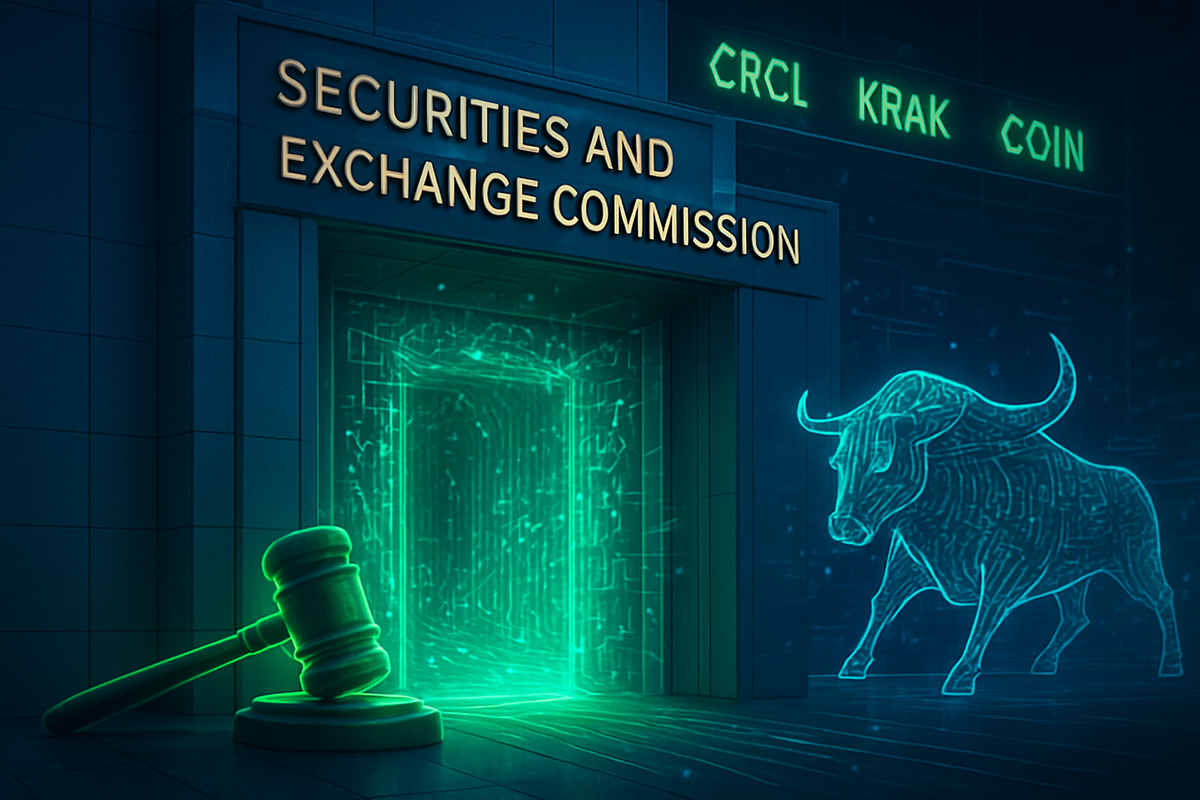
The departure of Gary Gensler and the subsequent appointment of Paul S. Atkins as Chair of the Securities and Exchange Commission (SEC) has signaled a fundamental transformation in U.S. financial regulation. As of February 11, 2026, the era of "regulation by enforcement" that characterized the previous administration has been replaced by a "common sense" framework designed to foster innovation and streamline capital formation. This shift has not only repaired the strained relationship between Washington and the digital asset industry but has also catalyzed a massive wave of public listings and new financial products that are reshaping Wall Street.
The immediate implications of this transition are felt most acutely in the fintech and cryptocurrency sectors, where years of legal uncertainty have given way to clear, statutory guidelines. With a 3-1 Republican majority on the Commission, the SEC has pivoted from litigation to collaboration, resulting in a surge of confidence among institutional investors. The regulatory "green light" has unlocked billions in dormant capital, as traditional financial institutions and digital native firms alike rush to capitalize on a more predictable and hospitable American market.
The Dawn of the Atkins Era
The road to this regulatory sea change began on January 20, 2025, when Gary Gensler resigned his post as SEC Chair, fulfilling a widely anticipated transition following the change in the U.S. presidency. After a brief interim leadership under Commissioner Mark Uyeda, Paul S. Atkins was confirmed by the Senate and sworn in as the 34th SEC Chair on April 21, 2025. Atkins, a former SEC Commissioner and a known advocate for market efficiency and technological progress, wasted little time in dismantling the most contentious policies of his predecessor.
A cornerstone of this transition was the rescission of Staff Accounting Bulletin No. 121 (SAB 121). In January 2025, the SEC issued SAB 122, which effectively nullified the requirement for banks to list customer-held digital assets as liabilities on their balance sheets. This single move removed a massive barrier for systemic banks to offer crypto custody services. Furthermore, the Atkins-led SEC worked alongside Congress to support the passage of the GENIUS Act and the CLARITY Act, which provided a federal framework for stablecoins and finally established clear jurisdictional lines between the SEC and the Commodity Futures Trading Commission (CFTC).
Market reaction to these developments has been overwhelmingly positive. The "Project Crypto" initiative, a joint task force launched in mid-2025, has already begun streamlining the registration process for digital asset intermediaries. Unlike the previous regime’s focus on broad enforcement actions, the new Cyber and Emerging Technologies Unit (CETU) has focused its resources on clear cases of fraud while providing "pathways to compliance" for legitimate projects. This shift in tone has been credited with the revitalized IPO pipeline currently dominating the financial news cycle in early 2026.
Winners and the New IPO Pipeline
The primary beneficiaries of this new regime have been established crypto-native firms that were previously locked in legal battles or regulatory limbo. Coinbase Global Inc. (NASDAQ: COIN) has seen its regulatory overhead decrease significantly as long-standing litigation regarding its staking and listing services reached favorable resolutions. Similarly, Robinhood Markets Inc. (NASDAQ: HOOD) has expanded its digital asset offerings aggressively, benefiting from the new clarity to provide a broader range of tokens to retail investors. The most significant "winner" in the IPO space has been Circle Internet Group (NYSE: CRCL), which successfully listed in June 2025, becoming the first major stablecoin issuer to trade on the NYSE and serving as a bellwether for the sector's maturity.
As we move through the first quarter of 2026, the focus has shifted to the impending listing of Payward Inc., better known as Kraken. Following a confidential S-1 filing in late 2025, Kraken is currently the most anticipated debut on the horizon, supported by its SPAC vehicle, KrakAcquisition (NASDAQ: KRAQU). Other winners include Gemini and Bullish, both of which completed their listings in late 2025, while eToro (NASDAQ: ETRO) has finally successfully navigated the U.S. public markets after years of delays. These companies are no longer viewed as outliers but as core components of a modernized financial system.
Conversely, the "losers" in this environment are those firms that thrived on the lack of U.S. clarity by operating in offshore, less-regulated jurisdictions. As the SEC makes the U.S. the most attractive destination for crypto capital, liquidity is migrating back to regulated domestic exchanges. Traditional financial laggards who failed to invest in digital asset infrastructure are also finding themselves at a competitive disadvantage, as peers like BNY Mellon and State Street Corp (NYSE: STT) leverage the repeal of SAB 121 to dominate the institutional custody market.
A Global Shift in Financial Regulation
The wider significance of this shift cannot be overstated. It represents the end of an era where digital assets were treated as a peripheral or inherently suspicious asset class. This event fits into a broader global trend of "regulatory competition," where nations are vying to host the next generation of financial infrastructure. By adopting a pro-innovation stance, the U.S. has effectively countered the progress made by the European Union’s MiCA framework, reclaiming its position as the global hub for fintech.
Historical precedents for this shift can be found in the early 2000s, when the SEC had to adapt to the rise of electronic trading and the internet. Much like then, the current transition marks a realization that the technology itself is neutral and that the role of the regulator is to ensure transparency and fairness without stifling growth. The ripple effects are already being felt in the ETF market, where the SEC's more open stance has led to the approval of a wide range of "altcoin" ETFs, including those for Solana and XRP, following the success of Bitcoin and Ethereum products.
The policy implications are also profound. The Atkins SEC has moved toward a "disclosure-based" model rather than a "merit-based" model for crypto. This means that as long as a project provides full and fair disclosure to investors, the SEC will not stand in the way of its listing or trading. This philosophy aligns with the broader push toward decentralization and the democratization of finance, moving away from the paternalistic approach that critics argued characterized the Gensler years.
The Road Ahead: 2026 and Beyond
Looking ahead, the short-term outlook is dominated by the completion of the "Great IPO Wave." With Kraken and potentially Grayscale Investments seeking to list by mid-2026, the market will soon have a diverse array of public proxies for the digital asset economy. We expect to see a series of strategic pivots from traditional fintech companies as they integrate blockchain technology more deeply into their core services, no longer fearing that such moves will trigger an SEC subpoena.
In the long term, the challenge will be maintaining the balance between innovation and investor protection. While the current "light touch" approach has spurred growth, any significant market failure or fraud could lead to calls for a return to stricter oversight. Market participants will need to adapt to a world where "compliance" is no longer a defense against an aggressive regulator, but a foundational requirement for sustainable growth. The emergence of a "unified ledger" concept—where traditional assets and digital assets trade on a single, blockchain-based infrastructure—is a scenario that is moving from theory to reality as we head into 2027.
A New Chapter for Wall Street
The transition from Gary Gensler to Paul Atkins marks a definitive turning point for the American financial landscape. The repeal of SAB 121 and the implementation of the GENIUS and CLARITY Acts have provided the structural integrity needed for a robust, regulated crypto ecosystem. Key takeaways for investors include the maturation of the crypto-equity sector, the massive entry of traditional banks into digital asset custody, and the return of the U.S. as the primary theater for financial innovation.
As we look toward the remainder of 2026, the market appears positioned for sustained growth, provided that the newly public companies can deliver on the high expectations set by their valuations. Investors should keep a close eye on the performance of the "Class of 2025" IPOs and the upcoming Kraken debut. While the regulatory headwinds have largely abated, the fundamental risks of the technology and the volatility of the underlying assets remain. The SEC is no longer the enemy of the industry, but its new role as a partner in progress will be tested by the next market cycle.
This content is intended for informational purposes only and is not financial advice