The Great Rotation: Small Caps Surge as Trump Trade 2.0 Redraws the Market Map
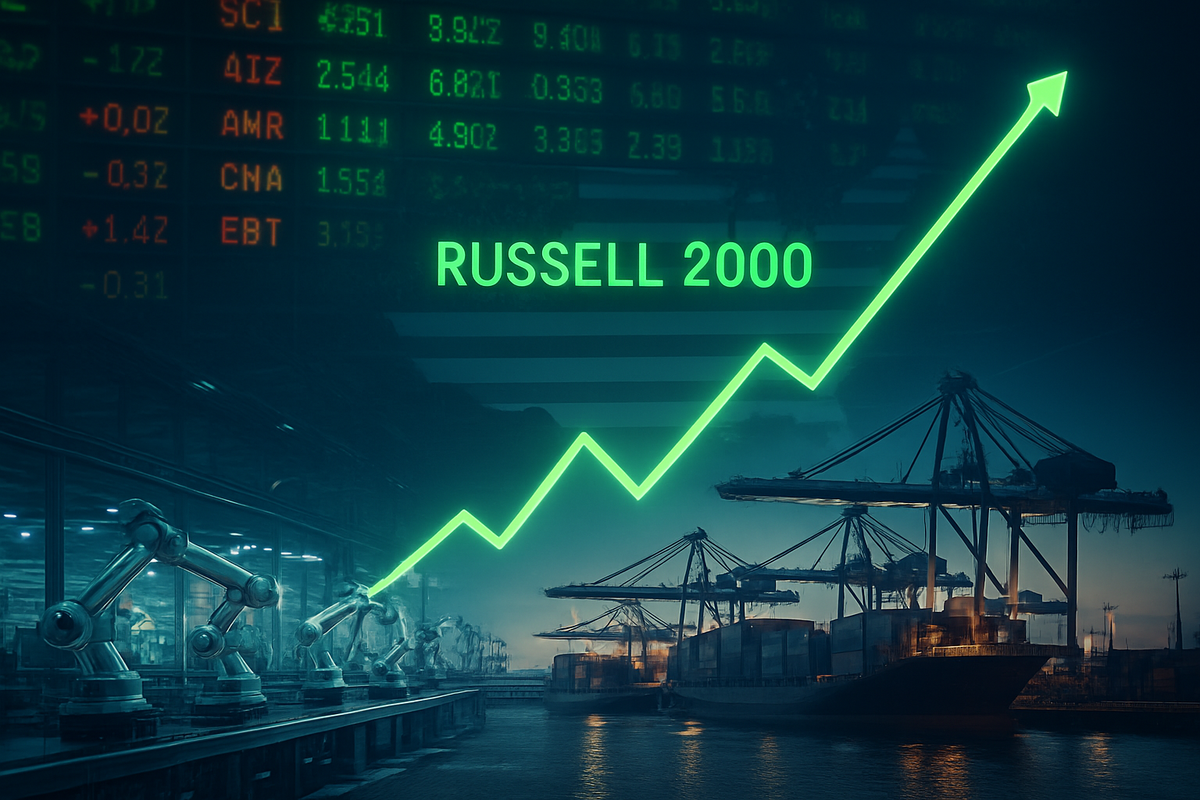
In a dramatic shift that has caught many Wall Street analysts off guard, the first two weeks of February 2026 have witnessed a historic "Great Rotation" within the equity markets. The Russell 2000 Index (IWM), which tracks domestic small-cap companies, has staged its most aggressive rally in decades, significantly outperforming the heavyweights of the S&P 500 (SPY). As of February 11, 2026, the small-cap index is up nearly 8.5% for the month, while the tech-heavy large-cap indices have largely traded sideways or moved lower, marking a stark divergence in investor sentiment.
This market upheaval is the direct result of the "Trump Trade 2.0"—a suite of aggressive "America First" policies that are creating a bifurcated economy. While domestic-focused small companies are thriving under the promise of deregulation and corporate tax cuts, multinational giants are grappling with the fallout from new trade wars, currency volatility, and a hawkish shift in monetary policy. For the first time in thirty years, the market’s center of gravity is shifting away from global dominance toward domestic resilience.
The "Warsh Shock" and the Fair Trade Act
The catalyst for this rotation was a series of rapid-fire policy announcements and personnel changes in late January and early February. The most significant of these was the nomination of Kevin Warsh to succeed Jerome Powell as Federal Reserve Chair. This "Warsh Shock" on January 30, 2026, immediately triggered an unwinding of "currency debasement" trades. Investors, anticipating a more hawkish Fed focused on a "hard money" agenda and a leaner balance sheet, sent the U.S. Dollar higher, which perversely helped small-cap firms with little international exposure while hurting multinationals whose foreign earnings are now worth less.
Following the Fed nomination, the legislative landscape shifted with the passage of the Fair Trade Act of 2026 through the U.S. House. This legislation granted the Executive Branch permanent authority to impose sweeping duties, moving the administration’s tariff agenda from temporary executive orders to codified law. Simultaneously, the One Big Beautiful Bill Act (OBBBA) began its rollout, offering deep tax cuts for domestic manufacturers. The combination of these factors led the Russell 2000 to a historic 15-session winning streak against the S&P 500, the longest such period of outperformance since 1996.
The timeline reached a fever pitch on February 6, when the administration announced an "Interim Agreement" with India that slashed tariffs on Indian imports in exchange for a massive $500 billion purchase commitment of U.S. energy and technology products. At the same time, the administration threatened a 50% tariff on Canadian aircraft, signaling that no neighbor or ally is exempt from the "Reciprocity" doctrine. This environment has forced portfolio managers to flee large-cap stocks that are vulnerable to supply chain disruptions and retaliatory tariffs, seeking refuge in the domestic sanctuary of small-cap stocks.
Winners and Losers of the New Economic Order
The "Trump Trade 2.0" has created clear tiers of performance. General Motors (NYSE: GM) has emerged as a standout winner in the large-cap space, surging over 8% in a single day as investors cheered the relaxation of environmental mandates and new protectionist barriers against foreign EV competition. Similarly, domestic steel giants like Nucor (NYSE: NUE) have seen their valuations swell as the Fair Trade Act effectively prices foreign competitors out of the American market. Within the small-cap space, Upbound Group (NASDAQ: UPBD) and UniFirst (NYSE: UNF) have been highlighted by analysts as "quality small-caps" that are benefiting from increased domestic demand and a more favorable tax environment.
Conversely, the casualties of this rotation have been concentrated among the market’s former darlings. UnitedHealth Group (NYSE: UNH) and Humana (NYSE: HUM) saw their shares plummet between 13% and 20% in early February following a "Medicare Advantage rate shock" as the administration pivoted toward a more aggressive cost-cutting stance on government healthcare programs. Even the "Magnificent 7" are not immune; Amazon (NASDAQ: AMZN) fell nearly 6% on February 6 after investors balked at its massive $200 billion AI capital expenditure plan, which is now viewed as high-risk given the rising cost of imported semiconductors and components.
Tesla (NASDAQ: TSLA), once the poster child for the green energy transition, has also struggled, significantly underperforming the broader index. The withdrawal of federal EV tax credits and the escalation of trade tensions with China—a key market and manufacturing hub for the company—have cooled investor enthusiasm. Meanwhile, companies with weak cash flows or high exposure to the cooling virtual real estate market, such as eXp World Holdings (NASDAQ: EXPI), have found themselves at the bottom of the Russell 2000 rankings, as the new market regime favors "real world" industrial and service businesses over speculative tech.
A Structural Shift in Global Trade
The current market dynamic is not just a temporary spike in small-cap popularity; it represents a fundamental restructuring of the global trading system. The shift from a 3% average effective tariff rate in 2024 to an estimated 18% in 2026 has effectively ended the era of "hyper-globalization." This event fits into a broader trend of "reshoring," where companies are prioritizing the security of their supply chains over the efficiency of offshore labor. For competitors and partners, this means that the "cost of doing business" in America has changed, requiring a move toward localized manufacturing.
Historically, this period draws parallels to the mid-1990s, but with a protectionist twist. While the 1990s were characterized by the expansion of trade via NAFTA and the WTO, the 2026 environment is its mirror image. The regulatory implications are profound: the Executive Branch now holds more power over trade policy than at any point since the 1930s. This has forced a pivot in corporate strategy, as multinational firms must now decide whether to "localize" their production within U.S. borders or face punitive duties that could erase their profit margins.
The ripple effects are also being felt in the commodities market. As the "Warsh Shock" signaled a move toward a stronger dollar and "hard money," gold and silver faced a flash crash in early February, with silver dropping as much as 30% in a single session. This move away from "inflation hedge" assets into domestic equity reflects a belief that the U.S. economy can generate growth through industrial policy rather than monetary expansion, a significant departure from the post-2008 economic consensus.
The Path Forward: Volatility and Adaptation
Looking ahead, the short-term outlook remains bullish for domestic small caps, but long-term challenges loom. The rapid rise in the U.S. Dollar and the potential for retaliatory tariffs from the EU and China could eventually dampen the very domestic demand that small caps rely on. However, in the immediate future, market participants expect a continued influx of capital into the Russell 2000 as the valuation gap between small and large caps remains historically wide. The "Great Rotation" is likely only in its middle innings.
For multinational corporations, the strategic pivot is already underway. We should expect to see a wave of domestic M&A activity as large-cap firms seek to acquire small, domestic-centric companies to bolster their "Made in America" credentials and mitigate tariff risks. The challenge will be managing the increased cost of capital if the Warsh-led Fed continues its hawkish trajectory. Scenario planning for "full-scale trade reciprocity" is no longer an academic exercise for C-suite executives; it is a survival requirement.
Navigating the New Frontier
The outperformance of small-cap stocks in February 2026 marks a watershed moment for the American financial markets. The key takeaway for investors is that the old playbook—blindly holding large-cap tech and global multinationals—is being rewritten. The combination of the Fair Trade Act, the OBBBA tax cuts, and a hawkish Federal Reserve has created a "perfect storm" that favors the domestic over the global, and the industrial over the virtual.
As we move forward, the market will likely remain sensitive to every new tariff announcement and "reciprocity" deal. Investors should keep a close eye on the implementation of the OBBBA tax provisions and the first official statements from the Fed under the new leadership in May. While the Russell 2000 has taken the lead, the lasting impact will be determined by whether these domestic-focused companies can translate their protectionist advantages into sustainable long-term earnings growth.
This content is intended for informational purposes only and is not financial advice