The Great Recalibration: Tech Reclaims the Throne as Santa Claus Rally Ignites
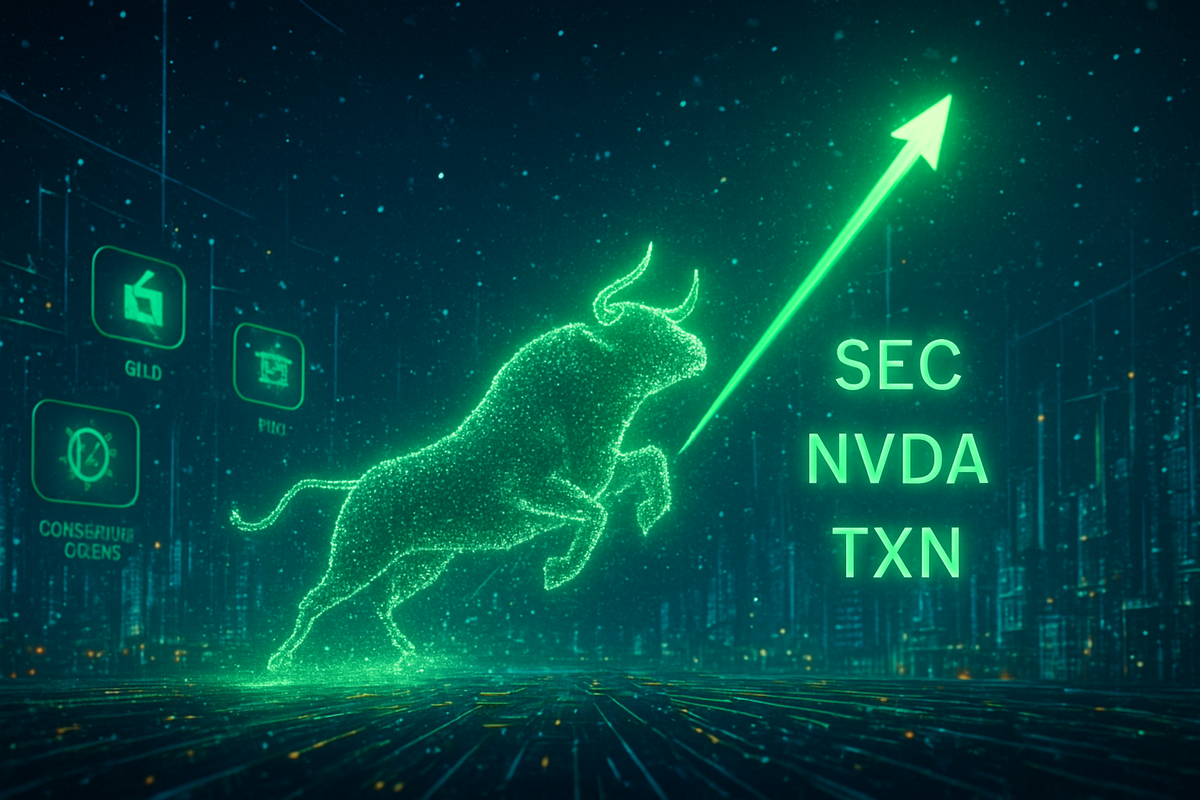
As the final trading days of 2025 approach, the long-anticipated "Santa Claus Rally" has arrived with a vengeance, but not in the way many expected. After a jittery start to December that saw investors flee to the safety of "defensive" sectors like Utilities and Consumer Staples, the market is witnessing a massive, high-velocity rotation back into high-growth technology and artificial intelligence (AI) stocks. This pivot, occurring in the shadow of a record-breaking $7.1 trillion "Triple Witching" expiration on December 19, 2025, marks a definitive end to the brief defensive flirtation and re-establishes tech as the primary engine of market growth heading into 2026.
The implications of this shift are immediate and profound. Institutional capital is aggressively repositioning, favoring "quality growth" over safety, as cooling inflation data and a more accommodative Federal Reserve provide the necessary "green light" for risk-taking. For the broader market, this means the S&P 500 (NYSEARCA: SPY) and the Nasdaq 100 (NASDAQ: QQQ) are once again being spearheaded by a handful of AI titans, even as the broader economic backdrop remains complex following the resolution of a historic 43-day federal government shutdown earlier this quarter.
The Pivot Point: From Defensive Safety to AI Aggression
The timeline leading to this week’s dramatic rotation began in early December, when a wave of "AI exhaustion" hit the markets. Following a year of meteoric gains, high-flyers like NVIDIA (NASDAQ: NVDA) and Broadcom (NASDAQ: AVGO) faced a mid-month "margin anxiety" correction. This was exacerbated by a disappointing earnings report from Oracle (NYSE: ORCL) on December 12, which sparked fears that the massive capital expenditures (capex) being poured into AI infrastructure were not yet translating into bottom-line software profits. During this period, defensive stalwarts such as Procter & Gamble (NYSE: PG) and NextEra Energy (NYSE: NEE) saw unusual inflows as investors sought a "safe harbor" from tech volatility.
However, the tide turned decisively on December 18, 2025. The catalyst was a powerhouse earnings report from Micron Technology (NASDAQ: MU), which posted a 56% year-over-year revenue surge, totaling $13.6 billion. Micron’s management highlighted an insatiable demand for high-bandwidth memory (HBM) chips, effectively debunking the "AI bubble" narrative and reigniting the trade for the entire semiconductor sector. Coupled with a Consumer Price Index (CPI) report that showed core inflation cooling to 2.6%—the lowest level since 2021—the stage was set for the current "flight to growth."
The Federal Reserve’s December 10 decision to cut interest rates by 25 basis points to a range of 3.50%–3.75% acted as the foundational support for this move. While the FOMC’s "dot plot" suggested a cautious approach for 2026, the immediate reduction in the cost of capital has emboldened growth-oriented fund managers. On this "Triple Witching" Friday, the sheer volume of expiring options and futures has provided the liquidity necessary for institutions to execute massive buy orders in mega-cap tech, effectively forcing a "short squeeze" on those who had hedged for a year-end downturn.
Winners and Losers in the Year-End Shuffle
The primary beneficiaries of this rotation are the "AI Enablers" and the "Magnificent Seven" members who have demonstrated tangible AI monetization. NVIDIA (NASDAQ: NVDA) has reclaimed its role as the market’s bellwether; despite a brief December dip, it remains up approximately 35% year-to-date, with analysts at major firms pointing to its "Rubin" architecture as the next multi-billion dollar catalyst. Microsoft (NASDAQ: MSFT) has also seen a late-December resurgence, with its Azure cloud growth exceeding 40%, proving that its multi-billion dollar partnership with OpenAI is yielding real-world dividends.
Apple (NASDAQ: AAPL) has emerged as a surprising late-year winner, successfully navigating recent tariff concerns and seeing robust demand for the iPhone 17. After reaching a historic $4 trillion market valuation in October, Apple’s stock had cooled, but the current rotation has brought it back to near-record highs as investors prize its massive cash flow and buyback programs. Conversely, the "defensive" winners of early December are now seeing capital outflows. Consumer Staples giants like Procter & Gamble (NYSE: PG), while still considered "dividend legends," are being treated as "sources of funds" as traders rotate into higher-beta tech names to capture the final percentage points of the year-end rally.
The semiconductor sector remains the most polarized battleground. While Micron Technology (NASDAQ: MU) and NVIDIA are surging, Broadcom (NASDAQ: AVGO) is still working to recover from an 11% mid-month plunge related to margin concerns. This dispersion highlights a new market reality: in late 2025, investors are no longer buying "tech" as a monolith; they are surgically selecting companies that can prove margin expansion in an increasingly competitive AI landscape.
The Macro Backdrop: Stargate and the New Fiscal Reality
This sector rotation is not happening in a vacuum; it is deeply intertwined with broader industrial and geopolitical trends. A major tailwind for the tech sector in late 2025 has been the announcement of the "Stargate" project—a $500 billion public-private partnership aimed at building the world’s most advanced AI infrastructure on U.S. soil. This initiative has provided a fundamental backstop for companies involved in data center construction, power management, and advanced networking, effectively turning the "AI trade" into a multi-year structural shift rather than a cyclical fad.
Historically, this year-end rotation mirrors the "Great Rotation" of late 1999 or 2020, where a period of defensive consolidation was followed by a speculative "melt-up" in growth. However, the 2025 version is tempered by a more disciplined Federal Reserve and a fiscal environment still recovering from the 43-day government shutdown. The passage of the "One Big Beautiful Bill Act" (OBBBA) in late November provided the fiscal stability needed for this rally, but it also raised questions about long-term debt sustainability—a concern that may come to the forefront in early 2026.
Furthermore, the Utilities sector (XLU) has broken its traditional "defensive" mold. Led by NextEra Energy (NYSE: NEE), the sector has become an "AI adjacent" play due to the massive electricity demands of new data centers. This has created a unique scenario where "safety" stocks are being revalued as "growth" stocks, further complicating the traditional definitions of sector rotation and providing a hedge for investors who want AI exposure without the extreme volatility of pure-play semiconductors.
Looking Ahead: The 2026 Strategic Pivot
As we look toward the first quarter of 2026, the current rotation into tech suggests that the market is "pulling forward" expectations of a soft landing and continued AI dominance. However, the limited number of projected rate cuts in the Fed’s latest "dot plot" means that the "easy money" era is not returning. Companies will need to rely on genuine earnings growth rather than multiple expansion. We expect a strategic pivot toward "AI software and services" in the coming months, as the focus shifts from building the hardware (the "shovels") to utilizing the technology to drive productivity (the "gold").
Market participants should also be wary of a potential "January Effect" reversal. If the Santa Claus Rally pushes valuations too far into overbought territory, the first weeks of 2026 could see a sharp "mean reversion" as tax-loss harvesting ends and new institutional allocations begin. The key challenge for tech leaders like Alphabet (NASDAQ: GOOGL) and Amazon (NASDAQ: AMZN) will be maintaining high double-digit growth rates in their cloud divisions while managing the escalating costs of AI research and development.
Summary and Investor Outlook
The late-2025 sector rotation is a testament to the enduring power of the AI narrative and the resilience of the U.S. consumer. The shift from defensive safety back to high-growth tech signifies a market that is looking past immediate macro hurdles—such as the recent government shutdown and elevated interest rates—and focusing on the long-term transformative potential of the "Intelligence Age."
Key takeaways for investors as they close out the year include:
- The "Santa Rally" is tech-led: Growth is currently outperforming value as the year-end liquidity surge favors high-beta names.
- Quality Matters: Dispersion within the tech sector is high; focus on companies with clear AI monetization and healthy margins like Microsoft and NVIDIA.
- Defensives are "Sources of Funds": Traditional safe havens are seeing outflows, but Utilities remain a structural growth play due to power demand.
- Watch the Fed: While the 25 bps cut was welcomed, the "hawkish cut" tone suggests a slower easing cycle in 2026 than many had hoped.
As the clock ticks down on 2025, the market’s message is clear: the path of least resistance is higher, and it is paved with silicon.
This content is intended for informational purposes only and is not financial advice.