The Great Re-Ordering: How 2024’s $250 Billion Consolidation Wave Redefined Global Energy
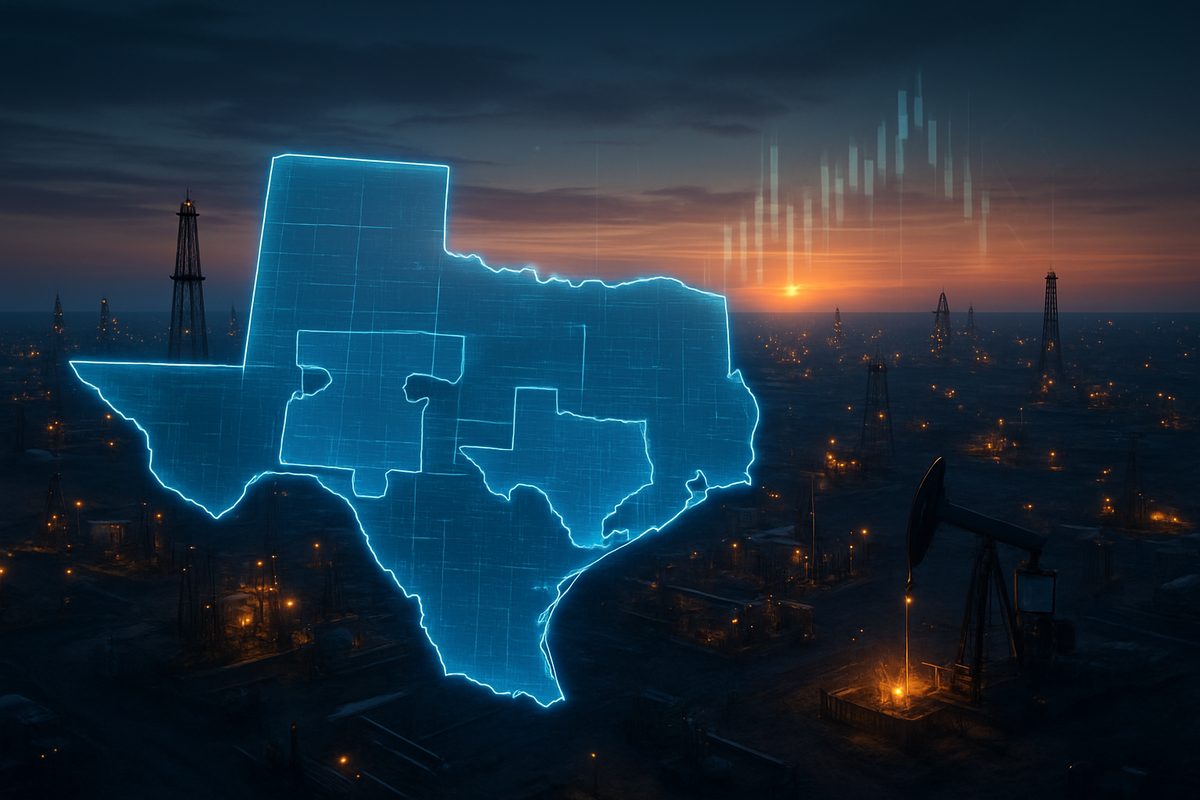
As we look back from the vantage point of early 2026, the landscape of the global energy sector has been fundamentally altered by a historic $250 billion wave of consolidation that crested in 2024. In a whirlwind 12-month span, the industry witnessed ten "megadeals" valued at over $5 billion each, signaling a decisive end to the era of fragmented shale growth and the beginning of a "Super-Major" dominated Permian Basin. This strategic land grab was not merely about increasing production volume; it was a desperate race for inventory depth and operational scale as the industry’s "tier-one" drilling locations began to dry up.
The immediate implications of this consolidation have been profound. By early 2024, the "Big Oil" narrative shifted from organic exploration to aggressive M&A, as companies utilized high stock prices and flush balance sheets to buy guaranteed production. This consolidation has led to a more disciplined, albeit less competitive, market where a handful of massive entities now control the lion’s share of U.S. oil and gas output. For the public markets, it marked a transition of the energy sector into a "value" play, where efficiency and shareholder returns outweighed the "drill-at-any-cost" mentality of the previous decade.
A Timeline of the Titans: The Year the Permian Was Carved Up
The consolidation super-cycle was ignited in late 2023 when ExxonMobil (NYSE:XOM) announced its seismic $64.5 billion acquisition of Pioneer Natural Resources (formerly NYSE:PXD). This deal, which officially closed in May 2024, set the pace for the industry, merging Exxon’s technological prowess with Pioneer’s unmatched acreage in the Midland Basin. Hard on its heels, Chevron (NYSE:CVX) announced a $60 billion bid for Hess Corporation (NYSE:HES), a deal that would eventually face a year-long delay due to a complex arbitration battle over assets in Guyana before finally concluding in mid-2025.
By the first quarter of 2024, the momentum reached a fever pitch. In February, Diamondback Energy (NASDAQ:FANG) stunned the market by winning the bid for the last great private Permian operator, Endeavor Energy Resources, in a $26 billion deal. This was followed by ConocoPhillips (NYSE:COP) acquiring Marathon Oil (formerly NYSE:MRO) for $22.5 billion, and Occidental Petroleum (NYSE:OXY) swallowing CrownRock L.P. for $12 billion. Even the natural gas side of the ledger saw massive moves, with Chesapeake Energy and Southwestern Energy merging in a $7.4 billion deal to create the nation’s largest gas producer, now known as Expand Energy (NASDAQ:EXE).
Market reactions during this period were a mix of awe and caution. Initially, analysts feared that the heavy premiums paid for these assets would erode the "capital discipline" that had made energy stocks attractive again. However, the use of all-stock deal structures largely mitigated these fears, allowing companies to scale up without bloating their debt-to-equity ratios. The Federal Trade Commission (FTC) provided the most significant speed bumps, intensifying its scrutiny of these "oil-on-oil" mergers, which led to delays for several deals, including the Occidental and Chesapeake transactions, as regulators looked for signs of anti-competitive behavior.
Winners, Losers, and the Vanishing Independent
In the wake of this consolidation, the "Winners" are undoubtedly the Super-Majors who successfully locked in 15 to 20 years of low-cost drilling inventory. ExxonMobil and Chevron have emerged with diversified, high-margin portfolios that can remain profitable even if oil prices dip below $40 per barrel. Diamondback Energy also stands as a primary victor, having transformed from a mid-cap player into a Permian heavyweight capable of competing with the global majors on efficiency and cost.
However, the "Losers" in this new paradigm include the smaller, independent producers that now find themselves squeezed out of the best acreage and facing higher costs for services. These smaller players no longer have the scale to negotiate favorable terms with oilfield service providers like SLB (NYSE:SLB) or Halliburton (NYSE:HAL). Furthermore, the pool of potential acquisition targets has shrunk so significantly that the remaining small-cap operators are finding their "exit strategies" limited, leading to a valuation gap between the "Haves" and the "Have-Nots" in the energy space.
Investors have had to adjust as well. While the megadeals have provided stability and robust dividends, they have also reduced the "speculative upside" that used to characterize the shale sector. The sector has become more "utility-like," rewarding long-term holders with buybacks rather than the explosive growth seen during the 2010s. For the public, the consolidation has meant a more stable, albeit perhaps less price-sensitive, domestic energy industry, which has implications for everything from gasoline prices to national energy security.
Shifting Tectonic Plates: Global Strategy and Policy
The significance of the 2024 wave extends far beyond the borders of West Texas. This consolidation fits into a broader global trend of "energy security over energy transition." While many of these companies continue to invest in carbon capture and hydrogen, the sheer volume of capital deployed into fossil fuel M&A in 2024 signaled a clear bet: oil and gas will remain the bedrock of global energy for decades to come. By consolidating the Permian, U.S. producers have created a "Fortress America" of energy production that can better withstand volatility from OPEC+ or geopolitical conflicts in Eastern Europe and the Middle East.
The ripple effects have also forced international competitors to react. European giants like Shell (NYSE:SHEL) and BP (NYSE:BP) have had to re-evaluate their strategies, moving away from aggressive renewables targets to refocus on their high-margin oil and gas cores to keep pace with the sheer scale of their American rivals. This has created a widening gap between U.S. energy policy, which remains relatively supportive of production, and European policy, which continues to emphasize decarbonization, even at the cost of domestic energy security.
Historically, this era will likely be compared to the late 1990s, when low oil prices led to the creation of the "Super-Majors" through mergers like Exxon-Mobil and BP-Amoco. However, the 2024 wave was different in its motivation; it wasn't driven by low prices, but by the physical exhaustion of high-quality shale "sweet spots." This realization—that the shale revolution has reached its middle-age—has forced the industry into a survival-of-the-fittest marathon where only those with the largest contiguous land positions can thrive.
Looking Ahead: The Integration Phase and the Gas Frontier
As we move through 2026, the industry has entered what analysts call the "Integration and Optimization" phase. The frantic buying has stopped, and the focus has shifted to proving that these massive mergers can actually deliver the promised "synergies." ExxonMobil and Chevron are currently under intense pressure to show that their proprietary technologies can extract more value from their new Pioneer and Hess assets than the original owners could. Any failure to meet these operational targets could lead to a significant rerating of their stocks.
The next frontier for M&A is likely the natural gas and midstream sectors. With the U.S. poised to become the world’s leading exporter of Liquefied Natural Gas (LNG), the race is on to control the pipelines and export terminals. We may see more "vertical integration" deals, similar to EQT Corporation (NYSE:EQT) re-acquiring Equitrans Midstream, as producers seek to control their product from the wellhead all the way to the international tanker.
Challenges remain, particularly on the regulatory front. If the current trend of consolidation continues into the midstream and service sectors, we can expect even more aggressive intervention from antitrust authorities. Additionally, the industry must navigate the "Energy Trilemma": balancing security, affordability, and sustainability. While 2024 was about scale and security, 2026 and beyond will be about the industry’s ability to maintain its "social license to operate" in an increasingly climate-conscious world.
The Bottom Line: A More Resilient, More Concentrated Industry
The 2024 consolidation wave was a watershed moment for the energy markets. It effectively signaled the "end of the beginning" for the U.S. shale era, moving the industry from a period of chaotic, decentralized growth into a mature phase of corporate concentration and operational discipline. The ten megadeals that defined early 2024 have created a new class of energy titans that are better capitalized and more resilient to price shocks than ever before.
Moving forward, the market will be defined by "Operational Alpha"—the ability of these giants to use their scale to drive down costs and maximize recovery. Investors should keep a close eye on the quarterly production reports from the newly enlarged ExxonMobil, Chevron, and Diamondback Energy. The key metric to watch is no longer just "total production," but "free cash flow per barrel." In this new era, the winners will be those who can most efficiently harvest the remaining riches of the Permian while successfully pivoting toward the global LNG opportunity. The 2024 wave may be over, but its impact will be felt on every energy bill and in every portfolio for the next decade.
This content is intended for informational purposes only and is not financial advice.