The Great Pause: US Retail Stagnation Throws ‘Soft Landing’ Into Question
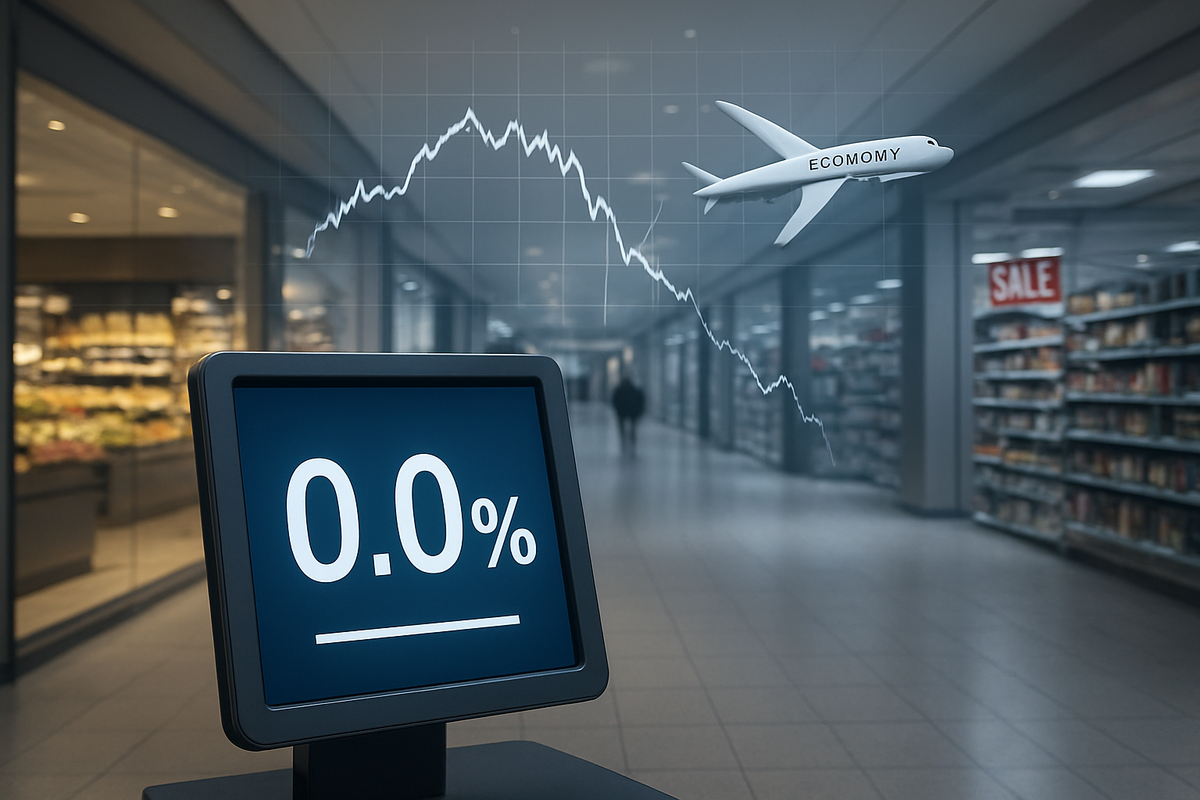
The American consumer, long considered the indomitable engine of the global economy, has finally hit a wall. On February 10, 2026, the Department of Commerce released a highly anticipated report revealing that retail sales in the United States were flat—0.0% growth—for the final month of 2025. This stagnation, arriving after years of inflation-defying resilience, has sent shockwaves through Wall Street and forced a sharp re-evaluation of the "soft landing" narrative that had dominated economic forecasts for the past year.
The sudden halt in spending growth is more than just a statistical anomaly; it represents a psychological shift among households now grappling with a "K-shaped" reality. While the wealthiest segments continue to spend, the broader middle class and lower-income brackets appear to be "tapped out," exhausted by persistent core inflation and the highest household debt levels in history. This data has immediately complicated the Federal Reserve's path, turning what was once a confident march toward interest rate cuts into a high-stakes guessing game.
A Holiday Season Without the Cheer
The 0.0% growth figure for December 2025—delayed until this week due to a chaotic 43-day federal government shutdown that paralyzed Washington in late 2025—was a significant miss against the 0.4% expansion analysts had projected. The breakdown of the data paints a grim picture of discretionary spending. Furniture stores saw a 0.9% decline, clothing retailers dropped 0.7%, and electronics fell 0.4%. The only sectors keeping the headline figure from dipping into negative territory were essential goods, such as groceries and building materials.
The timeline leading to this stagnation is rooted in the "shutdown hangover." The 43-day government closure disrupted holiday momentum, delayed paychecks for millions of federal employees and contractors, and severely dented consumer confidence at the most critical time of the year. Early estimates for January 2026, also released this week, suggest the slump is deepening, with a further 0.8% decline in overall retail sales. The National Retail Federation (NRF) attempted to strike a more optimistic tone, noting a slight 0.2% gain when excluding volatile sectors like autos and gas, but the market's initial reaction was one of swift retreat.
Retail Giants: A Tale of Two Consumers
The bifurcation of the American consumer is perhaps most visible in the diverging fortunes of the nation's largest retailers. Walmart (NYSE:WMT) has emerged as the primary beneficiary of the "trade-down" trend. In early February, Walmart’s stock reached all-time highs above $129 per share, as the company reported a robust 4.4% increase in same-store sales. Walmart has successfully positioned itself as a sanctuary for high-income shoppers who are now seeking relief from grocery inflation, effectively capturing market share from more expensive specialty grocers.
In contrast, Target (NYSE:TGT) continues to struggle in what analysts are calling a "discretionary doom loop." Target, which relies more heavily on non-essential goods like home decor and apparel, has faced declining comparable sales and significant margin pressure. Meanwhile, Amazon (NASDAQ:AMZN) reported a massive revenue beat of $213.4 billion for the fourth quarter, but its stock slid nearly 11% following the report. Investors were spooked by a staggering $200 billion capital expenditure announcement for 2026—aimed at AI infrastructure—coupled with shrinking margins in its core retail business, suggesting that even the e-commerce giant is feeling the pinch of a more price-sensitive consumer.
The Cracks in the Soft Landing Narrative
This retail stagnation is a direct challenge to the "soft landing" scenario, where inflation returns to the 2% target without a significant rise in unemployment or a contraction in GDP. For much of 2025, the economy appeared to be defying gravity, but the latest figures suggest that the "no landing" growth scenario was a mirage fueled by the last vestiges of pandemic-era savings. As of early 2026, those savings have vanished, replaced by a record $18.8 trillion in household debt. Credit card balances alone have hit $1.28 trillion, with delinquency rates on 90-day past-due accounts climbing to 2.57%.
The wider significance of this shift involves the Federal Reserve’s pending leadership transition. With President Trump’s nomination of Kevin Warsh to succeed Jerome Powell in May 2026, the market is bracing for a new "markets-first" approach. While Warsh is historically viewed as an inflation hawk, the stagnation in retail sales is placing immense pressure on the Fed to pivot. Historical precedents, such as the late 1990s and 2007, show that when retail sales flatline while debt levels are at record highs, a "soft landing" often transitions into a hard one.
The Road to June: What Comes Next
In the short term, the market has already moved its expectations for the first interest rate cut from March to June 2026. The Federal Reserve remains in a "hawkish pause," fearful that cutting rates too early could reignite inflation, yet wary that waiting too long could trigger a deep recession. The immediate challenge for retailers will be a shift in corporate strategy toward "extreme value." We expect to see more aggressive discounting from companies like Dollar General (NYSE:DG) as they compete for the dwindling discretionary dollars of the American household.
Looking further ahead, the potential for a strategic pivot is high. If the February and March retail data continue the downward trend seen in January, the Fed may be forced to accelerate its easing cycle regardless of the inflation data. This creates a volatile environment for investors, where "bad news" for the economy might once again become "good news" for the stock market, provided it guarantees a more accommodative central bank. However, the fundamental health of the consumer cannot be ignored indefinitely; a pivot in policy will only be effective if the consumer still has the capacity to borrow and spend.
Wrap-Up: An Economy at a Crossroads
The 0.0% retail growth reported this week marks a definitive end to the post-pandemic spending binge. The key takeaway for investors is that the consumer is no longer a monolithic force of growth; the market has split into those who have assets and those who have debt. As the federal government finds its footing after the shutdown and the Federal Reserve prepares for a change in leadership, the stability of the US economy rests on a knife's edge.
Moving forward, the "soft landing" is no longer a guarantee but a goal that is looking increasingly difficult to achieve. Investors should keep a close watch on credit card delinquency rates and the upcoming March jobs report. If the labor market begins to mirror the stagnation seen in retail, the narrative will shift from "cooling" to "contraction" very quickly. For now, the "Great Pause" in retail serves as a sobering reminder that even the most resilient economies have their limits.
This content is intended for informational purposes only and is not financial advice