The Great Inventory Whipsaw: How 2025’s Logistics Chaos Redefined Retail Profitability
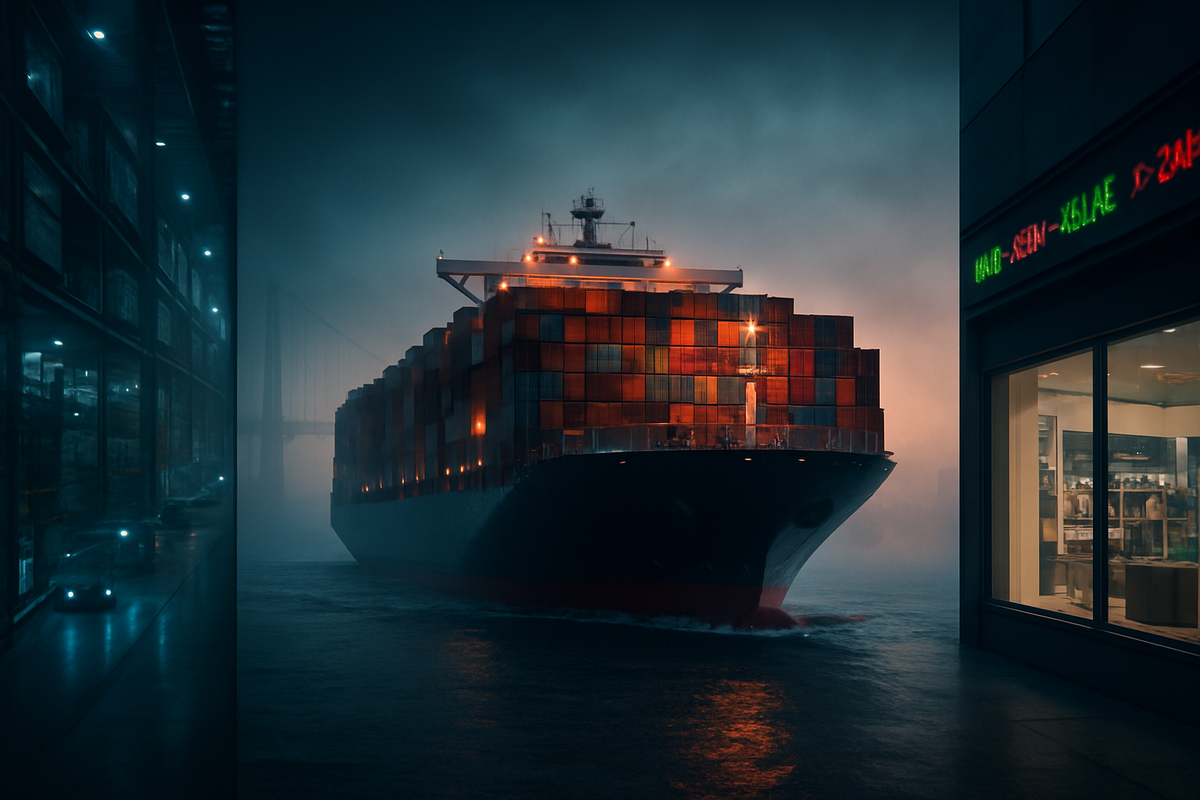
As of December 22, 2025, the global shipping industry is emerging from one of its most volatile years in a decade. What began as a frantic scramble to secure inventory amid Red Sea detours and looming tariff hikes has ended in a dramatic "freight rate collapse," leaving the retail sector sharply divided. While some retail giants have leveraged the chaos to widen their competitive moats, others are grappling with a "double whammy" of high-cost inventory gluts and late-year port disruptions that have decimated holiday margins.
The immediate implications are stark: the era of "Just-in-Time" logistics has been decisively replaced by a "Just-in-Case" model that carries significantly higher carrying costs. As 2025 draws to a close, the market is witnessing a massive divergence in the performance of major retail stocks, driven not just by consumer demand, but by the sheer efficiency—or lack thereof—of their global supply chains.
A Year of Chokepoints and Capacity Surges
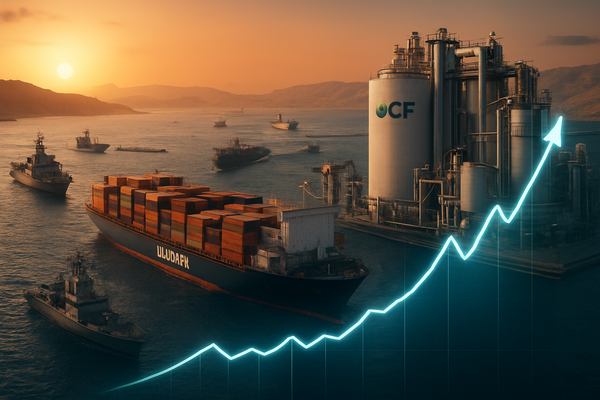
The timeline of 2025 was defined by a series of cascading disruptions. The year opened with the Red Sea crisis still in full swing, forcing the majority of Asia-to-Europe and Asia-to-U.S. East Coast traffic to bypass the Suez Canal in favor of the Cape of Good Hope. This added 10 to 14 days to transit times and initially sent freight rates soaring to over $6,000 per 40-foot container (FEU). However, the narrative shifted in October 2025 when a tentative ceasefire in regional conflicts led to a "cautious de-escalation." By mid-December, Maersk (CPH: MAERSK-B) and CMA CGM began testing the waters with a handful of vessels navigating the Bab el-Mandeb Strait for the first time in two years, though war-risk insurance premiums remain a stubborn cost barrier.
Simultaneously, the Panama Canal, which had been crippled by drought throughout 2024, finally declared an "all-clear" in July 2025 as Gatun Lake levels stabilized at 86.6 feet. This allowed the Panama Canal Authority to restore transits to a near-normal 36 ships per day by December. Yet, just as these primary arteries began to clear, a "strike wave" paralyzed Northern Europe. In October and November 2025, labor disputes at the ports of Rotterdam, Antwerp, and Hamburg created a backlog of over 100 vessels, pushing container dwell times to eight days and forcing retailers to scramble for alternative routes during the critical Golden Quarter.
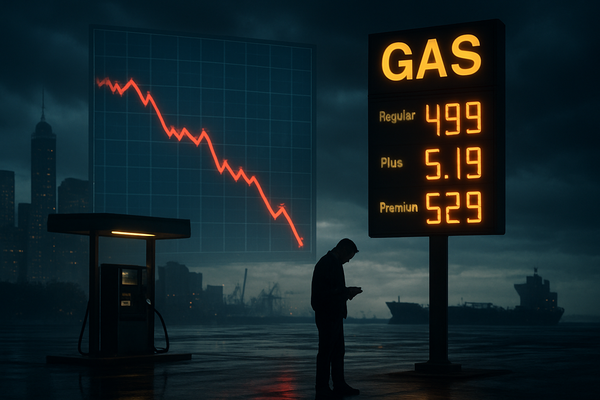
The most significant market reaction, however, has been the collapse of freight rates in the final weeks of 2025. A massive influx of new vessel capacity—totaling over 2.5 million TEUs (Twenty-foot Equivalent Units)—hit the water this year. This oversupply, combined with the cooling of "front-loading" activity, has sent the Drewry World Container Index plummeting to approximately $1,800 per FEU this December, a staggering 35% decrease year-over-year.
Winners and Losers: The Retail Margin Divide
The financial impact of this volatility has created a clear hierarchy of winners and losers. Walmart Inc. (NYSE: WMT) has emerged as the undisputed leader of 2025, with its stock climbing 30% year-to-date. By utilizing AI-driven supply chain automation and its massive scale to negotiate lower long-term contract rates, Walmart successfully navigated the "tariff whipsaw." The company proactively front-loaded its holiday inventory in early 2025 but did so with enough precision to avoid the warehouse gluts that plagued its competitors.
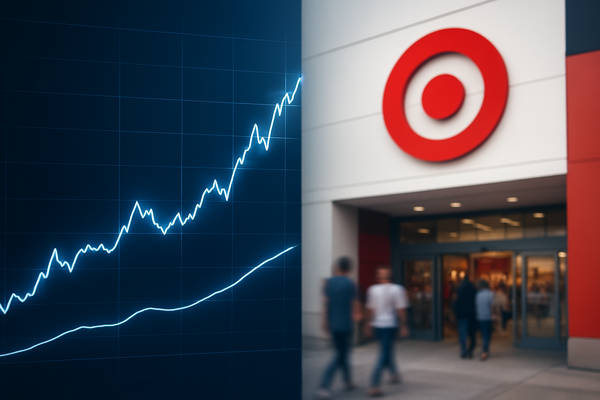
In contrast, Target Corporation (NYSE: TGT) has seen its stock tumble nearly 25% this year. Target was hit hard by the "inventory whipsaw"—the company aggressively over-ordered inventory in Q1 to get ahead of tariffs, only to find itself sitting on high-cost goods just as shipping rates began to crash. Furthermore, Target was disproportionately affected by the European port strikes in Q4, citing increased logistics costs and stockouts of holiday goods during its recent earnings calls.
Amazon.com, Inc. (NASDAQ: AMZN) has maintained a strong position, with shares up 18%. Its regionalized fulfillment model, which places goods closer to the end consumer, significantly lowered its "cost to serve" and buffered it from the worst of the international shipping delays. Meanwhile, Home Depot (NYSE: HD) remained stable, benefiting from a diversified sourcing strategy where over 50% of its products are U.S.-based, shielding it from the volatility of trans-Pacific freight. Costco Wholesale Corporation (NASDAQ: COST), however, has lagged the broader market, as investors penalized its low-margin model which struggled to absorb the sudden spikes in insurance and labor-related surcharges throughout the year.
The Significance of the "Polycrisis"
The events of 2025 represent a fundamental shift in how global trade is perceived. This "polycrisis"—a blend of geopolitical conflict, climate-driven canal restrictions, and labor unrest—has accelerated the trend toward "nearshoring" and "friend-shoring." Retailers are no longer looking for the cheapest shipping route; they are looking for the most resilient one. This has led to a surge in investment in Mexican and Southeast Asian manufacturing hubs, reducing the reliance on the traditional China-to-U.S. West Coast corridor.
Furthermore, the regulatory landscape is shifting. The European port strikes were partially driven by disputes over the implementation of the EU’s new green shipping mandates and automation. As ports move toward carbon neutrality and automated gantry cranes, labor tensions are expected to remain a recurring theme. Historically, these disruptions were seen as "black swan" events; in 2025, they have become a standard line item in the risk management playbooks of every Fortune 500 retailer.
The current situation also mirrors the "bullwhip effect" seen during the post-pandemic recovery, but with a twist. While 2021 was defined by a shortage of goods, 2025 has been defined by a surplus of shipping capacity and a mismatch in inventory timing. This has forced a regulatory focus on "port fluidity," with the U.S. and EU governments exploring new frameworks to prevent labor disputes from crippling national economies.
What Lies Ahead for 2026
Looking into the first half of 2026, the primary challenge for the shipping industry will shift from scarcity to "low-rate saturation." The massive oversupply of container ships is expected to keep freight rates depressed, which could provide a margin tailwind for retailers who managed to keep their balance sheets clean. However, the potential for new trade barriers and the ongoing transition back to the Suez Canal will keep logistics managers on edge.
Strategic pivots are already underway. We expect to see a "great consolidation" in the shipping industry as smaller carriers struggle to remain profitable in a low-rate environment. For retailers, the focus will shift to "logistical agility"—the ability to reroute cargo in real-time using satellite tracking and AI. Companies that cannot adapt to these rapid shifts in port availability and labor status will likely continue to see their margins eroded by "spot market" desperation.
Market opportunities may emerge in the logistics technology sector. Companies providing end-to-end visibility and automated customs brokerage are seeing record venture capital inflows, as retailers seek to "digitize" their way out of future supply chain traps.
Navigating the New Normal
As 2025 draws to a close, the key takeaway is that supply chain management has moved from the back office to the boardroom. The "Great Inventory Whipsaw" of the past year has proven that a company’s stock price is now as much a reflection of its logistics strategy as it is of its brand strength. Walmart and Amazon have shown that scale and technology are the best defenses against global volatility, while Target’s struggles serve as a cautionary tale about the dangers of "panic-buying" inventory.
Moving forward, the market will likely reward companies that demonstrate "operational resilience"—those with diversified sourcing, flexible logistics contracts, and the technology to see around the next corner. The shipping lanes may be clearing, but the economic ripples of 2025 will be felt well into the next decade.
Investors should keep a close eye on Q1 2026 earnings reports to see which retailers have successfully cleared their high-cost 2025 inventory and are beginning to benefit from the current "rock-bottom" freight rates. The "winners" of 2026 will be those who can turn this year’s logistics lessons into next year’s margin expansion.
This content is intended for informational purposes only and is not financial advice.