The Great Friday Silence: Markets Shutter as Middle East Conflict Flares and Labor Data Cools

As the bells remained silent on the floors of the New York Stock Exchange and the NASDAQ today, April 3, 2026, the global financial community found itself in a state of forced reflection. While the Good Friday holiday has shuttered U.S. equity markets, the world outside the trading pits is anything but still. Investors are currently navigating a high-stakes weekend, processing a critical Bureau of Labor Statistics (BLS) jobs report and a rapidly escalating military conflict in the Middle East that has sent oil prices screaming past the $100 mark.
This mandatory pause offers a rare, high-tension "cooling-off" period. For three days, human traders and algorithmic systems alike are unable to execute on the flurry of news, creating a pressurized environment that many analysts expect will lead to a volatile "gap" opening when trading resumes on Monday, April 6. The confluence of cooling domestic labor data and a heating global war has created a complex web of variables that will dictate the market's trajectory for the second quarter of 2026.
A Collision of Labor and Logistics
The week leading up to this Good Friday was defined by a steady drumbeat of geopolitical dread. Following months of rising tensions, the conflict involving the United States, Israel, and Iran reached a fever pitch this week with reports of direct airstrikes on Iranian regime infrastructure in Tehran and Karaj. The immediate retaliation by Iranian forces—targeting maritime routes and regional neighbors—has effectively neutralized the Strait of Hormuz, the world’s most vital energy artery. With the Strait closed, global energy markets are in a tailspin, and the UN has already begun forecasting hundreds of billions of dollars in lost GDP for the Arab world if a resolution isn't reached within the month.
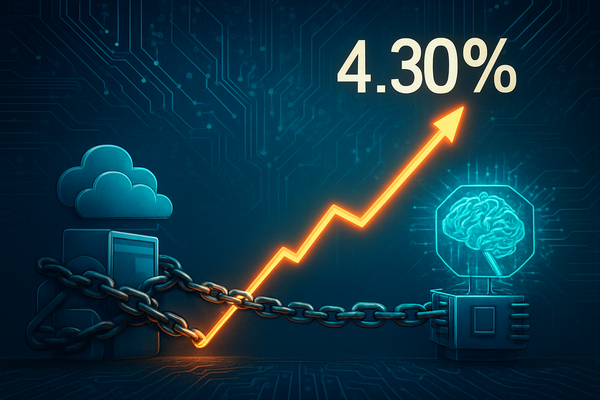
Against this backdrop of global instability, the U.S. Bureau of Labor Statistics released its March 2026 Employment Situation report this morning at 8:30 a.m. ET. Despite the market holiday, the data was stark: the U.S. economy added 178,000 jobs in March, while the unemployment rate held steady at 4.3%. While these numbers suggest a resilient economy, they also highlight a cooling labor market, particularly within the federal sector, which has seen a dramatic reduction of 355,000 jobs since its late 2024 peak. The contrast between a softening domestic labor market and the inflationary pressure of $100-plus oil has left the Federal Reserve in an unenviable position as it eyes its next policy meeting.
Winners and Losers in a Wartime Economy
When the opening bell rings on April 6, the energy and defense sectors are widely expected to lead the market higher. Giants like ExxonMobil (NYSE: XOM) and Chevron (NYSE: CVX) are positioned to reap the benefits of the sudden supply vacuum created by the Hormuz closure. With global inventories already tight, these domestic producers are seen as the primary beneficiaries of a sustained high-price environment. Similarly, the defense sector is bracing for a surge in demand. Lockheed Martin (NYSE: LMT) and RTX Corporation (NYSE: RTX) have seen their order books swell as the U.S. military ramps up its "precision hobbling" campaign against Iranian naval and missile capabilities.
Conversely, the outlook for energy-dependent and consumer-facing sectors is grim. Airlines, including Delta Air Lines (NYSE: DAL) and United Airlines Holdings (NASDAQ: UAL), are facing an immediate and severe spike in fuel costs that could derail their spring travel profitability. The broader tech sector, led by heavyweights like Apple Inc. (NASDAQ: AAPL) and NVIDIA (NASDAQ: NVDA), may also face headwinds. Higher oil prices are historically a precursor to persistent inflation, which could force interest rates to remain "higher for longer," dampening the discounted future cash flows that underpin tech valuations. Furthermore, supply chain disruptions in the Middle East could ripple through the global semiconductor trade, adding another layer of risk to high-growth hardware firms.
Geopolitical Shifts and Historical Echoes
The current crisis is not just a regional skirmish; it represents a significant pivot in global alignment. President Trump’s recent signals regarding a potential withdrawal from NATO have left European allies in a precarious state, struggling to manage an energy crisis without the guaranteed backstop of U.S. military and diplomatic hegemony. This "America First" approach to the Iranian conflict—aiming for a swift, three-week tactical campaign rather than a long-term occupation—suggests a new era of transactional foreign policy that markets are still struggling to price.
Historically, this moment draws comparisons to the oil shocks of the 1970s, yet it occurs in a far more integrated and automated financial landscape. The "Good Friday Pause" mirrors past instances where major news broke while markets were closed, such as the 1968 assassination of Martin Luther King Jr., which also occurred during a period of intense social and geopolitical upheaval. The modern difference lies in the speed of information; by the time the NYSE opens on Monday, three days of news will have been digested, analyzed, and "pre-traded" in the thinly traded crypto and overseas futures markets, likely leading to a chaotic Monday morning open.
The Road to Monday and Beyond
The short-term focus for investors will be the "Monday Gap." Analysts are watching the $110 per barrel level for crude oil as a critical psychological and technical threshold. If military reports over the weekend suggest the Strait of Hormuz will remain closed for longer than two weeks, we could see a flight to safety that benefits the U.S. Dollar and gold, while punishing risk assets. Strategic adaptations will be required for fund managers who have spent the last year betting on a "soft landing" and disinflation; the sudden return of geopolitical risk as the primary market driver requires a total recalibration of portfolio volatility.
In the longer term, the primary challenge will be the potential for "stagflation"—a scenario where the labor market continues to cool (as seen in today's jobs report) while energy prices keep inflation elevated. If the U.S. successfully exits the Iranian campaign within the President's targeted two-to-three-week window, the market may see a "relief rally." However, if the conflict expands or the Strait remains blocked, the global economy may face a structural shift in energy costs that could last through the remainder of 2026.
Summary and Market Outlook
The market closure of April 3, 2026, will likely be remembered as the "eye of the storm." While the physical exchanges are quiet, the underlying forces of labor data and war are reshaping the investment landscape in real-time. Key takeaways for the weekend include a resilient but cooling labor market and a Middle Eastern conflict that has fundamentally altered the global energy supply chain.
As we look toward Monday, investors should keep a close watch on crude oil futures and any statements from the Pentagon regarding the reopening of the Strait of Hormuz. The current volatility is a stark reminder that even in a digital, 24/7 world, the occasional silence of the market can be the loudest signal of all. The coming months will test the resolve of the "America First" economic policy and the ability of the U.S. consumer to withstand a dual shock of rising costs and shifting employment.
This content is intended for informational purposes only and is not financial advice