The Great Biotech Rebound: How Pricing Clarity Rescued the Drug Sector in 2025

After a tumultuous first half of 2025 that saw the pharmaceutical and biotechnology sectors languish under a cloud of regulatory dread, the industry is ending the year on a surprisingly high note. The primary driver of this turnaround has been the resolution of long-standing pricing uncertainties, as most major drugmakers reached definitive agreements with federal regulators regarding Medicare price caps and voluntary market-access deals. This "clearing event" has effectively removed the valuation overhang that had previously suppressed stock prices, allowing investors to return to the sector with renewed confidence.
The recovery is not merely a relief rally but a fundamental shift in market sentiment. By late December 2025, the NYSE Arca Pharmaceutical Index has outperformed the broader S&P 500, a stark contrast to the double-digit losses seen during the spring. With the rules of the road finally established for the next several years, the industry has pivoted from defensive posturing to aggressive growth, fueled by a resurgence in mergers and acquisitions and a more favorable interest rate environment.
From Uncertainty to Stability: The 2025 Pivot
The first six months of 2025 were characterized by a "wait-and-see" paralysis. The industry was grappling with the implementation of the Inflation Reduction Act (IRA) and the selection of 15 new high-spend drugs for the second round of Medicare price negotiations. Investors feared that the Centers for Medicare & Medicaid Services (CMS) would impose draconian price cuts that would stifle innovation. This fear was compounded by a series of legal challenges from companies like Merck & Co. (NYSE:MRK) and Bristol Myers Squibb (NYSE:BMY), which initially created a high-stakes standoff between Washington and New Jersey’s pharmaceutical corridor.
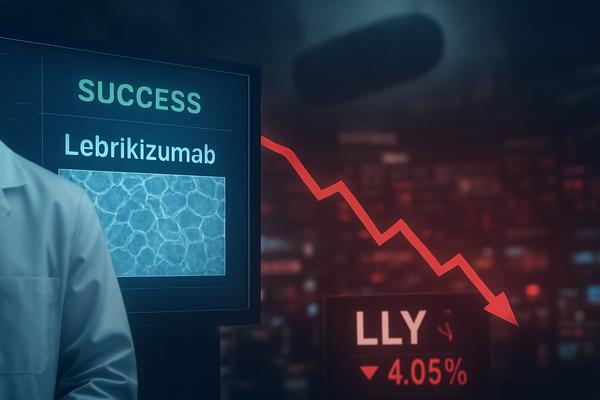
However, the narrative shifted in late summer when the first set of negotiated prices for 2026 was finalized, and a second cohort of drugs—including blockbuster GLP-1 therapies from Novo Nordisk (NYSE:NVO) and Eli Lilly (NYSE:LLY)—entered the negotiation phase. Rather than the catastrophic revenue losses some analysts predicted, the finalized discounts, ranging from 38% to 79% off list prices, were deemed "manageable" by Wall Street. The realization that these companies could maintain healthy margins through increased volume and improved patient adherence provided the floor the market needed.
Key to this stabilization was a series of voluntary pricing agreements signed in the fourth quarter. These deals, often referred to as the "Most Favored Nation" (MFN) compromises, allowed drugmakers to avoid more aggressive federal mandates in exchange for participating in new direct-to-consumer marketplaces. By the time the final signatures were inked in November 2025, the industry had a clear roadmap for revenue through 2028, effectively ending the period of regulatory volatility that had plagued the sector since 2022.
Winners and Losers in the New Pricing Era
Eli Lilly (NYSE:LLY) and Novo Nordisk (NYSE:NVO) have emerged as the clear winners of the 2025 recovery. Despite their weight-loss and diabetes drugs being prime targets for price negotiations, both companies saw their stock prices surge in the second half of the year. The clarity provided by the agreements allowed them to focus on scaling production and expanding their pipelines into neurology and cardiovascular health. For these giants, the certainty of a slightly lower price was far more valuable to shareholders than the uncertainty of an unknown one.
Mid-cap biotech firms with late-stage assets have also seen a significant boost. As large-cap pharmaceutical companies like Pfizer (NYSE:PFE) and Johnson & Johnson (NYSE:JNJ) sought to offset the impact of Medicare price caps on their older "legacy" drugs, they went on a massive shopping spree. This led to high-premium acquisitions, such as the late-year buyout of several neurology-focused biotechs, providing a liquidity event for venture capital and invigorated the broader biotech ecosystem.
Conversely, the "losers" of this cycle have been the early-stage, undercapitalized micro-cap firms. While the overall sector recovered, the market has become increasingly bifurcated. Investors are no longer willing to fund speculative "science projects" with long runways to profitability. Furthermore, companies with heavy reliance on a single drug currently in the Medicare crosshairs, without a robust pipeline to replace that revenue, have found it difficult to participate in the year-end rally. The new pricing regime favors diversified portfolios and platforms over one-hit wonders.
A Structural Shift in the Pharmaceutical Landscape
This year’s events represent a permanent shift in how the drug industry operates. The era of unchecked list-price increases is effectively over, replaced by a system that rewards volume, adherence, and demonstrable clinical value. This fits into a broader industry trend toward "value-based care," where drugmakers are increasingly held accountable for the real-world outcomes of their therapies. The 2025 Medicare Part D redesign, which introduced a $2,000 out-of-pocket cap for seniors, has already begun to show results, with pharmacy data suggesting a double-digit increase in prescription refills for chronic conditions.
The ripple effects are also being felt in R&D strategy. To avoid the "pill-to-biologic" disparity in the IRA—where small-molecule pills face price negotiations sooner than injectable biologics—many companies have shifted their research focus toward large-molecule therapies. This has historical precedents in the way the industry adapted to the Hatch-Waxman Act decades ago, showing that while the rules change, the industry’s ability to navigate them remains constant.
Regulators have also shown a surprising willingness to compromise. The 2025 agreements included provisions for manufacturing tax incentives and expedited review processes for "breakthrough" therapies that address unmet needs in rare diseases. This "carrot and stick" approach has created a more collaborative, albeit tense, relationship between the private sector and the federal government, a far cry from the litigious environment seen at the start of the year.
Looking Ahead: The 2026 Implementation
As we move into 2026, the market will be closely watching the actual implementation of the first round of negotiated prices. The short-term challenge will be the administrative hurdle of integrating these new prices across the complex web of pharmacy benefit managers (PBMs) and insurers. There is a risk of short-term margin compression as the industry adjusts to the new math of Medicare Part D, but most analysts believe this has already been baked into current stock valuations.
In the long term, the strategic pivot toward M&A is expected to accelerate. With the "regulatory overhang" lifted, the estimated $1.6 trillion in dry powder held by global pharmaceutical companies is likely to be deployed rapidly. We should expect to see a wave of consolidations in the gene therapy and oncology spaces, as companies race to build "moats" around their most innovative and price-protected technologies.
Conclusion: A New Foundation for Growth
The 2025 recovery in the drug and biotech sector serves as a masterclass in how markets digest regulatory change. What began as a year of existential dread has concluded with a sense of pragmatic optimism. The key takeaway for investors is that the pharmaceutical industry has once again proven its resilience, successfully trading a degree of pricing power for long-term regulatory stability.
Moving forward, the market is likely to remain bifurcated, favoring companies with strong balance sheets and "must-have" therapies over those with weak pipelines. Investors should watch for the first-quarter 2026 earnings reports to see how the new Part D caps affect volume and whether the promised "adherence tailwind" truly offsets the pricing headwind. For now, the "Biotech Winter" of early 2025 has thawed, leaving behind a leaner, more focused, and ultimately more investable sector.
This content is intended for informational purposes only and is not financial advice.