The Flavor Powerhouse: McCormick’s $44.8 Billion Bet on Unilever’s Food Legacy
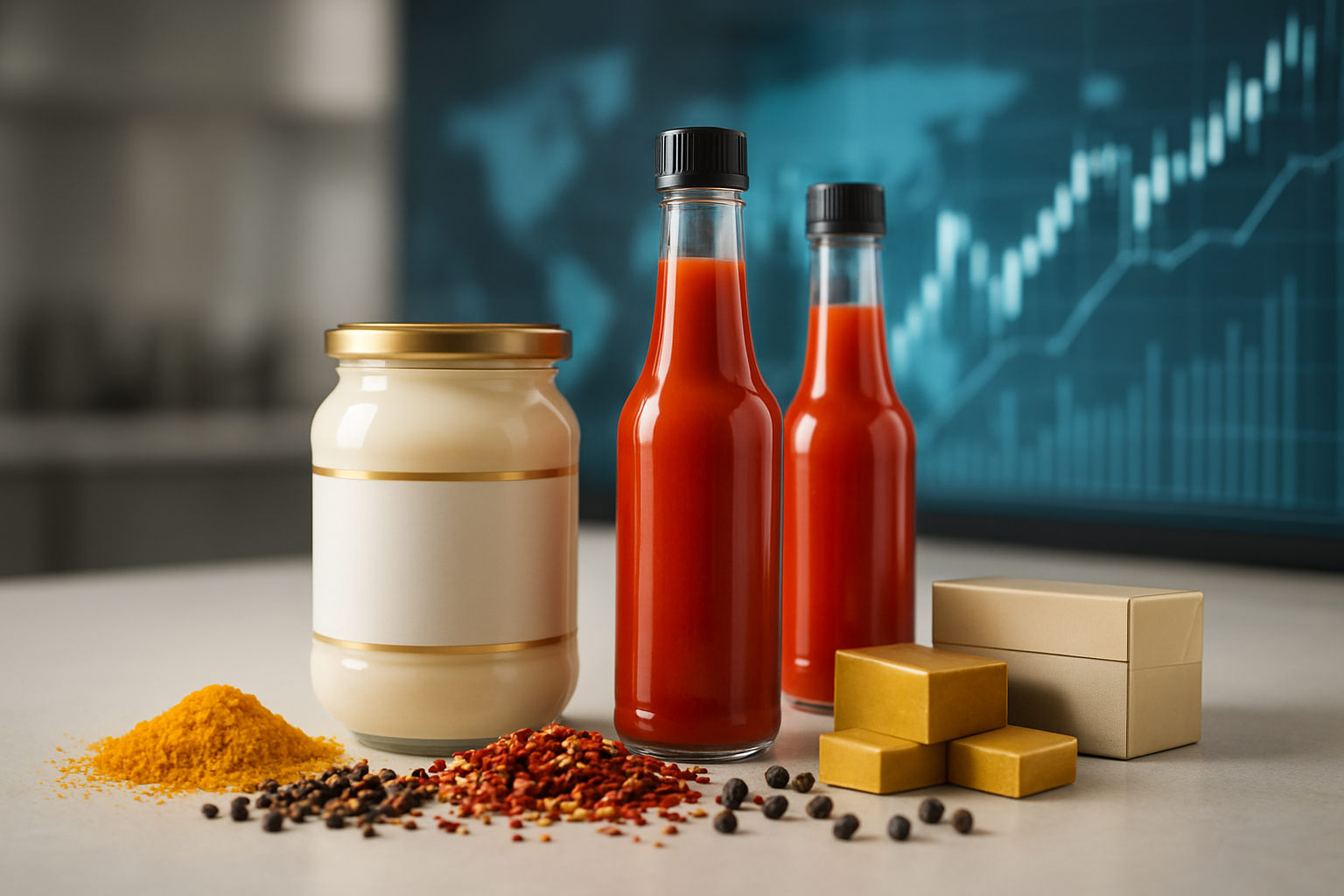
In a move that has sent shockwaves through the consumer packaged goods (CPG) industry, McCormick & Company (NYSE: MKC) announced yesterday, March 31, 2026, a definitive agreement to merge with Unilever’s (NYSE: UL) global food business. The transaction, valued at approximately $44.8 billion, aims to create an undisputed global leader in the flavor and condiments market. By combining McCormick’s dominance in spices and hot sauces with Unilever’s iconic staples like Hellmann’s and Knorr, the new entity—which will retain the McCormick name—is poised to control a significant portion of the world’s dinner plates and grocery aisles.
The immediate implications are profound: McCormick is effectively doubling down on its "flavor-first" strategy while shouldering a massive debt load to finance the $15.7 billion cash portion of the deal. Meanwhile, Unilever is executing a long-anticipated strategic pivot, slimming down to focus on its higher-growth beauty and personal care segments. However, the market’s initial reaction has been one of cautious trepidation; shares of McCormick tumbled nearly 8% in after-hours trading as investors weighed the benefits of scale against the risks of a complex, multi-year integration.
A "Reverse Morris Trust" Masterstroke
The deal is structured as a Reverse Morris Trust, a sophisticated tax-efficiency maneuver that allows Unilever to divest its food arm without incurring the massive tax liabilities associated with a straight sale. Under the terms of the agreement, McCormick will pay $15.7 billion in cash to Unilever, while Unilever’s shareholders will receive a 65% stake in the newly expanded company. McCormick’s existing shareholders will retain the remaining 35%. The combined entity will remain headquartered in Hunt Valley, Maryland, led by current McCormick CEO Brendan Foley.
This merger represents the culmination of years of industry speculation regarding Unilever’s "underperforming" food assets. While brands like Knorr and Hellmann’s generate billions in steady cash flow, they have historically struggled to match the explosive growth of Unilever’s premium beauty brands. For McCormick, the acquisition is a transformative leap. It brings together a "who’s who" of the pantry: McCormick’s spices, Frank’s RedHot, and French’s Mustard will now sit alongside Unilever’s Maille mustard, Marmite, and the global powerhouse Knorr. The transaction is expected to close in mid-2027, provided it survives what is expected to be a grueling regulatory review process in both the United States and the European Union.
Squeezing the Competition: Winners and Losers
The emergence of this "Flavor Powerhouse" creates immediate winners and losers across the supermarket landscape. Kraft Heinz (NASDAQ: KHC) appears to be the most vulnerable, as it now faces a competitor with a dominant position in the "wet" condiments category. By owning both Hellmann’s and French’s, McCormick can offer retailers bundled deals that could force Kraft’s flagship mayonnaise and mustard brands into less favorable shelf positions. Analysts suggest Kraft Heinz may be forced into defensive price wars or its own "desperation M&A" to maintain relevance.
Similarly, Campbell Soup Company (NYSE: CPB) and Conagra Brands (NYSE: CAG) are feeling the pressure. Campbell’s core soup and broth business now competes directly with an invigorated Knorr brand that will benefit from McCormick’s superior North American distribution network and R&D capabilities. Conagra, already struggling with a fragmented portfolio, faces an "existential squeeze" as retailers look to simplify their supply chains by partnering with fewer, larger conglomerates. On the winning side, McCormick gains a massive international footprint. Unilever’s deep-rooted infrastructure in Europe, Latin America, and Asia provides a ready-made highway for McCormick to take brands like Cholula and Old Bay to a truly global audience.
Consolidation and the "Must-Have" Portfolio
The wider significance of this deal lies in the ongoing consolidation of the consumer staples sector. As inflation and supply chain volatility become the "new normal," scale has become the ultimate defense. The combined McCormick-Unilever entity will have a pro-forma annual revenue of roughly $20 billion, giving it unprecedented bargaining power with retail giants like Walmart (NYSE: WMT) and Carrefour. In the CPG world, being a "must-have" partner is the difference between leading the category and being relegated to the bottom shelf.
However, this dominance has already caught the attention of antitrust regulators. The potential "condiment monopoly" created by combining the world’s leading mustard and mayonnaise brands is a red flag for the FTC. Furthermore, the merger highlights a shift in global food supply chains toward a more "chef-led" and "back-of-house" focus. By combining McCormick’s front-of-house tabletop strength with Unilever’s expertise in professional kitchens, the new company aims to dominate not just the grocery store, but the entire foodservice industry—a sector that has seen a robust post-pandemic recovery.
Navigating a Two-Year Integration
The road ahead is fraught with logistical and strategic hurdles. The "disentanglement" of Unilever’s food business from its home care and beauty operations is a massive undertaking. A Transitional Services Agreement (TSA) will be in place for two years following the 2027 close, during which Unilever will continue to provide IT and logistics support. The short-term challenge for McCormick will be managing its debt, which is expected to spike to over 4.0x EBITDA, a level that has historically made conservative investors nervous.
Long-term, the success of the deal hinges on McCormick’s ability to realize the promised $600 million in annual cost synergies. These savings are expected to come from consolidated manufacturing and joint procurement of raw materials like oils and spices. If successful, McCormick will have transformed itself from a spice company into a global culinary platform. If it fails, the company risks becoming a cautionary tale of "mega-merger" overreach in an era where consumers are increasingly gravitating toward smaller, artisanal brands.
A Final Assessment for Investors
The McCormick-Unilever merger is a defining moment for the 2026 financial landscape, signaling that the era of the "global mega-brand" is far from over. It is a bold, high-stakes play for margin expansion through scale. For investors, the next several months will be a waiting game. Key indicators to watch include the specific divestitures required by regulators to clear the deal and McCormick’s ability to maintain its investment-grade credit rating while servicing its new debt.
While the stock price hit is painful in the immediate term, the long-term strategic logic is difficult to ignore. McCormick is effectively cornering the market on how the world flavors its food. As the company moves toward its mid-2027 closing date, the industry will be watching to see if this "Flavor Powerhouse" can actually deliver the growth it promises, or if it will buckle under the weight of its own ambition. For now, the kitchen is getting very crowded, and McCormick has just claimed the biggest seat at the table.
This content is intended for informational purposes only and is not financial advice.