The Dawn of the Polyfunctional Era: Advanced Robotics and RPA Reshape Industrial Landscapes
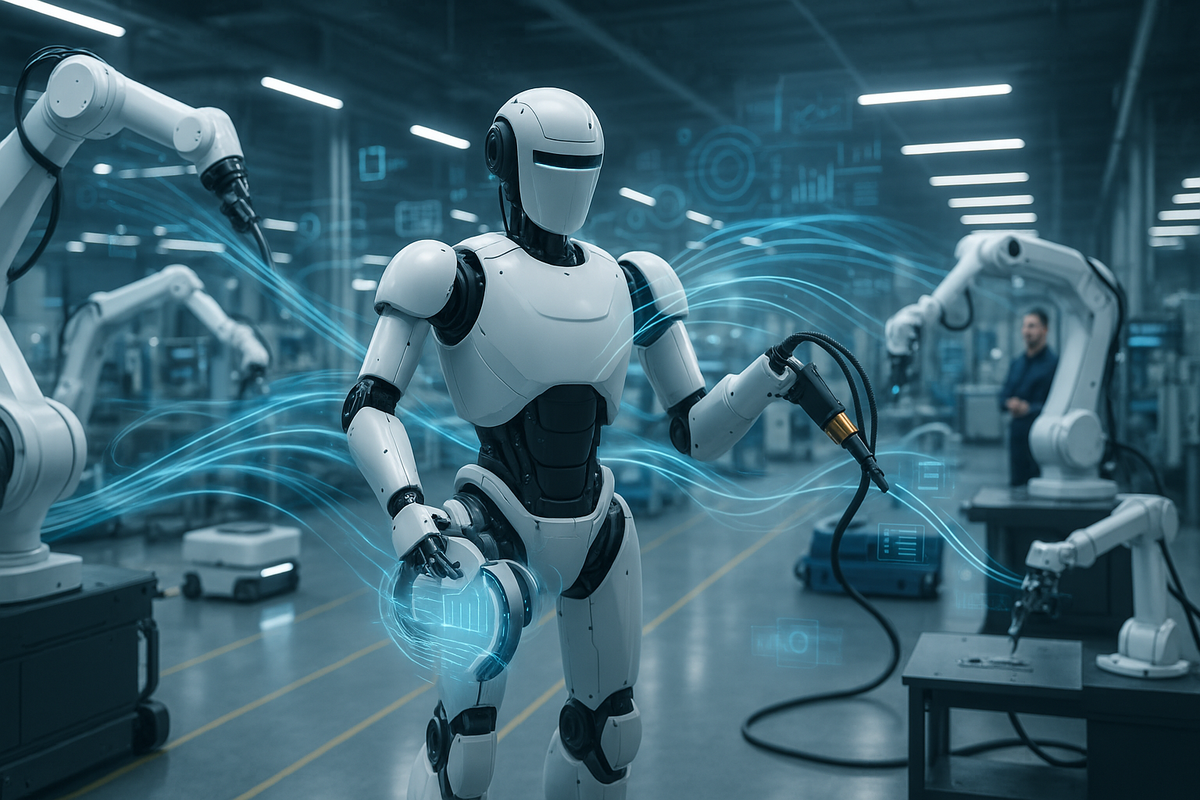
The global industrial sector is on the cusp of a revolutionary transformation, driven by unprecedented advancements in Advanced Robotics and Robotic Process Automation (RPA). This evolving landscape is characterized by increasingly sophisticated autonomous systems, capable of executing complex industrial processes with unparalleled efficiency and precision. A pivotal development in this shift is the emergence of polyfunctional robots, intelligent machines designed for versatility and adaptability, moving beyond the traditional confines of single-task automation.
These technological leaps are not merely incremental improvements; they represent a fundamental redefinition of human-machine synergy in manufacturing, logistics, healthcare, and beyond. The integration of artificial intelligence (AI) and machine learning (ML) is fueling this evolution, allowing robots and automated systems to learn, adapt, and make contextual decisions, thereby unlocking new levels of productivity and operational resilience across industries.
What Happened and Why It Matters: A New Paradigm in Automation
Over the past one to two years, the fields of advanced robotics and RPA have witnessed a surge in innovation, primarily driven by the seamless integration of AI and ML. This synergy has given rise to a new generation of automation solutions that are more intelligent, versatile, and capable than ever before. The most significant development is the rise of polyfunctional robots. Unlike their predecessors, which were purpose-built for specific, repetitive tasks, polyfunctional robots are engineered for adaptability, capable of performing multiple distinct roles across various domains without extensive reprogramming or hardware reconfiguration. This versatility is enabled by modular hardware, advanced AI algorithms for real-time data interpretation and decision-making, sophisticated sensor arrays for enhanced environmental perception, and the leveraging of cloud and edge computing for continuous functionality updates and optimized coordination.
This shift from single-purpose machines to versatile, intelligent systems is profoundly significant. It directly addresses the long-standing challenge of inflexibility in industrial automation, allowing businesses to dynamically respond to changing production demands and market conditions. For instance, a polyfunctional robot in a manufacturing plant could switch from assembly to quality control, or from material handling to packaging, significantly reducing downtime and optimizing resource utilization. This adaptability translates into higher return on investment (ROI) for automation investments, substantial cost reductions, and a marked improvement in overall operational efficiency and productivity. The ability to perform tasks with exceptional accuracy and consistency also leads to reduced defects and enhanced product quality, while taking on dangerous tasks improves workplace safety.
Market Repercussions: Winners, Losers, and Shifting Valuations
The rapid advancements in advanced robotics and RPA are poised to create significant shifts in financial markets, leading to clear winners and potential losers. Companies at the forefront of developing and implementing these technologies are set to capture substantial market share.
Potential Winners:
- Robotics Manufacturers: Established players like ABB (SIX: ABBN), Fanuc (TYO: 6954), Yaskawa (TYO: 6506), and KUKA (part of Midea Group (SZSE: 000333)) are well-positioned to benefit from the increasing demand for advanced and polyfunctional robots. Their existing infrastructure and R&D capabilities will allow them to innovate and scale. New entrants specializing in AI-driven modular robotics will also see rapid growth.
- RPA Software Providers: Companies like UiPath (NYSE: PATH), SS&C Technologies (NASDAQ: SSNC) (owner of Blue Prism), and Pegasystems (NASDAQ: PEGA) are already experiencing robust growth. Their evolution towards hyperautomation, integrating AI and ML into their platforms, will be crucial for continued success. Microsoft (NASDAQ: MSFT) is also a significant player, investing heavily in AI and ML to enhance its automation offerings, potentially expanding its market footprint.
- Semiconductor and Sensor Manufacturers: The increasing complexity of robots and automation systems drives demand for advanced processors, sensors, and AI chips. Companies like NXP Semiconductors (NASDAQ: NXPI) and others involved in developing specialized hardware for robotics will see increased demand.
- Cloud Computing Providers: As RPA and robotics increasingly leverage cloud-native solutions for scalability and data processing, major cloud providers such as Amazon (NASDAQ: AMZN) (AWS), Microsoft (NASDAQ: MSFT) (Azure), and Alphabet (NASDAQ: GOOGL) (Google Cloud) will see continued growth in their enterprise client base.
- Early Adopters in Manufacturing and Logistics: Companies like Tesla (NASDAQ: TSLA) and Amazon (NASDAQ: AMZN), which have aggressively invested in advanced robotics and automation for their production lines and warehouses, are likely to gain competitive advantages through improved efficiency, cost reduction, and faster time-to-market. BMW (ETR: BMW) is also deploying AI-powered robotic arms in its manufacturing.
Potential Losers:
- Companies Resistant to Automation: Businesses that fail to adapt and integrate advanced robotics and RPA into their operations risk falling behind competitors in terms of efficiency, cost-effectiveness, and product quality. This could lead to reduced market share and profitability.
- Labor-Intensive Industries Without Reskilling Initiatives: While automation creates new jobs, it also displaces certain manual roles. Industries heavily reliant on repetitive human labor without proactive strategies for workforce reskilling and upskilling may face significant disruption and social challenges.
- Legacy Automation Providers: Firms offering only single-function, rigid automation solutions without integrating AI, modularity, or cloud capabilities may find their offerings becoming obsolete in the face of more versatile and intelligent alternatives.
The overall market impact will likely be characterized by increased capital expenditure in automation technologies, shifts in labor markets, and a growing emphasis on AI and software capabilities within traditional hardware companies.
Broader Implications: Reshaping Industries and the Future of Work
The broader implications of these advancements extend far beyond individual company performance, fundamentally reshaping entire industries and the global economic landscape. This event fits into the broader trend of Industry 4.0, where digital transformation, automation, and data exchange are creating smart factories and interconnected supply chains.
The emergence of polyfunctional robots and hyperautomation represents a significant leap towards fully autonomous operations. In manufacturing, this means more flexible production lines, capable of rapid retooling for diverse product lines, enhancing resilience against supply chain disruptions. In logistics and warehousing, autonomous mobile robots (AMRs) and polyfunctional systems are integrating inventory movement, order fulfillment, and transportation into seamless, high-speed workflows, as exemplified by Amazon's extensive robotic deployments. Healthcare is also seeing transformative potential, with robots assisting in surgeries, patient care, diagnostics, and hospital logistics, improving both efficiency and patient outcomes.
Potential ripple effects include increased competitive pressure on companies to automate or risk obsolescence. This could lead to a wave of mergers and acquisitions as larger players seek to acquire innovative robotics and RPA startups. Furthermore, the rise of intelligent automation will necessitate new regulatory frameworks concerning robot ethics, data privacy, and the future of work. Governments and policymakers will need to address the social implications of automation, including job displacement and the need for new education and training programs to prepare the workforce for a human-machine collaborative future. Historically, similar technological shifts, such as the industrial revolution or the advent of personal computing, have always led to significant societal restructuring, creating new job categories while rendering others obsolete. This current wave of automation is likely to follow a similar pattern, albeit at an accelerated pace due to the capabilities of AI.
What the Reader Should Pay Attention to Next
As the landscape of industrial automation continues its rapid evolution, several key areas warrant close attention from investors, business leaders, and policymakers alike. In the short term, observe the deployment rates of polyfunctional robots in diverse industrial settings. Look for case studies and reports detailing their impact on efficiency, cost savings, and flexibility in early adopter companies. Pay attention to how quickly these versatile robots move beyond initial pilot programs to widespread implementation. The integration of AI and machine learning into RPA platforms, particularly the development of more sophisticated intelligent automation capabilities, should also be closely monitored. This includes advancements in natural language processing (NLP) and computer vision, which will allow RPA to handle increasingly complex and unstructured data.
In the long term, consider the strategic pivots required for businesses to remain competitive. This involves not only investing in automation technologies but also developing comprehensive strategies for workforce transformation, including upskilling and reskilling programs to prepare employees for roles that involve collaborating with intelligent machines. Market opportunities will emerge in areas like AI-powered robotics software, specialized sensors, and data analytics platforms designed for automated environments. Challenges will include navigating the ethical implications of AI in autonomous systems, ensuring data security, and addressing potential societal impacts on employment. Watch for new partnerships and collaborations between traditional industrial companies and AI/robotics startups, as these alliances will drive innovation and accelerate adoption.
Conclusion: A New Era of Intelligent Efficiency
The advancements in Advanced Robotics and Robotic Process Automation, particularly the rise of polyfunctional robots, mark a pivotal moment in industrial history. This new era is defined by intelligent efficiency, where machines are not just tools but adaptive, versatile collaborators capable of transforming complex processes across virtually every sector. The immediate implications are clear: enhanced productivity, significant cost reductions, improved quality and safety, and unprecedented operational flexibility.
Moving forward, the market will continue to be shaped by those who embrace and innovate within this automated paradigm. Investors should closely watch companies demonstrating strong R&D in AI-driven robotics, modular automation solutions, and comprehensive hyperautomation platforms. The lasting impact will be a more resilient, efficient, and technologically advanced global economy. However, success will also hinge on responsible development and deployment, ensuring that the benefits of this technological revolution are broadly shared and that the transition for the human workforce is managed thoughtfully. The coming months will provide crucial insights into the acceleration of these trends and the emergence of new leaders in the intelligent automation space.