The Billion-Dollar Disconnect: Wall Street Torn Between KKR’s Caution and Analyst Optimism for 2026
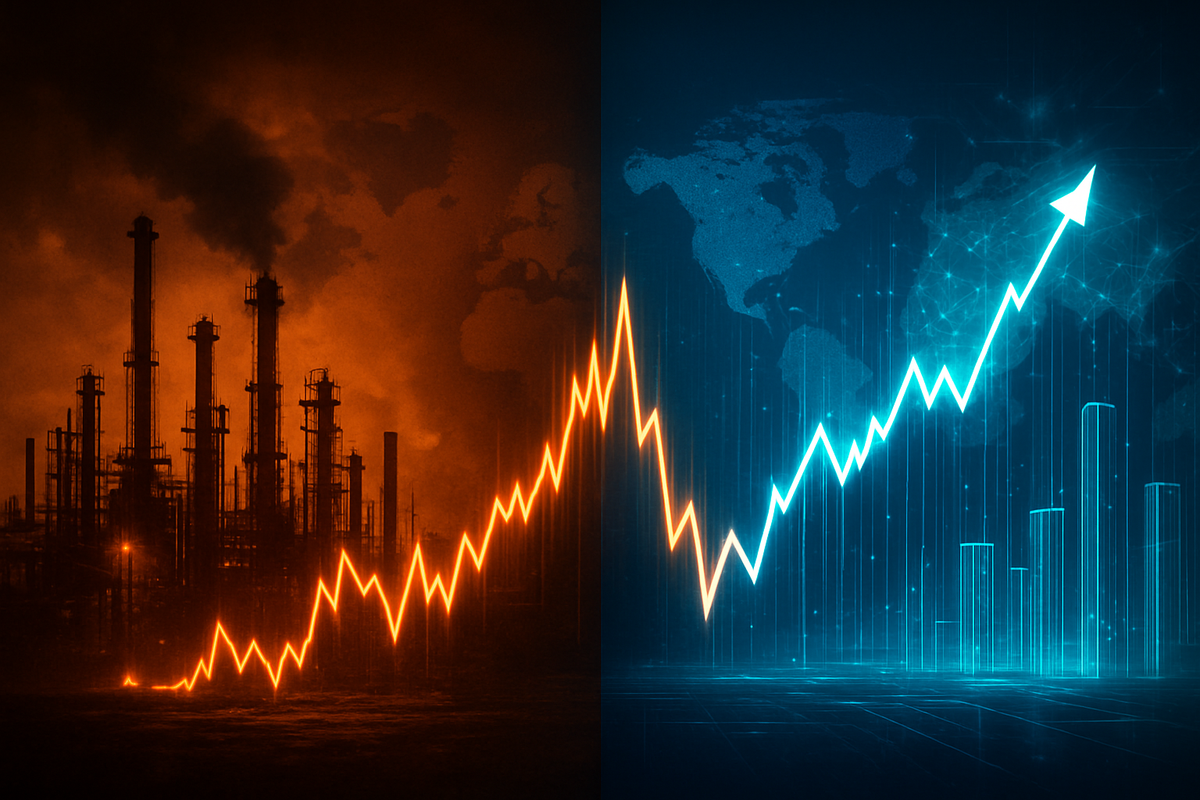
The financial world is currently witnessing one of the most significant forecasting schisms in recent memory. As of April 6, 2026, a massive 9.1% gap has opened between the cautious macro projections of institutional giant KKR & Co. Inc. (NYSE: KKR) and the hyper-optimistic consensus compiled by FactSet Research Systems Inc. (NYSE: FDS). This divergence is not merely a statistical curiosity; it represents a fundamental disagreement over the health of the American economy and the sustainability of the "AI-driven super-cycle" that has dominated market narratives for the past two years.
The immediate implications of this divide are already being felt across trading floors. With the S&P 500 currently sitting 8% below its January highs, the market is struggling to find a floor. Investors are caught between FactSet’s bottom-up analyst view—which sees 17.1% earnings-per-share (EPS) growth—and KKR’s top-down "Flash Macro" warning of a meager 8% growth rate. This uncertainty has pushed the CBOE Volatility Index (VIX) above the 30 level, signaling that the "Goldilocks" era of 2025 has officially transitioned into a period of high-stakes atmospheric turbulence.
A Tale of Two Realities: The KKR Downgrade vs. The Consensus Bull Run
The current standoff reached a boiling point on April 1, 2026, when KKR’s Global Macro team, led by Henry McVey, released a sobering update titled "Flash Macro: U.S. Markets Update." In the report, the private equity powerhouse slashed its 2026 EPS growth forecast from 11% down to 8%. The rationale was a "regime change" in the global economy, characterized by a "margin tax" resulting from structurally higher energy costs and persistent labor shortages. KKR’s model now assumes that West Texas Intermediate (WTI) crude will remain near $100 per barrel, driven by supply shocks and geopolitical instability in the Middle East, which acts as a drag on corporate profitability that bottom-up analysts may be underestimating.
In stark contrast stands the FactSet consensus, an aggregation of hundreds of individual equity analyst estimates. This "bottom-up" view remains remarkably resilient, projecting a 17.1% jump in earnings for 2026. This optimism is fueled by the belief that the massive capital expenditure (Capex) seen in 2024 and 2025 is finally yielding massive efficiency gains. Analysts contributing to the FactSet data argue that net profit margins will hit a record 13.9% this year as artificial intelligence integration moves from the "experimental" phase to the "optimization" phase, allowing companies to do more with less.
The timeline leading to this divergence began in late 2025, when the Federal Reserve paused its easing cycle far earlier than expected. While analysts initially brushed this off as a minor hurdle, KKR began signaling as early as January 2026 that "higher for longer" interest rates were colliding with a global energy crunch. Meanwhile, tech-focused analysts continued to raise targets, creating a "bifurcated market" where the macro-outlook grew darker while the sector-specific outlook for technology remained incandescent.
Sector Fallout: Winners of Efficiency and Losers of the Margin Tax
The divergence in forecasts suggests a clear line in the sand between different sectors of the market. If FactSet’s 17.1% growth target is to be met, the primary winners will be the tech behemoths that have spent the last 24 months building out the world's digital infrastructure. Companies like Microsoft Corp. (NASDAQ: MSFT) and NVIDIA Corp. (NASDAQ: NVDA) stand at the forefront of this "Efficiency Super-Cycle." Their ability to deliver software-driven productivity tools could allow them to maintain high margins even if the broader economy slows, effectively decoupling their earnings from the macro-drags cited by KKR.
Conversely, the "losers" in this scenario are likely to be found in the Consumer Discretionary and Industrial sectors. If KKR’s 8% forecast proves correct, these margin-sensitive industries will be hit hardest by the "supply shock" in energy. For instance, retail giants like Amazon.com Inc. (NASDAQ: AMZN) face the double-whammy of rising logistics costs due to $100 oil and cooling consumer demand as inflation hovers near 3.8%. KKR’s report specifically suggests that the "de-facto tax" of energy and labor will disproportionately impact companies that lack the pricing power to pass these costs on to a stretched middle-class consumer.
Furthermore, the private equity sector itself, led by firms like KKR, is positioning for a more volatile environment by "high-grading" portfolios. This means shifting away from high-leverage growth plays and toward real assets and infrastructure. This strategic pivot suggests that KKR believes the public markets are currently overvalued, trading at a forward P/E of 21.6x—a multiple that looks increasingly precarious if earnings growth only hits the single digits.
The Regime Change: AI Productivity Meets Macro Reality
The significance of this gap extends far beyond 2026. It represents a fundamental test of the "AI Productivity Paradox." For years, economists have debated whether technology can truly offset the structural headwinds of an aging workforce and rising resource costs. FactSet’s consensus suggests the answer is a resounding "yes," implying that AI is a deflationary force strong enough to overcome 4% inflation and high energy prices. If this consensus holds, it would mark a historical precedent, mirroring the productivity boom of the late 1990s but on a much more compressed timeline.
However, historical comparisons also provide a warning. The current market setup shares similarities with the "Nifty Fifty" era or the lead-up to the 2000 dot-com bubble, where bottom-up optimism ignored deteriorating macro conditions. KKR’s "regime change" thesis argues that we are no longer in a world of abundant cheap energy and low interest rates. By pointing to a 3.8% CPI forecast, KKR is signaling that the era of central bank "puts" is over. In this new regime, corporate earnings cannot simply rely on cheap credit and globalized supply chains; they must navigate a fragmented, expensive, and volatile geopolitical landscape.
This event also highlights a growing rift in how market data is interpreted. In a world of high-frequency data and algorithmic trading, the "consensus" can often become a self-fulfilling prophecy until it isn't. The 9% gap is a "volatility bomb" waiting to go off; as Q1 and Q2 2026 earnings reports are released, the market will be forced to converge toward one of these two realities. This convergence is rarely a smooth process and typically involves sharp "re-pricing" events that can trigger broader systemic stress.
The Road Ahead: Earnings Season as the Ultimate Tie-Breaker
In the short term, the upcoming Q1 2026 earnings season will serve as the first major reality check. Investors will be looking closely at the guidance provided by S&P 500 companies. If a significant number of firms follow KKR’s lead and cite energy costs or labor "stickiness" as reasons for downward revisions, we could see a rapid "valuation reset" where the P/E multiple contracts to align with the 8% growth reality. This would likely push the S&P 500 toward KKR’s target of 7,300, a significant drop from current levels.
Long-term, the market may see a strategic pivot toward "quality" and "defensiveness." If the FactSet optimism begins to crumble, we expect a massive rotation out of high-multiple tech stocks and into "Real Assets." Infrastructure, energy production, and private credit are likely to emerge as the preferred safe havens. The challenge for investors will be navigating the "election fog" of the 2026 U.S. midterm elections, which historically adds another layer of uncertainty to the second half of the year.
The potential for a "bullish surprise" remains, however. If the "Industrial Super-Cycle" mentioned by FactSet analysts manifests in the form of massive, tangible ROI from AI investments, the 17.1% growth rate could be achieved. In this scenario, the current 8-9% pullback would be viewed in retrospect as a classic "buy the dip" opportunity before the next leg of the secular bull market.
Final Assessment: Navigating the Fog of 2026
The divergence between KKR’s 8% forecast and FactSet’s 17.1% consensus is the defining narrative of the 2026 market. One side sees a world where technology conquers all; the other sees a world where the laws of macroeconomics—inflation, energy, and labor—have finally returned to exact their toll. This 900-basis point divide is the primary driver of the current VIX surge and the recent weakness in equity indices.
As we move forward, the key takeaway for investors is that the "average" return may no longer exist. We are entering a period of extreme dispersion, where sector selection and macro-awareness will be far more important than simple index tracking. The "margin tax" is real, but so is the AI efficiency gain. The winner of this tug-of-war will determine the trajectory of global wealth for the remainder of the decade.
Investors should watch for three critical indicators in the coming months: the stabilization (or escalation) of WTI oil prices near the $100 mark, the Federal Reserve’s commentary on "higher for longer" in light of sticky 3.8% CPI, and, most importantly, the net profit margin reports from the "Magnificent 7." If those margins begin to slip, the FactSet consensus will likely collapse toward the KKR reality, bringing a period of painful but necessary market recalibration.
This content is intended for informational purposes only and is not financial advice.