The $500 Billion Blueprint: How Oracle, OpenAI, and SoftBank are Architecting the Future of American Power
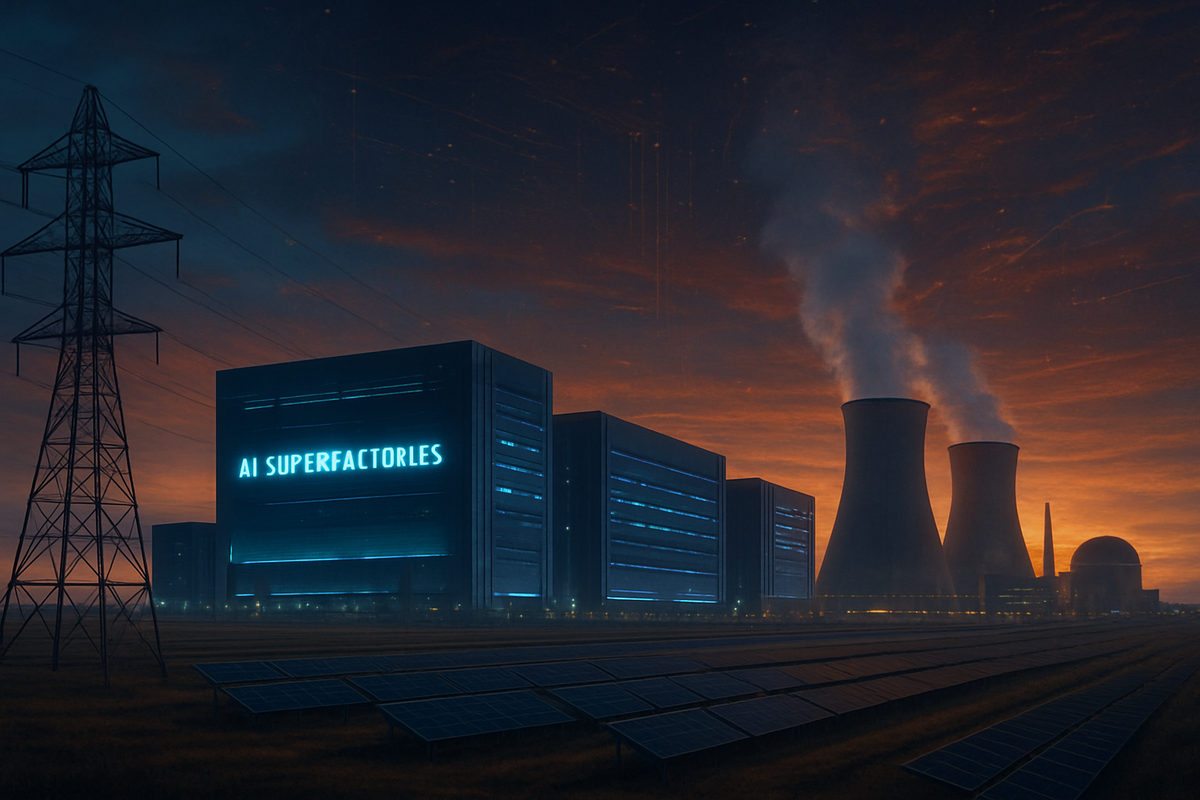
As of January 19, 2026, the global race for Artificial General Intelligence (AGI) has entered a new, industrial-scale chapter. The "Project Stargate" initiative, a staggering $500 billion infrastructure venture spearheaded by OpenAI, Oracle (NYSE: ORCL), and SoftBank (OTC: SFTBY), has transitioned from a visionary White House proposal into a massive physical reality across the American landscape. This project, which aims to build "AI Superfactories" capable of generating unprecedented levels of compute, represents the largest private-sector infrastructure play in history, signaling a fundamental shift in how technological leadership is defined.
The immediate implications are profound: the venture is effectively nationalizing the path to AGI, tying the fortunes of Silicon Valley’s elite directly to U.S. energy policy and geopolitical strategy. By securing massive swaths of land and gigawatts of power—fueled by a resurgence in nuclear energy—this consortium is creating a "compute moat" that competitors may find impossible to breach. For investors, the project has redefined the valuation of legacy tech giants and infrastructure providers, turning cloud and energy assets into the most valuable commodities of the late 2020s.
The Genesis of Stargate: A Timeline of Industrial Intelligence
The roadmap for Project Stargate began in early 2024 with leaked reports of a $100 billion supercomputer planned by Microsoft (NASDAQ: MSFT) and OpenAI. however, the scale of the ambition grew exponentially as the sheer power requirements for next-generation models became clear. By January 2025, the project was officially unveiled at the White House as a $500 billion national priority. The announcement, featuring OpenAI CEO Sam Altman, Oracle Chairman Larry Ellison, and SoftBank’s Masayoshi Son, framed the initiative not just as a tech project, but as a strategic capability essential for outpacing global rivals, particularly China.
Throughout 2025, the consortium moved with wartime speed. Construction began on flagship data centers in Abilene, Texas, and by September, the project expanded to five additional major sites across New Mexico, Ohio, and Wisconsin. The most recent milestone occurred just this month, in January 2026, as OpenAI and SoftBank finalized a $1 billion investment into SB Energy to develop a 1.2-gigawatt dedicated solar-plus-storage site in Milam County, Texas. This site will serve as the heartbeat for the next phase of Stargate’s "compute clusters," which are expected to reach a total capacity of nearly 10 gigawatts by the end of the decade.
The division of labor within the venture, officially organized as Stargate LLC, is distinct. SoftBank serves as the lead financial engine and chairman of the project, leveraging its vast capital reserves and its energy subsidiary, SB Energy, to manage the grid-scale power needs. Oracle provides the physical backbone and construction expertise, utilizing its Oracle Cloud Infrastructure (OCI) to host the massive workloads. OpenAI remains the operational driver and primary tenant, utilizing the specialized infrastructure to train "GPT-6" and other frontier models that require power equivalent to that of mid-sized American cities.
Winners and Losers in the Age of Gigawatt Computing
Oracle (NYSE: ORCL) has emerged as the clear market victor of the Stargate era. Once viewed by some as a legacy database provider, Oracle’s transformation into a hyperscale cloud leader is now complete. Shares of ORCL surged over 50% in 2025, as the company secured a landmark $30 billion annual cloud deal to lease 4.5 gigawatts of capacity to the project. By positioning itself as the primary builder of these AI superfactories, Oracle has effectively locked in a decade of high-margin infrastructure revenue, making it the indispensable landlord of the AI revolution.
SoftBank (OTC: SFTBY) has also seen a significant vindication of its long-term strategy. After years of volatile bets through its Vision Funds, Masayoshi Son has successfully pivoted the firm toward hard AI infrastructure. SoftBank’s stock rose approximately 12% following the 2025 White House announcement and has remained resilient as the project hits its construction milestones. Furthermore, Arm Holdings (NASDAQ: ARM), in which SoftBank maintains a majority stake, has seen its shares jump as the Stargate data centers standardize on Arm-based server architectures for their superior energy efficiency.
Conversely, traditional cloud providers who are not primary partners in Stargate face a challenging "compute gap." While Microsoft (NASDAQ: MSFT) remains a key technology partner and holds a right of first refusal on certain capacity, it is no longer the exclusive provider for OpenAI. This loss of exclusivity initially tempered MSFT stock gains to a modest 4% in late 2025, as investors recalibrated the competitive landscape. Meanwhile, utility companies and energy providers like Constellation Energy (NASDAQ: CEG) are seeing a windfall; CEG’s deal to restart the Three Mile Island nuclear facility specifically to power AI workloads has set a new precedent for the energy sector’s role in tech growth.
Strategic Implications and the New Geopolitics of AI
Project Stargate represents more than just a massive capital expenditure; it is a pivot toward "sovereign AI" infrastructure. By concentrating $500 billion of investment within U.S. borders, the consortium is aligning private interests with the federal goal of maintaining technological hegemony. This mirrors historical precedents like the Manhattan Project or the Interstate Highway System—moments where the scale of a challenge required a fusion of private innovation and national strategic focus. The project effectively treats compute as a strategic resource, similar to oil or grain, that must be protected and expanded.
The ripple effects on competitors are already being felt. Tech rivals are now forced to consider whether they can compete with the sheer physical scale of Stargate. The entry barrier for frontier AI models has shifted from software talent to the ability to secure gigawatts of power and massive physical footprints. This trend toward "industrial AI" is also creating a regulatory vacuum; policymakers are now grappling with the environmental impact of such massive energy consumption and the potential for these data centers to strain local power grids.
Historically, this event marks the end of the "laptop era" of AI development. We have moved into an era where the hardware and energy requirements are so vast that they dictate the software's limits. This has led to a renewed focus on nuclear energy and modular reactors, as the tech industry realizes that the current electrical grid is insufficient for the demands of AGI. The "Three Mile Island" model—reopening decommissioned plants for specific industrial users—is likely to become the blueprint for future AI expansions globally.
The Road to 2030: Challenges and Strategic Pivots
Looking ahead, the short-term challenge for the Stargate partners will be execution risk. Building out 10 gigawatts of capacity involves navigating complex local zoning laws, environmental regulations, and a fragile global supply chain for high-end chips and electrical transformers. Any significant delay in construction could allow competitors to close the gap or cause a cooling of investor enthusiasm for the high-CapEx model. Strategic pivots may be required if the next generation of AI models requires less compute than predicted—a "diminishing returns" scenario that remains the project's primary long-term risk.
However, the potential market opportunities are even larger. If Project Stargate successfully achieves its goal of "robotically" designing cancer vaccines or solving complex materials science problems within days, the economic value generated will dwarf the $500 billion investment. We are likely to see the emergence of specialized "AI-first" industrial zones around these data centers, as manufacturers and biotech firms move to be physically closer to the massive compute clusters to minimize latency and maximize integration.
Conclusion: A Market Forever Transformed
Project Stargate has fundamentally re-indexed the technology sector. The partnership between Oracle, OpenAI, and SoftBank has proven that in the race for AGI, size truly matters. Key takeaways for the market include the elevated importance of the "physical layer" of the internet—the data centers, the fiber, and most importantly, the power. Oracle has cemented its place in the modern pantheon of tech giants, while SoftBank has found the "big bet" that justifies its decade of AI evangelism.
As we move forward into 2026, investors should keep a close watch on two primary factors: the timeline for the integration of nuclear power into the Stargate grid and the performance of the first models trained on this new infrastructure. If the results of "GPT-6" demonstrate a quantum leap over current capabilities, the $500 billion price tag may eventually look like a bargain. The era of small-scale AI is over; the era of the AI Superfactory has begun, and the world is watching to see if this massive bet on American infrastructure will pay off.
This content is intended for informational purposes only and is not financial advice.