The 2026 March Washout: How the Nasdaq 100 is Fighting to Reclaim Its Peak After an 8.8% YTD Slump
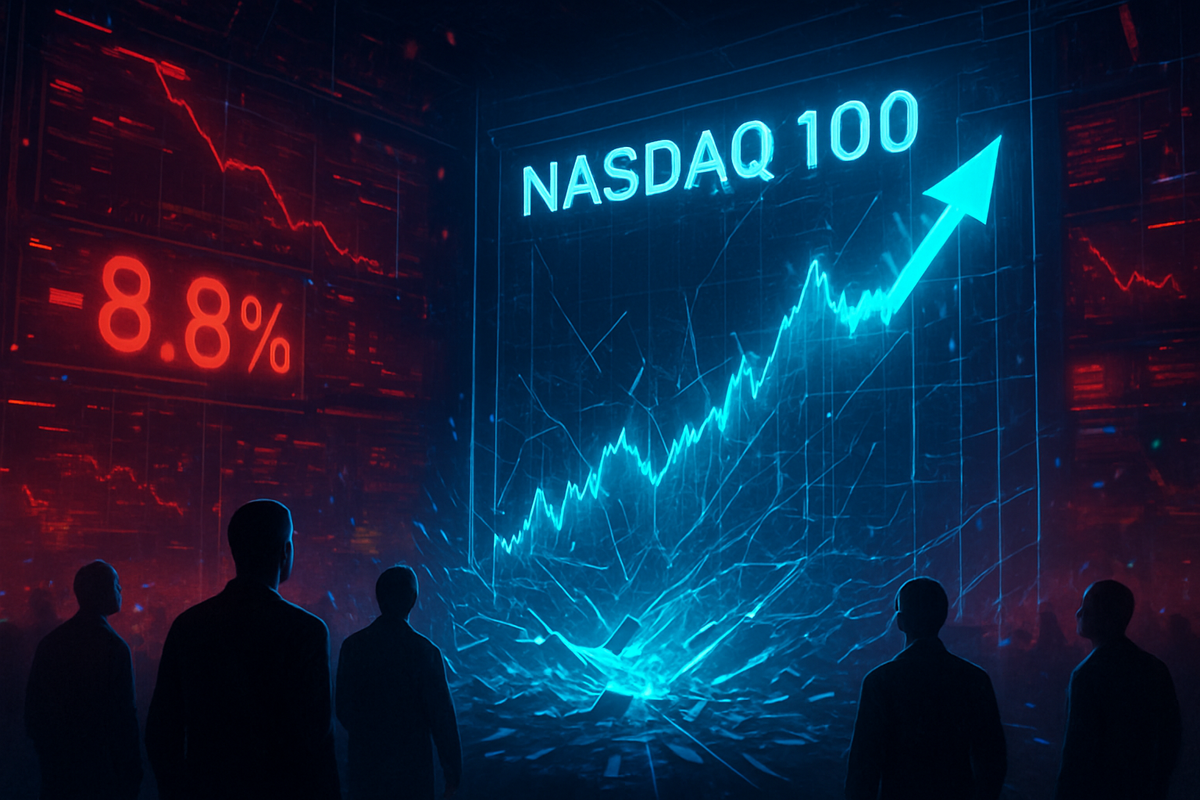
As the second quarter of 2026 opens, the technology sector is grappling with the aftermath of what traders are calling the "March Washout." Following a historic bull run through much of 2025, the tech-heavy Nasdaq 100 index has entered a period of intense turbulence, recording an 8.8% year-to-date decline as of April 6, 2026. This sharp reversal has wiped out nearly $2 trillion in market capitalization, leaving investors to wonder if the industry is finally finding a bottom or if the current volatility is the precursor to a more prolonged bear market.
The immediate implications of this washout are being felt across global markets. Institutional desks are shifting away from the speculative fervor that defined the early AI era, pivoting instead toward companies that can prove immediate return on investment (ROI). With energy costs soaring and interest rate expectations being recalibrated, the "easy money" phase of the tech cycle appears to have officially ended, forcing a fundamental repricing of the world’s most influential growth stocks.
A Perfect Storm: Geopolitics, Rates, and AI Fatigue
The "March Washout" was not the result of a single failure but rather a convergence of three distinct macroeconomic pressures that reached a boiling point in late March 2026. The most immediate catalyst was the escalation of the "Hormuz Crisis." Following the launch of military engagement known as Operation Midnight Hammer, the de facto closure of the Strait of Hormuz sent Brent crude oil prices skyrocketing past $120 per barrel. For the Nasdaq 100, this was an indirect but devastating blow, as it reignited stagflation fears and increased the operational costs for energy-hungry data center operators.
Simultaneously, the Federal Reserve delivered a "hawkish pause" during its March 18 meeting. While the market had previously priced in three interest rate cuts for 2026, the FOMC signaled only one potential reduction for the remainder of the year. This shift in monetary policy expectations raised the discount rate for future earnings, disproportionately affecting high-multiple technology firms. By the time the technical correction bottomed on March 26 and 27, the index had fallen more than 10% from its October 2025 highs, triggering massive automated sell-offs and a deleveraging event that cleared out "weak-handed" retail positions.
Finally, a growing sense of "AI Fatigue" permeated the market. After three years of rewarding companies simply for announcing new Large Language Models (LLMs), investors began punishing firms that could not show clear monetization paths for their massive capital expenditures. This "Accountability Phase" became the primary driver of the volatility seen at the end of the quarter, as shareholders demanded proof that the billions spent on infrastructure would actually hit the bottom line.
Winners and Losers of the Washout
The carnage of the first quarter has created a stark divide between the tech giants. Microsoft Corp. (NASDAQ: MSFT) found itself at the center of the capital expenditure debate. Despite reporting robust earnings, the stock plummeted 21% year-to-date as investors balked at a $37.5 billion quarterly CapEx bill. Shareholders are increasingly concerned that the company's massive investments in data centers may not yield the expected margin expansion in a high-interest-rate environment, making it one of the primary "losers" of the March reset.
In contrast, Nvidia Corp. (NASDAQ: NVDA) has shown remarkable resilience despite the broader sector's 8.8% decline. While it was not immune to the volatility, the stock established a firm valuation floor following its GTC 2026 conference in March. CEO Jensen Huang’s unveiling of the "Rubin" chip roadmap and a projected $1 trillion revenue opportunity through 2027 provided a beacon of growth that helped the stock stabilize faster than its peers. Similarly, Alphabet Inc. (NASDAQ: GOOGL) has mirrored the index's 8.8% decline, struggling to balance the massive energy costs required for its AI infrastructure against the rising price of oil.
Apple Inc. (NASDAQ: AAPL) has faced its own unique set of challenges, falling 9% year-to-date. The company is dealing with a perceived lag in AI monetization and a significant 7.7% dip in China shipments reported in February. Meanwhile, Meta Platforms Inc. (NASDAQ: META) saw its shares "crater" by 11.2% after guidance suggested its "Superintelligence" unit would require up to $135 billion in annual spending. For Meta, the washout served as a stark reminder that the market’s patience for "moonshot" spending has grown razor-thin.
Shifting Trends: From Software Hype to "Physical AI"
The March Washout signifies a broader shift in the technology industry’s evolutionary path. The market is moving away from "Pure AI Hype"—the speculative phase where any mention of generative software boosted stock prices—toward what analysts are calling "Physical AI." This trend favors companies with tangible assets, diversified revenue streams, and a focus on energy infrastructure. As power constraints become the primary bottleneck for tech growth, the significance of energy independence and localized chip production has never been higher.
This event also highlights a potential ripple effect on the broader economy. If tech giants continue to slash their CapEx to appease nervous investors, the "AI gold rush" could cool, impacting a vast ecosystem of smaller SaaS providers and semiconductor equipment manufacturers. Regulatory and policy implications are also looming, as the administration navigates the "Hormuz Crisis" and attempts to stabilize the equity markets through diplomatic initiatives like the rumored "Muscat Protocol." Historically, such washouts have often preceded a more disciplined growth phase, similar to the post-2000 dot-com recovery, where only the most fundamentally sound companies survived and thrived.
The Q2 Outlook: Recovery or Dead Cat Bounce?
Looking ahead, the short-term outlook for the Nasdaq 100 is one of "pensive recovery." The early days of April have shown signs of a "buy the dip" mentality among institutional investors who view the March deleveraging as a necessary "clearing of the decks." If the Muscat Protocol succeeds in lowering energy prices, a tactical rally could easily reclaim a significant portion of the year-to-date losses. However, the Federal Reserve’s "higher-for-longer" stance remains a formidable headwind that will likely cap any exuberant gains.
In the long term, tech companies will be required to undergo strategic pivots. We are likely to see an increase in stock buybacks and dividend initiations as firms like Microsoft and Meta attempt to placate investors while they wait for their AI investments to mature. The market opportunity in Q2 and Q3 of 2026 lies in "Quality Growth"—identifying firms that can maintain double-digit growth without relying on cheap credit or unsustainable energy consumption.
Investor Takeaways: Watching the Bottom
The 8.8% year-to-date decline in the Nasdaq 100 serves as a critical stress test for the modern tech portfolio. The key takeaway is that the "AI Free Lunch" is over; the market has transitioned from a valuation environment based on potential to one based on performance. As the second quarter progresses, the primary indicator of a true bottom will be the stabilization of energy prices and the clarity of the Federal Reserve’s next move.
Investors should keep a close watch on the upcoming Q1 earnings season in late April, which will provide the first real look at how the Hormuz Crisis impacted corporate margins. While the volatility of the March Washout was painful, it has reset valuation multiples to more attractive levels for the long-term holder. The coming months will determine whether this correction was a temporary detour or the beginning of a new, more cautious era for Silicon Valley.
This content is intended for informational purposes only and is not financial advice