Strategic Pivot: Beijing’s $213 Billion BRI Surge Signals a New Era of Resource Hegemony
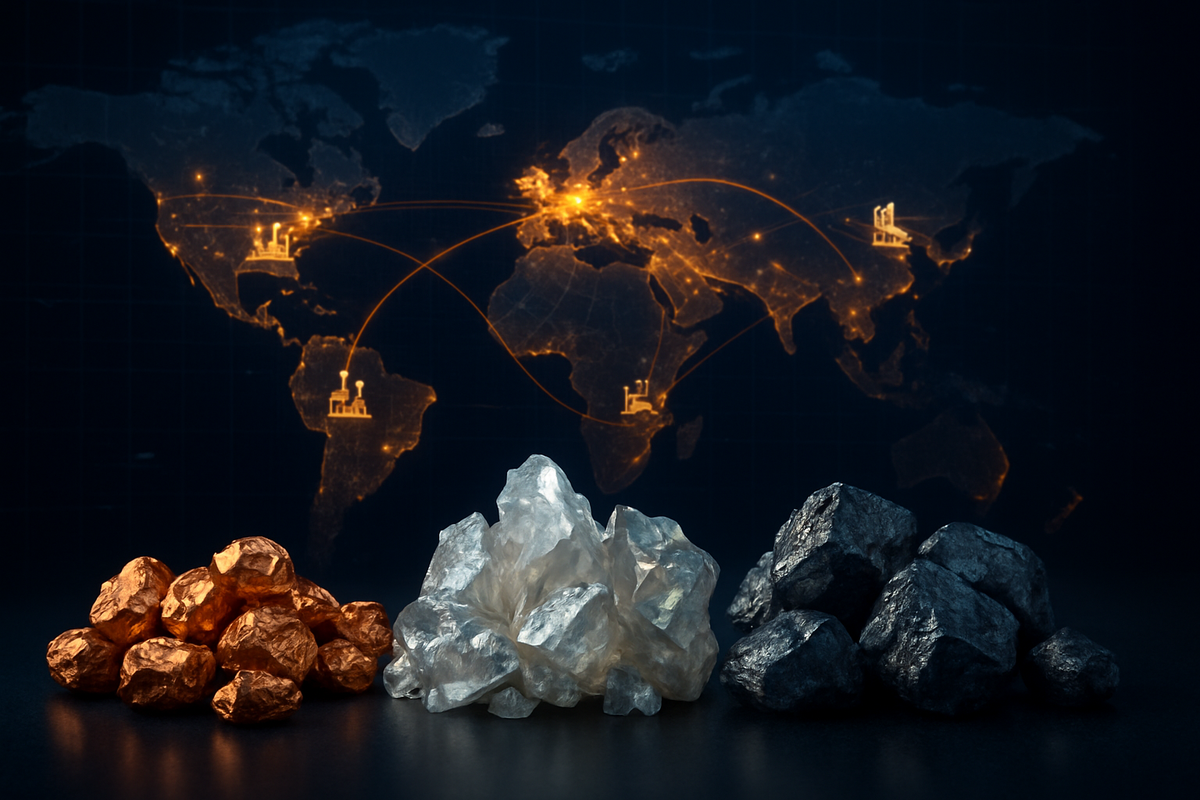
In a definitive shift that has sent ripples through global commodity markets, a landmark report released on January 18, 2026, by the Green Finance & Development Center (GFDC) and Griffith University has unveiled a massive resurgence in China’s Belt and Road Initiative (BRI). Beijing has committed a record-breaking $213.5 billion to overseas projects in 2025, a staggering 74% increase from the previous year. This "surge" marks the end of the cautious "small but beautiful" era of the early 2020s, replacing it with a high-stakes "global resources grab" designed to insulate the world's second-largest economy from geopolitical volatility.
The immediate implications are profound: China is no longer just building roads and bridges; it is securing the literal foundations of the 21st-century economy. By aggressively locking in supply chains for lithium, copper, and rare earths, Beijing is creating a "strategic resilience" model that challenges the dominance of Western mining giants and standardizes Chinese influence across Africa, Central Asia, and Southeast Asia. As of January 19, 2026, market analysts are already pricing in the long-term reality of a bifurcated supply chain where China holds the keys to the most critical green-energy inputs.
The Return of the Megaproject: A 2025 Retrospective
The data finalized in the January 18 report illustrates a dramatic reversal of the post-pandemic investment slump. Throughout 2025, Chinese engagement in the BRI hit its highest level since the initiative's launch in 2013, with cumulative spending now surpassing $1.4 trillion. The shift was led by a massive pivot toward the metals and mining sector, which saw $32.6 billion in new investments, and the energy sector, which attracted $93.9 billion. This was not a random spending spree but a calculated move to "front-load" resource security ahead of the 15th Five-Year Plan (2026–2030).
The timeline of this escalation began in late 2024 as global interest rates began to stabilize, allowing Chinese state-owned enterprises (SOEs) to resume large-scale financing. By mid-2025, the average deal size had doubled to $1.24 billion. Key players such as China National Chemical Engineering (SHA: 601117) and Power Construction Corp of China (SHA: 601668) spearheaded massive gas and renewable energy projects in Nigeria and Saudi Arabia. Meanwhile, private titans like CATL (SHE: 300750) moved aggressively into the "Lithium Triangle" and Africa, ensuring that the raw materials for the global EV revolution remain under Chinese oversight.
Winners and Losers in the Race for Critical Minerals
The primary beneficiaries of this financing surge are the integrated Chinese firms that have mastered the art of "value-chain integration." Zijin Mining Group (HKG: 2899) and Ganfeng Lithium (HKG: 1772) are emerging as the new titans of the industry, using BRI funds to acquire and develop assets that Western companies often view as too risky. By owning the mine, the processing facility, and the export infrastructure, these companies are effectively bypassing traditional market fluctuations. Similarly, Zhejiang Huayou Cobalt (SHA: 603799) has solidified its dominance in the Democratic Republic of Congo and Zimbabwe, creating a near-monopoly on midstream processing that forces global manufacturers to look toward Beijing for supply.
Conversely, traditional Western mining majors such as Rio Tinto (ASX: RIO) and BHP Group (ASX: BHP) face a tightening environment. While these companies remain profitable, they are increasingly finding themselves outbid or diplomatically outmaneuvered in frontier markets like Kazakhstan and the Republic of Congo. American firms like Freeport-McMoRan (NYSE: FCX) are particularly vulnerable to this shift, as the "global resources grab" limits their ability to expand copper reserves at a time when demand for AI data centers and electrical grids is peaking. The 2026 report suggests that the "premium" for non-Chinese-controlled resources is likely to rise significantly as the available supply is "locked-in."
Geopolitical Realignment and the AI Commodity Boom
This surge fits into a broader industry trend where commodities are being treated as strategic national security assets rather than simple tradable goods. The "Strategic Resilience" model codified in Beijing’s latest policy documents emphasizes using the BRI as a "protective umbrella." By securing resources through direct investment rather than open-market purchases, China is hedging against potential maritime blockades or Western-led sanctions. This is particularly evident in the rare earth sector, where Baogang Group (SHA: 600010) has expanded its reach into Central Asia to ensure that China maintains its 90% plus grip on the refined rare earth market.
The historical precedent for this was the "Going Out" policy of the early 2000s, but the 2026 version is far more sophisticated. Unlike the previous decade's focus on oil and coal, the current grab is laser-focused on the "dual-track" economy: high-tech manufacturing and the energy transition. The ripple effects are already being felt in the copper market, where the demand for AI-driven infrastructure has intersected with Chinese-led mine acquisitions. This has created a "supply-side bottleneck" for any nation not currently aligned with Beijing’s infrastructure network.
The Road Ahead: Scenarios for 2026 and Beyond
In the short term, the market can expect heightened price volatility as Western nations scramble to enact "de-risking" strategies. We are likely to see a surge in "resource nationalism" in BRI partner countries, who may seek to renegotiate terms as they realize the value of the assets they have pledged to Chinese creditors. However, the long-term outlook suggests a strategic "lock-in" where the most cost-effective resources are integrated into the Chinese ecosystem, forcing Western companies to develop more expensive, lower-grade deposits in "friendly" jurisdictions.
Strategically, the next phase of the BRI will likely focus on "Digital and Green" integration. We should expect to see Chinese companies not only mining lithium but also building the gigafactories and smart-grid infrastructure directly in host nations like Indonesia and Brazil. This "all-in-one" approach makes it nearly impossible for competitors to enter these markets. For the public companies involved, the challenge will be navigating the increasing regulatory scrutiny from the U.S. and EU, which are likely to introduce stricter "traceability" requirements for minerals in an attempt to curb China’s influence.
Summary: A New Map of Global Power
The January 18 report confirms what many had suspected: China has successfully used a period of global economic transition to front-load its resource needs for the next decade. The $213.5 billion surge is more than just an investment figure; it is a declaration of intent. By controlling the "veins" of the modern economy—copper, lithium, and rare earths—Beijing has positioned itself as the indispensable gatekeeper of the global energy transition.
For investors, the coming months will require a focus on two key areas: the "locked-in" supply agreements that provide Chinese SOEs with a cost advantage and the potential for diplomatic flare-ups in resource-rich regions like Africa and Central Asia. The market is moving toward a reality where resource security is no longer guaranteed by the highest bidder, but by the entity that built the road to the mine. The "global resources grab" is no longer a future threat; as of 2026, it is the defining feature of the international commodity landscape.
This content is intended for informational purposes only and is not financial advice.