Silicon Spin-off: Alibaba Prepares to List T-Head Unit Amid Global AI Chip Race
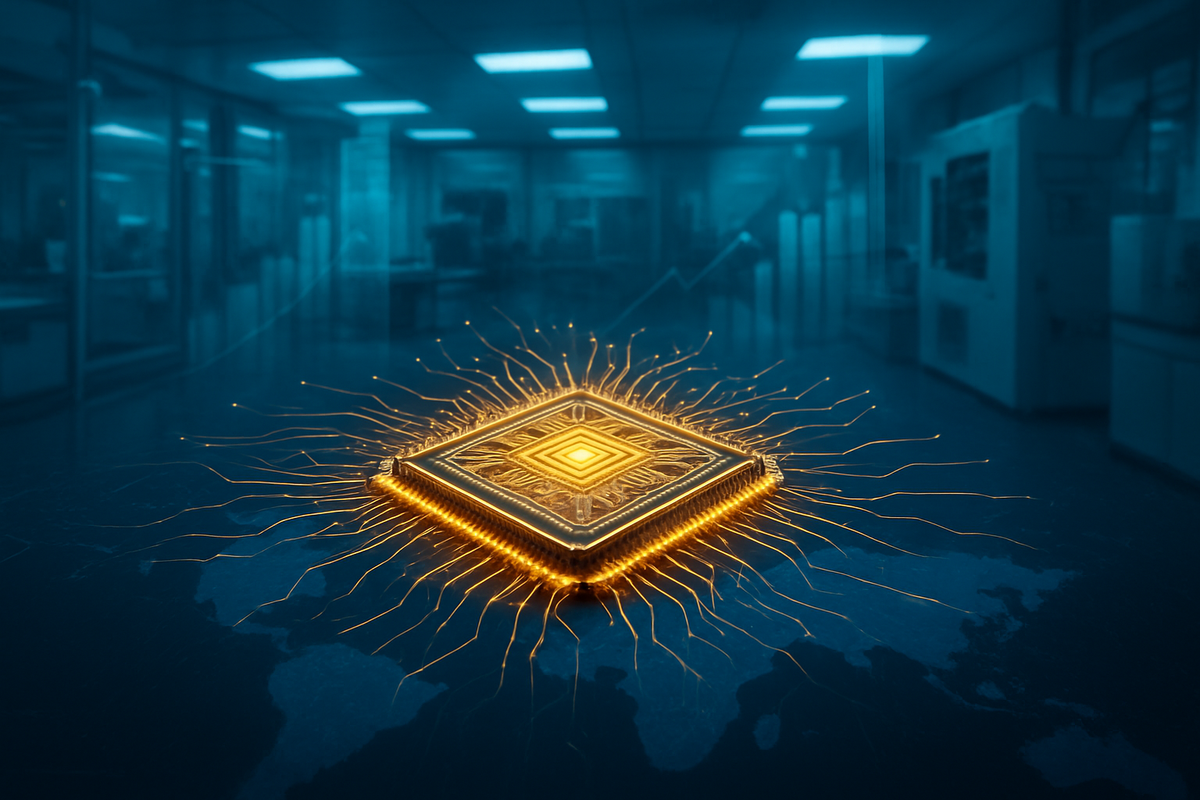
In a move that signals a profound shift in the global semiconductor hierarchy, Alibaba Group Holding Limited (NYSE: BABA) has reportedly initiated plans to list its specialized chipmaking subsidiary, T-Head (also known as Pingtouge). As of January 22, 2026, the tech giant is moving to restructure the unit into a standalone entity, adopting a mixed-ownership model that includes equity stakes for key engineering talent. This potential Initial Public Offering (IPO) represents more than just a capital raise; it is a strategic maneuver to decouple Alibaba’s high-growth hardware ambitions from its core e-commerce and cloud businesses, positioning T-Head to compete directly on the international stage.
The immediate implications of this listing are twofold: first, it provides T-Head with the independent valuation and capital necessary to scale its production of AI accelerators; and second, it marks a definitive pivot in Alibaba’s broader corporate strategy. By carving out its silicon division, Alibaba aims to insulate its most critical technology development from the volatility of the broader consumer market while aggressively challenging the dominance of Western chipmakers within the Asian market.
The Move to Market: T-Head’s Path to Independence
The reports surfacing in late January 2026 indicate that Alibaba’s leadership, spearheaded by CEO Eddie Wu and Chairman Joe Tsai, has designated T-Head as the vanguard of the company’s "AI-First" era. This development follows a period of intense internal reorganization. Unlike the previously scrapped IPO for Alibaba’s Cloud Intelligence Group, which was hindered by shifting U.S. export controls in late 2023, the T-Head listing is being framed as a "national champion" play. The timeline suggests a formal filing could occur in late 2026 or early 2027, with a likely listing on the Hong Kong Stock Exchange or Shanghai’s STAR Market.
The impetus for this spin-off is rooted in T-Head’s recent commercial breakthroughs. No longer just an internal research and development department, the unit recently secured a landmark contract with one of China’s largest wireless carriers to deploy its proprietary AI accelerators in a massive data center project. This transition from a captive supplier to a commercial hardware provider has fundamentally changed the unit's valuation profile. Industry insiders note that the restructuring includes a "mixed-ownership" incentive structure designed to retain the elite engineers who developed the company's XuanTie RISC-V processors and Hanguang AI units.
Initial market reactions have been cautiously optimistic. Analysts suggest that by creating a separate corporate structure, T-Head can more easily form joint ventures and secure external customers who might have previously been wary of purchasing hardware from a direct competitor like Alibaba Cloud. The move also follows a massive $53 billion pledge by Eddie Wu toward AI infrastructure, signaling that Alibaba is willing to bet the farm on the future of specialized silicon.
Winners and Losers in the Silicon Shuffle
The most immediate winner in this scenario is Alibaba Group itself. By unlocking the value of T-Head, the parent company can demonstrate to investors the worth of its deep-tech portfolio, which has often been overshadowed by the regulatory and competitive pressures facing its e-commerce segments. Furthermore, a successful IPO would provide T-Head with a war chest to accelerate its 2nm and 3nm development cycles, potentially narrowing the generational gap with global leaders.
Domestic competitors such as Baidu, Inc. (NASDAQ: BIDU), which operates its own Kunlunxin chip unit, also stand to gain. A high-profile, successful listing for T-Head would likely lead to a "rising tide" effect, lifting the valuations of other Chinese AI hardware firms as investors look for localized alternatives to Western technology. Conversely, NVIDIA Corporation (NASDAQ: NVDA) faces a more complex challenge. While Nvidia remains the undisputed global leader, T-Head’s flagship Parallel Processing Unit (PPU) is reportedly 40% cheaper to produce than the China-compliant variants offered by Western firms. If T-Head can achieve scale, it could significantly erode Nvidia’s market share within the world’s largest semiconductor market.
Traditional architecture providers like Arm Holdings plc (NASDAQ: ARM) may also see a shift in the landscape. T-Head has been a primary driver of the RISC-V architecture, an open-source alternative to Arm’s proprietary designs. A well-funded, public T-Head would further legitimize RISC-V, potentially reducing the long-term licensing revenue for Arm as more Chinese and global firms look to avoid the geopolitical risks associated with proprietary Western instruction sets.
A Seismic Shift in the Semiconductor Landscape
This event fits into a broader industry trend where the world’s "hyperscalers"—including the likes of Amazon.com, Inc. (NASDAQ: AMZN) and Alphabet Inc. (NASDAQ: GOOGL)—are increasingly designing their own silicon to optimize AI workloads. However, T-Head’s move toward a public listing is a radical departure from the "captive" model used by American tech giants. By seeking an independent listing, Alibaba is attempting to create a merchant silicon powerhouse comparable to a specialized version of Advanced Micro Devices, Inc. (NASDAQ: AMD).
The ripple effects on global policy cannot be ignored. The potential IPO comes at a time of heightened scrutiny over semiconductor supply chains and export controls. T-Head’s focus on RISC-V and domestic manufacturing partnerships is a direct response to these pressures, serving as a blueprint for "de-risking" in the tech sector. Historically, this mirrors the trajectory of specialized units that eventually outgrew their parents, similar to how certain aerospace or automotive components divisions became industry titans in their own right during the 20th century.
Furthermore, the move underscores the "balkanization" of the AI hardware market. As T-Head accelerates its commercial sales, we may see the emergence of two distinct global ecosystems: one centered around established Western architectures and another around the open-source and domestic designs championed by firms like T-Head. This could force global software developers to support multiple hardware stacks, increasing complexity but also fostering a new era of price competition in the AI infrastructure space.
The Road Ahead: Scaling the AI Wall
In the short term, the market will be watching for the specifics of T-Head’s external revenue growth. For the IPO to achieve the desired valuation, the unit must prove it can win contracts outside the Alibaba ecosystem. The transition from an internal cost center to a profit-driven hardware vendor is notoriously difficult, requiring a robust sales force and global support infrastructure that T-Head is only just beginning to build. Strategic pivots toward "edge AI"—chips for vehicles and IoT devices—may be necessary to diversify revenue beyond large data centers.
Long-term, the success of T-Head will depend on its ability to stay at the cutting edge of lithography. While design capability is high, access to advanced manufacturing remains a hurdle. Potential scenarios include T-Head becoming the primary silicon provider for a "sovereign AI" cloud across Southeast Asia and the Middle East, leveraging its cost advantages to undercut Western rivals. However, the challenge remains: can a Chinese chip firm maintain its technological pace if further international restrictions are placed on design software or manufacturing equipment?
Summary and Investor Takeaways
The reported plans for a T-Head IPO mark a watershed moment for Alibaba and the global semiconductor industry. It represents the culmination of years of R&D and a strategic bet that AI hardware, rather than just software or services, will be the defining battleground of the next decade. For Alibaba, this is an opportunity to reclaim its status as a premier technology innovator; for the market, it is a signal that the era of "captive" chip design is evolving into a more commercial, competitive phase.
Investors should closely monitor T-Head’s upcoming quarterly performance reports and any official filings in Hong Kong. Key metrics to watch include the percentage of revenue derived from external customers and any updates on the unit’s 2nm development roadmap. While the geopolitical environment remains a headwind, the commercial momentum of domestic AI accelerators in China suggests that T-Head could be one of the most significant tech listings of 2026 and 2027.
This content is intended for informational purposes only and is not financial advice.