Silicon Renaissance: Nasdaq Reclaims 23,000 as 'Reinvigorated' Tech Giants Lead 2025 Year-End Surge
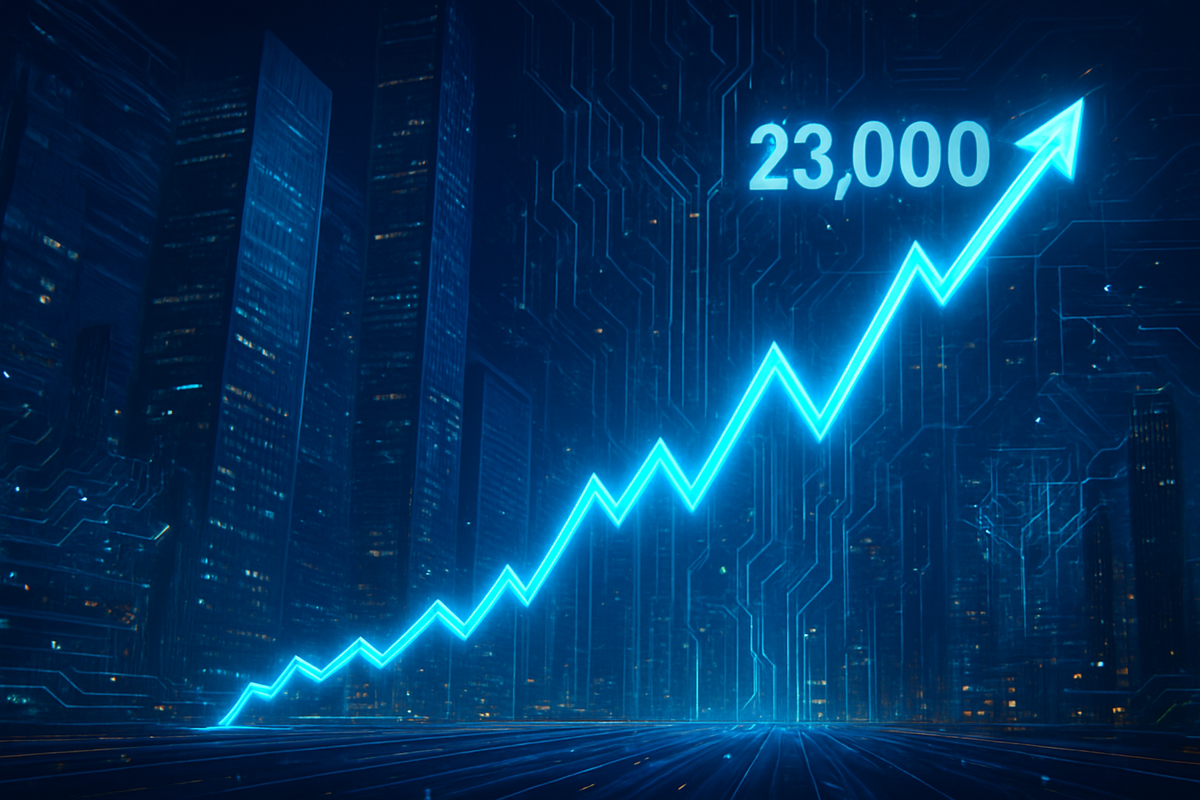
The Nasdaq Composite surged past the 23,000 mark on December 19, 2025, capping off a dramatic 48-hour recovery that has recalibrated investor expectations for the coming year. This "Tech Renaissance," as many on Wall Street are calling it, follows a period of intense volatility and a sharp mid-December correction that briefly threatened to derail the three-year bull market. The rally was ignited by a "perfect storm" of cooling inflation data and a decisive pivot by the Federal Reserve, providing a much-needed second wind for the technology sector.
The immediate implications of this surge are profound, signaling a shift in market leadership toward what analysts describe as "reinvigorated" tech names—companies that have successfully transitioned from the speculative hype of artificial intelligence to tangible, large-scale monetization. As the market enters the final trading days of 2025, the narrative has moved firmly away from "AI potential" and toward "AI performance," with the tech-heavy index now positioned for a potential run at 25,000 in early 2026.
The December Breakthrough: From Correction to Catalyst
The timeline leading to this week's rally began with a period of "AI fatigue" in late 2025, as investors grew weary of the massive capital expenditures (CapEx) required to build out neural infrastructure. This skepticism culminated in a 10% correction across major tech indices between October and early December. However, the tide turned on December 18, 2025, when the November Consumer Price Index (CPI) report showed inflation cooling to 2.7%, with Core CPI hitting 2.6%. This data arrived just eight days after the Federal Reserve, led by Chairman Jerome Powell, cut interest rates by 25 basis points to a target range of 3.50%–3.75%.
The rally was further solidified by a series of blowout earnings reports and forward-looking guidance from the "infrastructure plumbers" of the digital age. Key players like Oracle and Micron provided the fundamental evidence the market was craving: that the billions spent on chips were finally generating massive backlogs of future revenue. The initial market reaction was explosive, with the Nasdaq jumping 3.4% in a single session, its best daily performance since the spring of 2024. Traders who had been sitting on the sidelines in cash began a frantic "Santa Claus rally" rotation back into high-growth equities, fearing they would miss the next leg of the AI cycle.
Winners and Losers: The Rise of the Reinvigorated
The primary beneficiaries of this late-season surge are the "reinvigorated" giants that had been written off or undervalued during the mid-year slump. Nvidia Corp (Nasdaq: NVDA) remains the undisputed bellwether, rebounding from a 14% autumn decline to flirt with a historic $5 trillion market capitalization. The company’s "Blackwell" architecture has moved from the testing phase to mass production, calming fears that the semiconductor cycle had peaked. Similarly, Oracle Corp (Nasdaq: ORCL) emerged as the "primary engine" of the December rally. After a mid-month dip, Oracle’s stock skyrocketed following news of a staggering $523 billion in Remaining Performance Obligations (RPO), proving that its cloud infrastructure is now the backbone for the next generation of autonomous AI startups.
On the consumer side, Apple Inc (Nasdaq: AAPL) has staged a remarkable comeback. After losing over $1 trillion in market value earlier in 2025 due to tariff-related supply chain disruptions, the integration of "AI Agents" into the latest iPhone hardware has triggered a massive upgrade cycle, re-establishing Apple as a top-tier growth play. Microsoft Corp (Nasdaq: MSFT) has also seen a reinvigoration; after underperforming for much of 2024 and 2025, the software giant is finally showing clear return on investment (ROI) from its OpenAI partnership, with enterprise AI tools now contributing significantly to its bottom-line growth. Conversely, the "losers" in this environment are legacy hardware firms and non-AI-integrated SaaS providers that have failed to adapt, seeing their valuations stagnate as capital migrates toward the "AI 2.0" leaders.
AI 2.0 and the Industrialization of Intelligence
This event represents a wider significance in the evolution of the global economy: the transition from the "training phase" of AI to the "utility phase." In 2023 and 2024, the market was dominated by the "training phase," where the primary activity was buying chips to build large language models. The December 2025 rally marks the beginning of the "Industrialization Phase," or "AI 2.0," where autonomous "Agentic AI" begins to execute complex, multi-step workflows for Fortune 500 companies. This shift is mirrored in the performance of companies like Alphabet Inc (Nasdaq: GOOGL), whose Google Cloud growth accelerated to 34% this quarter, driven by custom TPU (Tensor Processing Unit) chips designed for specific industrial applications.
Historically, this moment draws comparisons to the 1998-1999 period of the internet boom, but with a critical difference: the current leaders possess massive cash flows and high barriers to entry. Regulatory implications are also looming, as the surge in AI utility has prompted renewed discussions in Washington regarding AI safety and data sovereignty. However, for the moment, the market is prioritizing "Infrastructure Economics"—the physical storage and power required to keep the AI engines running—which has led to a resurgence in the semiconductor and energy sectors that support the massive data centers of the future.
Looking Ahead: The Road to 25,000
The short-term outlook for the Nasdaq remains bullish, with the index likely to benefit from a "window dressing" effect as fund managers adjust their portfolios for year-end reporting. However, the long-term success of this rally depends on whether the massive CapEx of 2025 continues to translate into double-digit earnings-per-share (EPS) growth in 2026. A potential strategic pivot may be required for smaller tech firms, which must now find ways to compete in an environment where the "Magnificent Seven" and their infrastructure partners hold an increasingly dominant share of the AI value chain.
Market opportunities will likely emerge in the "AI services" sector, as companies seek help implementing the complex agentic systems sold by Microsoft and Oracle. The primary challenge will be the potential for "valuation indigestion"—if the Fed pauses its rate-cut cycle or if geopolitical tensions reignite inflationary pressures, the current high multiples could face another test. Scenarios for 2026 range from a continued "melt-up" to a 25,000 Nasdaq, to a more sober "sideways" market if the anticipated AI productivity gains take longer than expected to materialize in broader economic data.
Final Assessment: A Market in Transition
The December 2025 tech rally is more than just a seasonal bounce; it is a validation of the "AI Second Wind." The key takeaway for investors is that the market has become more discerning, rewarding companies that can prove their AI utility through RPO and tangible revenue rather than just "visionary" presentations. The Nasdaq's return to record highs demonstrates the resilience of the technology sector in the face of fluctuating interest rates and global trade uncertainties.
Moving forward, investors should keep a close watch on the "infrastructure plumbers"—the memory, storage, and power providers—as they serve as the early warning system for the broader tech ecosystem. While the "Silicon Renaissance" has provided a spectacular end to 2025, the lasting impact will be determined by how effectively these reinvigorated giants can turn their massive infrastructure investments into the next generation of global productivity. The "cautious optimism" of late 2025 is likely to define the market's character well into the first half of 2026.
This content is intended for informational purposes only and is not financial advice.