Peace Hopes Ignite Wall Street: S&P 500 and Dow Post Best Gains Since Start of Iran Conflict
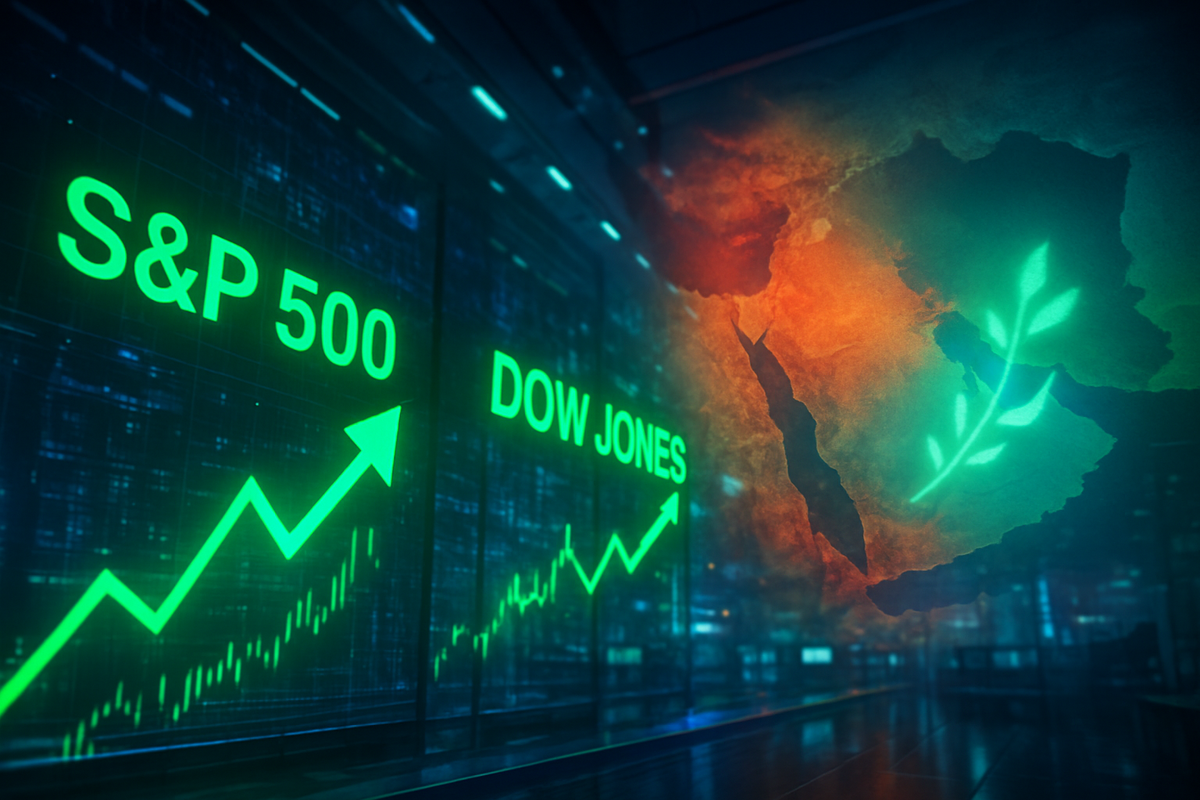
Wall Street erupted in a massive relief rally on Tuesday, March 31, 2026, as investors seized on signs of a potential end to the month-long military hostilities in the Middle East. The S&P 500 jumped 2.3%, while the Dow Jones Industrial Average surged 841 points, marking the best single-session performance for both indices since the conflict with Iran escalated in late February. The buying frenzy was sparked by reports from the White House indicating that President Trump is prepared to halt military operations, even as the Strait of Hormuz—the world’s most critical energy chokepoint—remains effectively closed to commercial traffic.
The sudden shift in geopolitical sentiment provided a much-needed catalyst for an equity market that had been battered by "stagflation" fears and skyrocketing energy costs. As the trading floor buzzed with the news, the CBOE Volatility Index (VIX) plummeted, signaling a return of the "risk-on" appetite that had been absent for weeks. Analysts suggest that the market is now pricing in a "diplomatic pivot" that prioritizes economic stability over a protracted naval engagement, offering a glimmer of hope for a global economy that was teetering on the edge of a recession.
A Breakthrough in High-Stakes Diplomacy
The rally began in earnest during the mid-morning session following a leaked memo from the National Security Council. The document detailed a strategic shift by the Trump administration, suggesting that the primary military objectives—degrading Iranian missile sites and naval infrastructure—had been sufficiently achieved. This signaled that the U.S. might be willing to declare a "mission accomplished" phase and move toward a ceasefire, despite the fact that Iranian forces still hold a tentative blockade over the Strait of Hormuz.
The timeline leading to this moment has been fraught with tension. After a series of minor skirmishes in 2025, the situation exploded into a full-scale air and sea conflict on February 24, 2026. For over five weeks, the U.S. and its regional allies engaged in intensive strikes, which sent Brent crude prices soaring above $115 per barrel and domestic WTI prices near $100. The market's reaction today reflects a collective sigh of relief that the "worst-case scenario"—a multi-year ground war—is being avoided. Treasury yields also moderated slightly as the flight-to-safety trade eased, with the 10-year Note stabilizing after weeks of volatile swings.
Key stakeholders, including major European allies and the Gulf Cooperation Council (GCC), have reportedly been pressuring Washington to find an off-ramp as the closure of the Strait began to threaten global supply chains. President Trump’s willingness to de-escalate without a full reopening of the waterway is a departure from traditional naval doctrine, which insists on the "freedom of navigation." However, the administration’s focus on domestic "Energy Dominance" appears to have given them the political cover to allow for a temporary trade disruption in exchange for a cessation of active combat.
Corporate Winners and the Energy Pivot
The shift in the geopolitical landscape has created a stark divide in corporate performance. High-growth technology firms, which had been the primary victims of rising discount rates and inflation fears, led the charge upward. NVIDIA Corporation (Nasdaq: NVDA) saw its shares climb 4.5%, as investors bet that a cooling of tensions would stabilize the global semiconductor supply chain. Similarly, Microsoft Corporation (Nasdaq: MSFT) and Marvell Technology, Inc. (Nasdaq: MRVL) posted significant gains, as the tech-heavy Nasdaq Composite outpaced the broader market with a 3.3% jump.
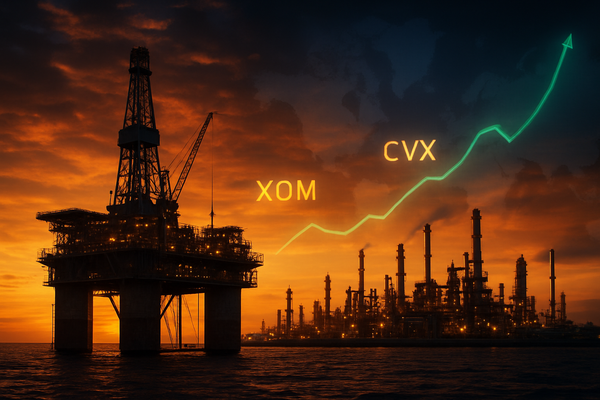
Conversely, the energy sector, which had been the sole beneficiary of the conflict's premium, saw a "sell the news" reaction. Exxon Mobil Corporation (NYSE: XOM) and Chevron Corporation (NYSE: CVX) both saw their early gains evaporate, closing the day nearly flat or slightly down. While these companies benefited from $100 oil, the prospect of a de-escalation suggests a capping of the "war premium" in crude prices. Meanwhile, the transportation and travel sectors, which are highly sensitive to fuel costs, staged a massive comeback. United Airlines Holdings, Inc. (Nasdaq: UAL) and Delta Air Lines, Inc. (NYSE: DAL) rallied over 6% each, anticipating that a ceasefire would eventually lead to lower jet fuel prices and a return to normal international flight paths.
Defense contractors, which had seen record-breaking order books over the last month, experienced a nuanced session. Lockheed Martin Corporation (NYSE: LMT) and RTX Corporation (NYSE: RTX) initially dipped on the news of a potential ceasefire but recovered toward the end of the day. Analysts argue that even if active hostilities end, the regional "re-arming" phase is far from over, as Middle Eastern allies look to bolster their own defenses against future disruptions.
Wider Significance and Historical Precedents
This rally is not just about a single day’s gains; it represents a significant test of the "Trump Energy Doctrine." By maintaining high domestic production levels, the U.S. has managed to weather the closure of the Strait of Hormuz better than it did during the oil shocks of the 1970s. This event serves as a modern validation of the "Energy Dominance" policy, suggesting that the U.S. can now engage in—and disengage from—Middle Eastern conflicts with a degree of economic insulation that was previously impossible.
Historically, markets have shown a "72-hour rule" regarding geopolitical shocks: a sharp sell-off followed by a rapid recovery once the path toward resolution becomes clear. Today’s 2.3% jump in the S&P 500 mirrors the post-invasion rallies of 1991 and 2003, where the market bottomed almost exactly when the "uncertainty" of the conflict’s scope was replaced by the "certainty" of the military outcome. The ripple effect is being felt globally, with the Nikkei and DAX expected to open significantly higher in overnight trading as the "risk of contagion" to the global financial system appears to be receding.
However, the decision to leave the Strait of Hormuz closed remains a significant regulatory and policy hurdle. Insurance premiums for global shipping remain at historic highs, and companies like A.P. Møller - Mærsk A/S (OTC: AMKBY) are still rerouting vessels around the Cape of Good Hope. This "new normal" of restricted trade routes may force a permanent shift in global logistics, favoring near-shoring and domestic manufacturing—a trend the administration has championed since 2025.
The Path Ahead: What to Watch
In the short term, the market will be hyper-focused on the specifics of the ceasefire. Any "break" in the peace talks or a resumption of missile exchanges could quickly erase today’s gains. Investors should watch for the "Phase 2" of this recovery, which will likely involve a gradual reopening of the Strait. If the administration can transition from military might to diplomatic pressure to clear the waterway, it could trigger another 5-10% leg up for the S&P 500 as "stagflation" fears are finally put to rest.
Long-term, the strategic pivot toward domestic energy and isolated foreign policy will require a shift in investor thinking. The "Globalism" of the early 2000s is being replaced by a more fragmented, "Fortress America" economic model. Companies that can thrive in a high-cost, high-friction trade environment will likely be the winners of the next decade. Strategic adaptations in the automotive and manufacturing sectors, particularly regarding supply chain resilience, will be the key metrics for performance in the coming quarters.
Closing Thoughts for Investors
The March 31 rally marks a definitive turning point in the 2026 market narrative. While the conflict in the Middle East is not entirely resolved, the shift from active military escalation to a controlled "de-escalation" has removed the immediate threat of a global economic meltdown. Investors should take this as a signal that the floor for equities may have been set, but caution is still warranted as the logistical challenges of a closed Strait of Hormuz remain.
Moving forward, the primary focus for the market will shift back to the Federal Reserve and the March inflation data. If energy prices begin a steady decline following today's news, it may give the Fed the "green light" to pause its interest rate hikes, or perhaps even signal a cut later in the year. For now, the "peace dividend" is back on the table, and Wall Street is eager to feast.
This content is intended for informational purposes only and is not financial advice