PCE Data Preview: Fed Braces for "Hawkish Hold" Amid Inflation Stickiness and Data Blindness
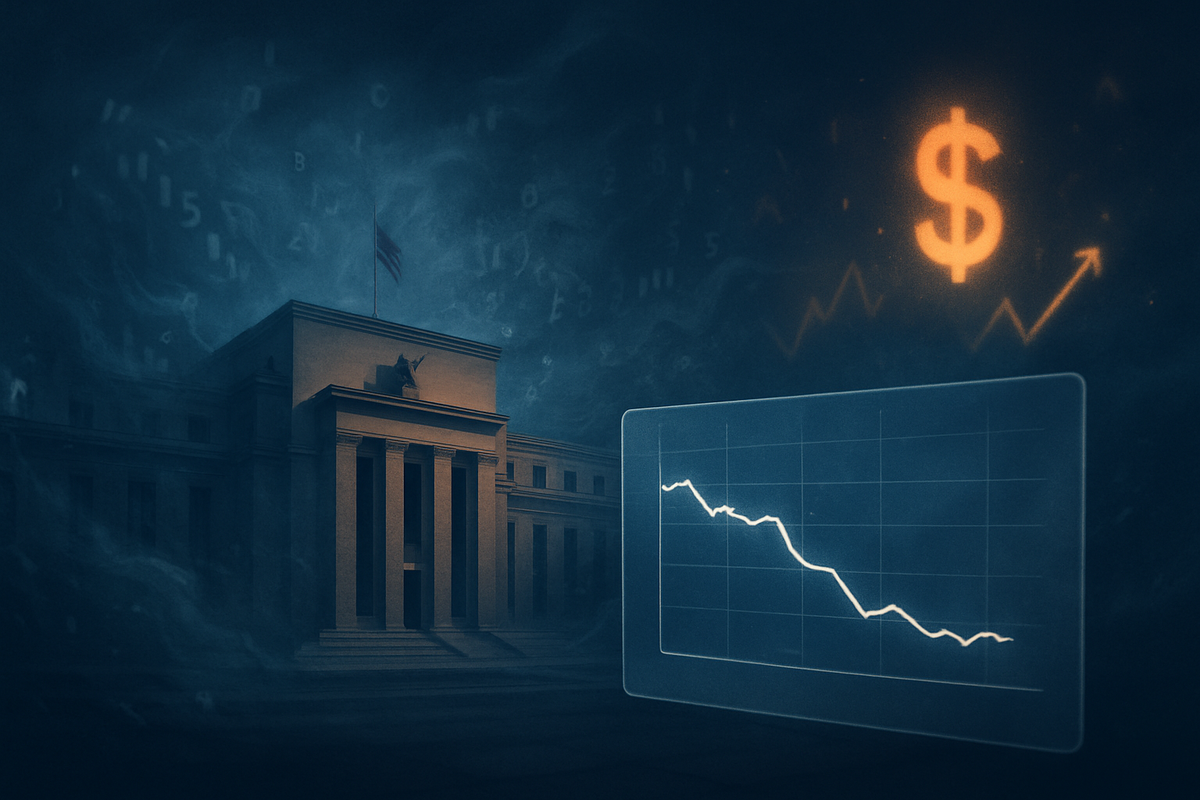
As the Federal Reserve prepares for its first policy meeting of 2026, a sense of cautious anxiety has gripped Wall Street. With the January 27–28 Federal Open Market Committee (FOMC) meeting looming, investors are parsing the latest fragments of inflation data to determine if the central bank’s recent cycle of rate cuts is coming to a premature end. The backdrop is unusually complex: a late-2025 federal government shutdown has disrupted traditional reporting cycles, leaving policymakers and traders in a state of "data blindness" just as the "last mile" of the inflation fight turns unexpectedly grueling.
The immediate implications are clear: the market is now pricing in a near-certainty that the Fed will maintain the federal funds rate at its current target range of 3.50%–3.75%. This "hawkish hold" marks a sharp pivot from the optimism of late 2025, when three consecutive rate cuts suggested a smooth path toward a "neutral" monetary policy. However, with the latest catch-up data released just yesterday, January 22, showing Core Personal Consumption Expenditures (PCE) ticking back up to 2.8%, the narrative of a cooling economy has been replaced by one of resilient, "sticky" prices.
The Inflation Stall: A Confluence of Shutdowns and Stickiness
The primary focus for traders this week is the fallout from the October and November 2025 PCE figures, which were delayed by a 43-day federal government shutdown and only recently released by the Bureau of Economic Analysis (BEA). These reports confirmed that Core PCE—the Fed’s preferred inflation gauge that strips out volatile food and energy costs—rose to 2.8% year-over-year, up from 2.7% previously. Because the official December 2025 PCE report has been pushed back to February 20, the FOMC will enter its January meeting without a full year-end picture, forcing Chairman Jerome Powell to rely on "nowcasting" models that suggest inflation remains stubbornly above the 2% target.
This timeline of events has created a peculiar environment where the "wait-and-see" approach is no longer a choice but a necessity. Throughout 2025, inflation appeared to be on a glide path, reaching as low as 2.5% in the spring. However, the final quarter of the year saw a resurgence in services pricing and the initial anticipatory effects of proposed trade tariffs, which have kept business costs elevated. Key stakeholders, including regional Fed presidents who were previously dovish, have signaled that the risk of a "secondary inflationary wave" outweighs the risk of a mild economic cooling.
Market Bifurcation: Who Wins and Loses in the "Higher-for-Longer" 2.0
The prospect of rates staying at 3.5% or higher for the first half of 2026 has created distinct winners and losers across the equity landscape. Large-cap financial institutions like J.P. Morgan Chase & Co. (NYSE: JPM) stand to benefit from wider net interest margins (NIM), as the yield curve remains supportive of lending profitability. However, this is balanced against concerns over credit quality; regional players such as Regions Financial Corp. (NYSE: RF) have seen increased volatility as investors worry that sustained high rates could strain small business borrowers and commercial real estate portfolios.
In the technology sector, the reaction is more clinical. High-growth, high-beta companies that rely on cheap capital are facing a valuation squeeze. While titans like Microsoft Corp. (NASDAQ: MSFT) and Meta Platforms, Inc. (NASDAQ: META) boast strong enough cash flows to weather the storm—and notably report earnings on the final day of the FOMC meeting—others are more vulnerable. Intel Corp. (NASDAQ: INTC), already struggling with capital expenditure costs and recent earnings misses, has seen its recovery narrative challenged by the lack of further rate relief.
Retailers are also feeling the pinch of the PCE data, which showed a 0.2% contraction in real consumer spending in late 2025. Walmart Inc. (NYSE: WMT) and Costco Wholesale Corp. (NASDAQ: COST) have emerged as defensive "winners," as their value-oriented models attract consumers whose purchasing power is being eroded by 2.8% inflation. Conversely, Target Corp. (NYSE: TGT) remains under pressure, as its exposure to discretionary goods makes it more sensitive to the shifts in consumer sentiment highlighted by the recent PCE reports.
A Global Pivot and Historical Echoes
The current situation bears a striking resemblance to the mid-1990s, where a series of "insurance" rate cuts were followed by a long period of stability as the Fed balanced growth against latent price pressures. Today, this event fits into a broader industry trend of "deglobalization-led inflation," where trade tariffs and shifts in immigration policy are viewed as structural pro-inflationary forces. This complicates the Fed’s mission; unlike previous cycles where inflation was driven by excess demand, the current "stickiness" may be rooted in supply-side shifts that interest rates are less effective at curbing.
The ripple effects extend far beyond U.S. borders. With the Fed pausing its cutting cycle, the U.S. dollar has regained strength, putting pressure on emerging markets and complicating the easing plans of the European Central Bank and the Bank of England. Domestically, the regulatory environment is also shifting, as higher-for-longer rates increase the scrutiny on banking capital requirements and the sustainability of the massive federal deficit, which becomes more expensive to service as rates remain elevated.
The Road to June: What Comes Next?
Looking ahead, the short-term outlook is dominated by the February data "dump." Once the BEA releases the December 2025 and January 2026 figures in late February, markets will have their first "clean" look at the post-shutdown economy. If those figures show a retreat toward 2.5%, a March rate cut could return to the table. However, as of January 23, the consensus has shifted significantly, with most analysts projecting that the Fed will remain on hold until at least June 2026.
Strategic pivots will be required for both corporations and investors. Companies that spent 2025 preparing for 2% interest rates must now recalibrate for a world where 3.5% is the new floor. This may lead to a slowdown in mergers and acquisitions and a renewed focus on "fortress" balance sheets. For investors, the opportunity lies in high-quality fixed income and dividend-growing equities that can provide a cushion if the Fed's "hawkish patience" eventually leads to a more significant economic slowdown.
Summary and Investor Outlook
The January 2026 PCE and FOMC nexus represents a critical turning point in the post-pandemic economic saga. The primary takeaways are the resilience of core inflation at 2.8% and the Fed's refusal to be baited into further cuts without definitive proof of a return to the 2% target. The "data blindness" caused by the federal shutdown has only served to increase the Fed’s caution, effectively removing the "Fed Put" for the first quarter of the year.
Moving forward, the market is likely to remain range-bound and highly sensitive to any rhetoric from Chairman Powell regarding the "neutral rate." Investors should keep a close watch on the employment data in early February and the delayed PCE release on February 20. In this environment, the mantra for the coming months is clear: patience is a necessity, and quality is the ultimate hedge.
This content is intended for informational purposes only and is not financial advice.