Pause on the Horizon: Fed Prepared to Halt Rate-Cutting Cycle as "Data Fog" and Political Pressure Mount
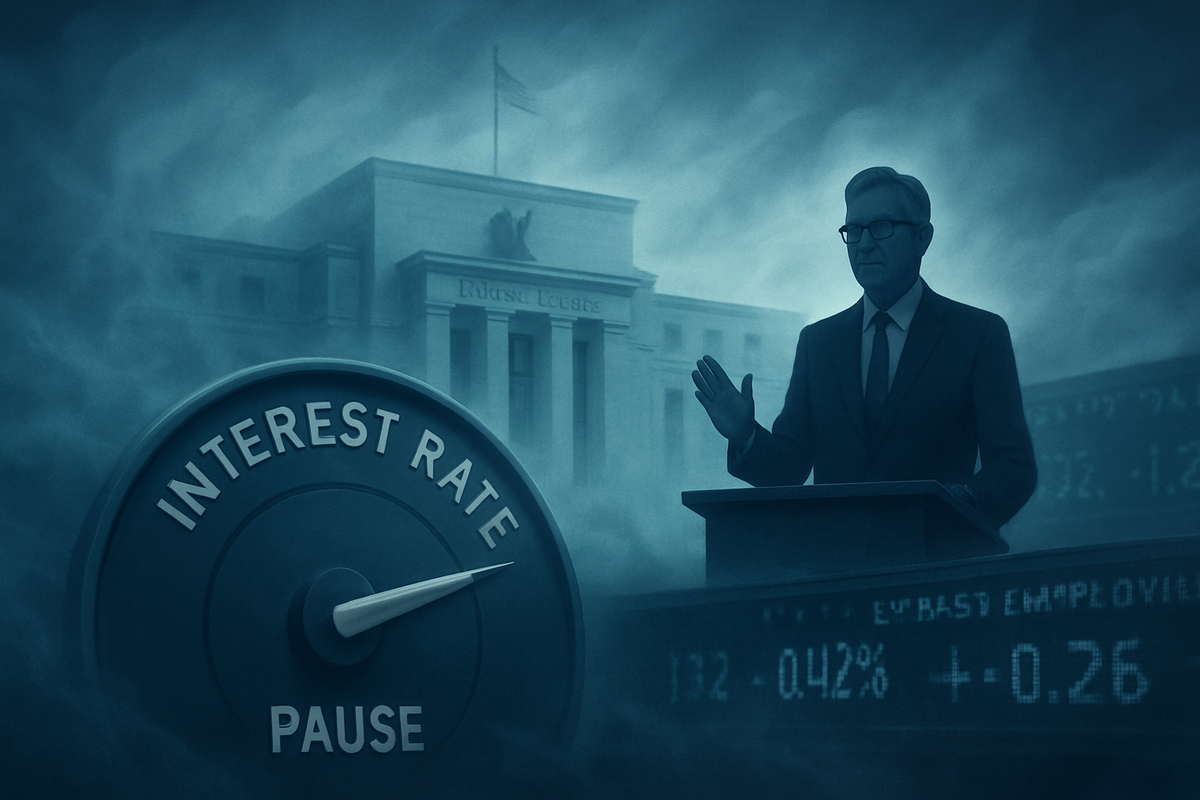
As the Federal Open Market Committee (FOMC) prepares to convene on January 27–28, 2026, the global financial community is bracing for what appears to be a definitive shift in monetary policy direction. After a flurry of activity in late 2025 that saw the central bank slash borrowing costs three times in quick succession, market participants are now overwhelmingly pricing in a "hawkish pause." This decision comes at a delicate juncture where the Federal Reserve must balance a cooling—yet stable—labor market against "sticky" inflation that has been complicated by recent fiscal policy shifts and a significant 43-day government shutdown that has left economists squinting through a "data fog."
The immediate implications of a pause are significant. Maintaining the federal funds rate at the current target range of 3.50%–3.75% would signal that the Fed believes it has reached a "neutral" level where it is neither stimulating nor restricting economic growth. For the markets, this pause represents a moment of introspection; after the aggressive easing of 2025, investors are now forced to reckon with the possibility that the "easy money" era is not returning as quickly as some had hoped, especially as the Trump administration’s trade and tariff policies begin to exert upward pressure on consumer prices.
A Division in the Ranks: The Path to the January Stand-Off
The road to the January 2026 meeting has been anything but smooth. Throughout the final quarter of 2025, the Federal Reserve delivered three consecutive 25-basis-point cuts in September, October, and December. These moves were designed as a "pre-emptive strike" to protect a labor market that showed signs of fraying under the weight of high interest rates. However, the December meeting revealed deep cracks within the FOMC. In a rare display of internal friction, three committee members dissented against the final cut of the year, arguing that inflation was still too far from the 2% target to justify further easing. This internal divide has set the stage for the current consensus of a pause, as Chair Jerome Powell seeks to find common ground among his colleagues.
The economic data fueling this uncertainty is a mixed bag, largely due to the late-2025 government shutdown which delayed the release of critical reports. The most recent figures show the unemployment rate at a stable 4.4%, down slightly from a peak of 4.5% earlier in the year. While payroll growth remains modest at approximately 70,000 jobs per month, it is the inflation side of the mandate that is causing the most concern. Headline PCE (Personal Consumption Expenditures) inflation ticked up to 2.8% in November 2025, moving in the wrong direction and away from the Fed's 2% goal. With the CME Group Inc. (NASDAQ: CME) FedWatch tool showing a 95% to 98% probability of no change, the market is no longer asking if the Fed will pause, but rather how long the pause will last.
Banking and Tech: Navigating the Yield Plateau
The prospect of a rate pause creates a complex landscape of winners and losers across the equity markets. For major financial institutions like JPMorgan Chase & Co. (NYSE: JPM) and Bank of America Corp. (NYSE: BAC), a steady interest rate environment can be a double-edged sword. While the end of the cutting cycle helps protect Net Interest Margins (NIM)—the difference between what banks earn on loans and pay on deposits—a prolonged pause at these levels could dampen the demand for new commercial and consumer loans. However, these "money center" banks often perform well in environments where the Fed signals stability, as it allows for more predictable long-term capital planning.
In the technology and growth sectors, companies such as Apple Inc. (NASDAQ: AAPL) and Microsoft Corp. (NASDAQ: MSFT) may see a period of consolidation. Growth stocks are highly sensitive to the "discount rate" applied to their future earnings; as the Fed halts its downward trajectory on rates, the rapid valuation expansions seen in late 2025 may lose steam. Conversely, the real estate sector, represented by giants like Simon Property Group (NYSE: SPG), is likely to feel a pinch. Mortgage and construction loan rates are unlikely to fall further in the short term if the Fed maintains its 3.50%–3.75% range, potentially cooling the recent recovery in the housing and commercial property markets.
Tariffs, Tensions, and the Battle for Fed Independence
The January 2026 meeting is not just about numbers; it is about the fundamental independence of the Federal Reserve. This meeting occurs amidst an escalating war of words between the White House and the Eccles Building. President Trump has been vocal in his calls for more aggressive rate cuts to stimulate the economy, even as his administration’s proposed tariffs threaten to reignite inflation. This creates a "catch-22" for the Fed: cut rates to satisfy political pressure and risk an inflationary spiral, or hold rates steady to fight inflation and risk a confrontation with the executive branch.
Historically, this level of public tension hasn't been seen since the Nixon and Volcker eras. Jerome Powell’s recent commentary on January 11, 2026, where he delivered a "robust defense" of central bank autonomy, suggests that the Fed is digging in its heels. This institutional friction has ripple effects across global markets, as foreign central banks—like the European Central Bank—watch closely to see if the U.S. dollar will remain a stable anchor or if it will be subject to political volatility. The potential for "tariff-induced inflation" remains the primary wild card for 2026, making the Fed's "data-dependent" stance more than just a catchphrase; it is a survival strategy.
The Succession Shadow: What Comes After the Pause?
Looking beyond the January decision, the shadow of leadership change looms large over the market. Jerome Powell’s term as Chair is set to expire in May 2026, and the speculation regarding his successor is already influencing market sentiment. Names such as Kevin Hassett and Kevin Warsh are frequently mentioned in Washington circles as potential candidates who might be more aligned with the administration’s pro-growth, low-rate philosophy. Investors are beginning to price in a "regime change" risk, where a more dovish appointee could override the current cautious consensus in the second half of the year.
In the short term, the market will be looking for any breadcrumbs in Powell’s post-meeting press conference regarding the "neutral rate." If the Fed hints that 3.5% is the floor for this cycle, it could trigger a sell-off in bonds and a rotation into defensive equities. Strategic pivots for investors may include moving toward "quality" companies with strong cash flows that are less dependent on debt refinancing, as the era of ultra-low rates appears to be a distant memory. The most likely scenario for the first half of 2026 is a period of "observational volatility," where every CPI and jobs report is scrutinized for a reason to break the pause.
Final Word: Stability Over Stimulus
The January 28, 2026, interest rate decision marks the end of the "easy" phase of the Fed’s pivot. By opting for a pause, the FOMC is choosing to prioritize its inflation-fighting credibility over immediate economic stimulus. The key takeaway for investors is that the "Fed Put"—the idea that the central bank will always step in to save the market with lower rates—now has a higher strike price. The Fed is clearly signaling that it will not be bullied by political rhetoric or market tantrums as long as inflation remains uncomfortably close to 3%.
As we move forward, the market will remain in a state of high alert. Investors should watch for the "dot plot" updates in future meetings and pay close attention to the February inflation data, which will be the first "clean" report post-shutdown. The significance of the January pause cannot be overstated; it is a declaration that the Federal Reserve is willing to endure political heat to ensure that the inflationary ghosts of the past decade remain buried. For now, the motto for the market is clear: trust the data, but prepare for the politics.
This content is intended for informational purposes only and is not financial advice