Pain at the Pump Returns: U.S. Gas Prices Top $4 for First Time Since 2022
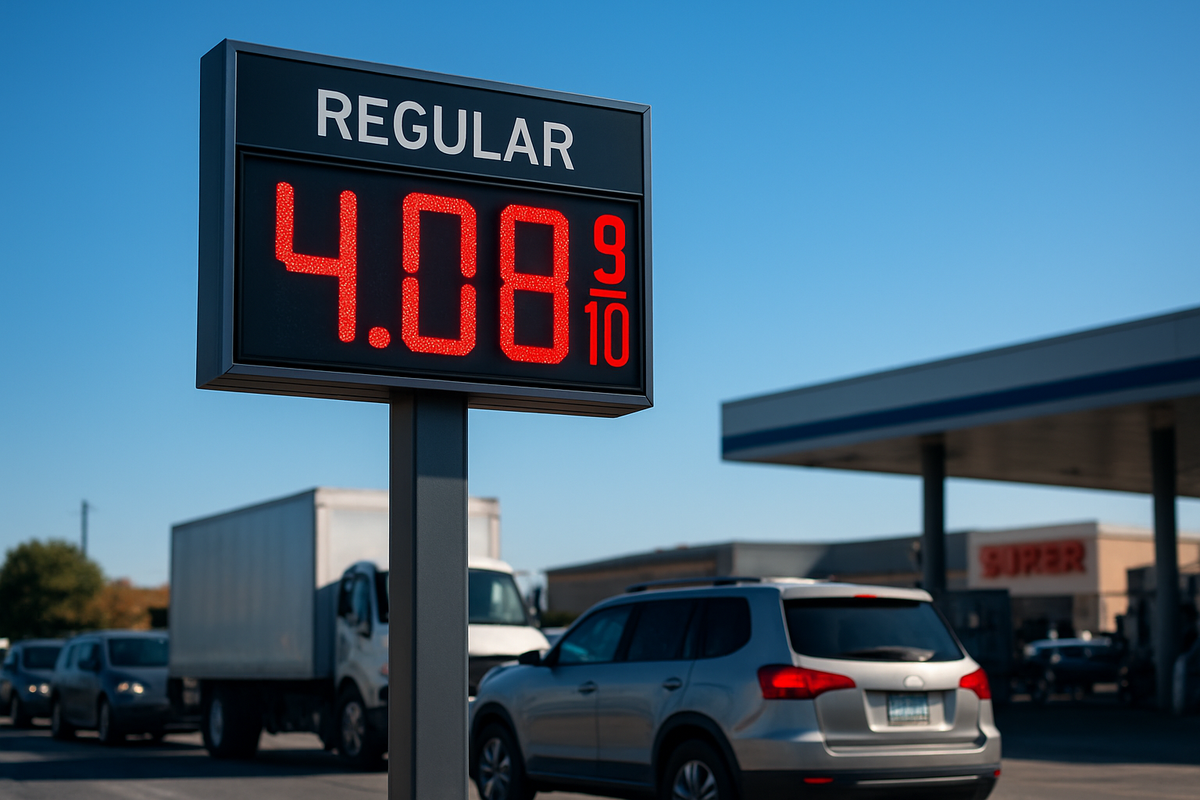
As of April 6, 2026, the American consumer is facing a stark reminder of the energy volatility of years past. The national average for a gallon of regular unleaded gasoline has officially surged past the $4.00 threshold, reaching $4.08 per gallon this week. This marks the first time since the summer of 2022 that fuel costs have breached this critical economic and psychological barrier, sending shockwaves through a market that had only recently begun to feel the stabilizing effects of cooling inflation.
The immediate implications of this price hike are already manifesting in a sharp decline in consumer sentiment. As households are forced to divert more of their monthly budgets toward transportation, discretionary categories such as dining out, electronics, and home improvements are seeing a noticeable slowdown in traffic. For many Americans, the return of $4 gasoline feels like an "energy tax" that threatens to derail the fragile economic expansion of early 2026, particularly as higher fuel costs begin to permeate the supply chains of essential goods like groceries and medicine.
A "Perfect Storm" in the Energy Market
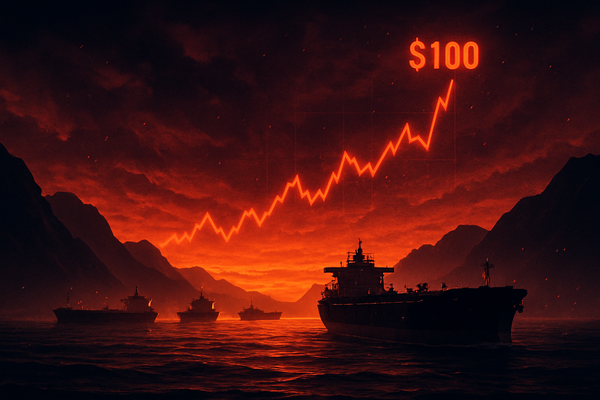
The road to $4.00 gasoline was paved by a series of compounding geopolitical and domestic factors that intensified throughout the first quarter of 2026. The most significant catalyst was the late February escalation of military operations in the Middle East, which led to the intermittent closure of the Strait of Hormuz. This vital waterway serves as the transit point for nearly 20% of the world’s oil supply, and its disruption has sent Brent crude prices skyrocketing to the $115 per barrel range.
Domestically, the U.S. energy infrastructure has struggled to keep pace. The permanent closure of major facilities, such as the Phillips 66 (NYSE: PSX) refinery in Los Angeles in late 2025 and the LyondellBasell (NYSE: LYB) refinery in Houston, has left the nation with a dangerously thin margin of refining capacity. With fewer facilities capable of converting crude oil into gasoline and diesel, any supply-side shock is amplified at the pump. This lack of "spare capacity" has been exacerbated by ongoing production cuts from OPEC+ nations and Russia, which have tightened the global market to maintain high price floors.
By mid-March 2026, the national average had already climbed 30% from February lows, moving from approximately $3.15 to the current $4.08 average. While some states like Texas (NYSE: XOM—major operator there) remain slightly lower at $3.82, the West Coast is bearing the brunt of the crisis, with California residents paying as much as $5.89 per gallon. The rapid pace of this ascent has left both consumers and policymakers scrambling for a response as the busy summer driving season approaches.
Winners and Losers in the $4 Gas Era
The energy sector has seen a massive influx of capital as oil majors reap the benefits of higher commodity prices. ExxonMobil (NYSE: XOM) has seen its stock price reach all-time highs in early April, posting year-to-date gains of nearly 40%. Similarly, Chevron (NYSE: CVX) has emerged as a primary beneficiary, leveraging high margins to fund aggressive share buybacks and protect dividend payouts. For these integrated giants, the current price environment represents a period of significant "windfall" profits, even as they face increasing scrutiny from Washington regarding production levels.
Conversely, the logistics and retail sectors are feeling the squeeze. United Parcel Service (NYSE: UPS) has been forced to adjust its fuel surcharges on a weekly basis to keep up with diesel costs, which have topped $5.45 per gallon. These costs are often passed down to small business owners and e-commerce customers, creating a "secondary inflation" effect. Amazon (NASDAQ: AMZN) recently announced a new 3.5% fuel and logistics surcharge for third-party sellers using its fulfillment services, effective April 17, 2026. This move highlights the pressure on even the largest logistics networks to maintain margins in the face of soaring input costs.
In the retail space, the impact is a double-edged sword. Walmart (NYSE: WMT) has reported a surge in "trade-down" behavior, as even higher-income households migrate to their stores to save on essential goods. However, the company’s Q1 2026 guidance remains conservative, as the cost of transporting those goods across its massive supply chain continues to rise. Kroger (NYSE: KR), the nation's largest pure-play grocer, is leaning into its fuel loyalty programs to maintain foot traffic, offering significant per-gallon discounts to shoppers who spend more on groceries—a strategy that has seen record enrollment as consumers look for any way to lower their fuel bills.
Wider Significance and Grocery Inflation
The rise in gas prices is more than just a transportation issue; it is a "visible accelerant" for food-at-home inflation. Because diesel powers the majority of the nation's farm equipment and long-haul trucking, the cost of bringing food from farm to table has risen by nearly 0.4% in the last month alone. Analysts warn that if fuel remains above $4.00 through May, grocery prices could see a second-order shock as the next cycle of harvests reaches the shelves with significantly higher embedded transportation costs.
Historically, periods of high energy prices have led to a pivot in consumer behavior and regulatory policy. This event mirrors the 2022 energy crisis, yet the 2026 iteration finds a U.S. economy with even tighter refining capacity and a more volatile global alliance structure. The current situation is likely to renew calls for increased domestic energy security and perhaps even a fresh wave of incentives for electric vehicle (EV) adoption, though the immediate high costs of fuel are also impacting the raw material supply chains for the automotive sector.
What Lies Ahead: Strategic Pivots and Scenarios
In the short term, the market should prepare for a "wait-and-see" approach from the Federal Reserve. While the Fed typically looks past volatile energy prices, the "stickiness" of grocery inflation caused by fuel costs may complicate the central bank's plans for interest rate adjustments later this year. Companies like Amazon and Walmart are expected to double down on automation and "last-mile" efficiency—such as using automated fulfillment centers and route-optimization AI—to reduce their reliance on traditional fuel consumption.
Looking into the summer of 2026, two primary scenarios emerge. If Middle Eastern tensions de-escalate and the Strait of Hormuz returns to full operation, gas prices could stabilize in the mid-$3.50 range by July. However, if the geopolitical deadlock persists, analysts at major financial institutions suggest that a national average of $4.50 to $5.00 per gallon is not out of the question. This would likely trigger a significant contraction in consumer spending, potentially pushing the U.S. into a "shallow recession" characterized by stagnant growth and high living costs.
Final Assessment for Investors
The return of $4 gas is a pivotal moment for the 2026 economy. It serves as a reminder that regardless of technological advancements in green energy, the global economy remains tethered to the price of a barrel of crude. The key takeaway for the market is the renewed importance of "cost-pass-through" ability; companies that can successfully implement surcharges or move consumers to private-label brands, like Kroger and Amazon, may prove more resilient than those with fixed pricing models.
Moving forward, investors should keep a close watch on weekly Energy Information Administration (EIA) inventory reports and any shifts in the geopolitical landscape of the Middle East. While energy stocks like ExxonMobil and Chevron remain attractive hedges against inflation, the broader retail and transport sectors will likely remain under pressure until the national average begins its descent. For the average American, the next several months will be a exercise in budget management as they navigate the most expensive spring at the pump in four years.
This content is intended for informational purposes only and is not financial advice.