Oil Markets Teeter as WTI Tests $100 Amid Hormuz Siege and Ceasefire Hopes
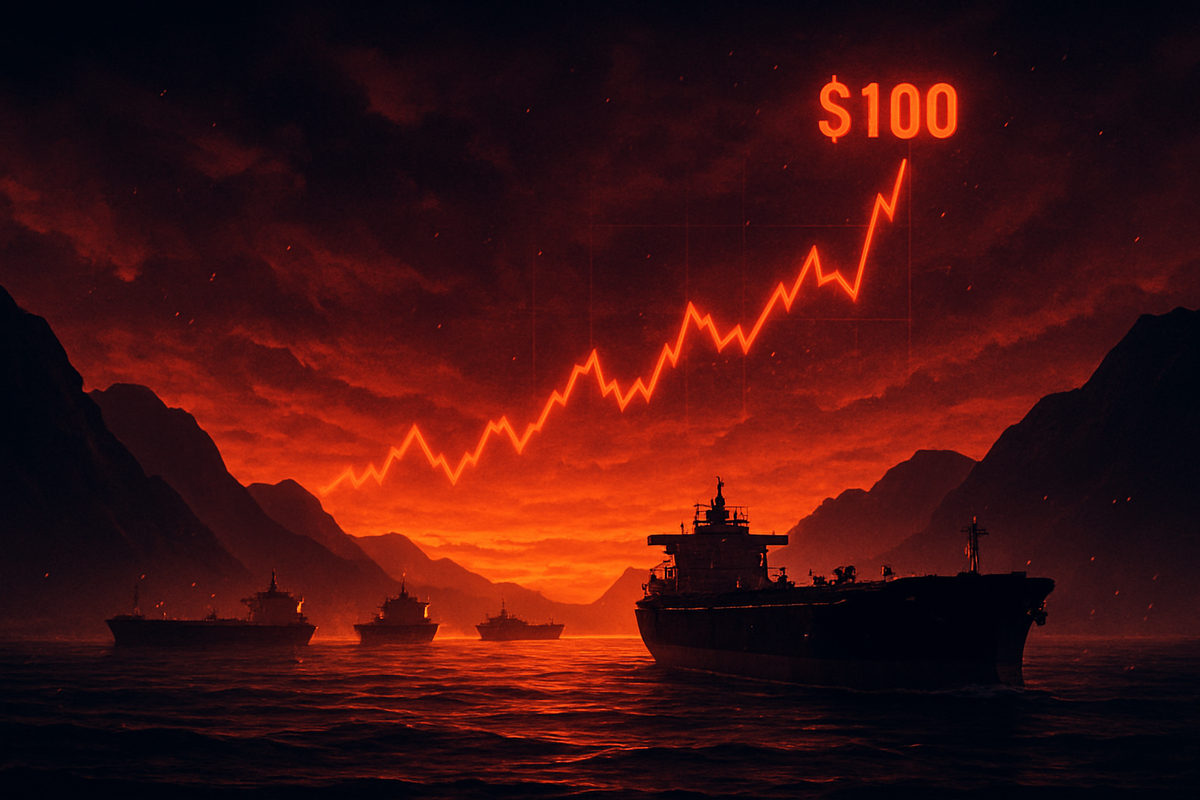
HOUSTON — The global energy landscape is currently gripped by a high-stakes tug-of-war as West Texas Intermediate (WTI) crude futures hover near the psychologically critical $100 mark. After a blistering rally that saw prices surge past $116 earlier this month, the market is now vibrating with volatility as traders weigh the catastrophic supply disruption in the Strait of Hormuz against a glimmer of diplomatic hope. As of April 6, 2026, the global economy is holding its breath, with the duration of the current maritime blockade emerging as the single most important variable for global inflation and the "stagflation" specter haunting central banks.
The immediate implications are stark: while a potential 45-day ceasefire offers a temporary reprieve, the threat of an escalated military response looms large. With roughly 15% of the world’s oil supply effectively trapped behind a geopolitical wall, the "Hormuz Premium" has become a permanent fixture in energy pricing. For the American consumer, this has translated to a painful reality at the pump, with national gasoline averages eclipsing $4.00 per gallon and the March Consumer Price Index (CPI) reflecting a staggering 1% monthly increase, driven almost entirely by the surge in energy and transportation costs.
The Hormuz Siege: A Timeline of Disruption
The current crisis traces its roots back to February 28, 2026, when a localized regional conflict escalated into a partial blockade of the Strait of Hormuz. Since then, the International Energy Agency has characterized the event as the largest supply disruption in the history of the global oil market, estimating that between 12 and 15 million barrels per day (bpd) have been removed from the standard global transit routes. While the market initially reacted with a vertical price spike, the narrative shifted this week as mediators from Turkey, Pakistan, and Egypt introduced a two-phased "45-day pause" proposal.
This diplomatic overture has caused WTI to retreat from its April 2 highs of $116, settling around $110.14 in early trading on Monday. However, the stability is fragile. The market is currently "trading the deadline," with eyes fixed on Washington. President Donald Trump has issued a stark ultimatum, setting a deadline of 8:00 PM ET on Tuesday, April 7, 2026, for the reopening of the Strait to all commercial traffic. The threat of targeted strikes on regional infrastructure has created a "deadline-driven" volatility, where a single social media post can swing futures by 3% in minutes.
Key stakeholders, including OPEC+, have found themselves sidelined by the geography of the conflict. In an emergency meeting on April 5, the cartel agreed to a modest production increase of 206,000 bpd for May. Yet, analysts have largely dismissed the move as symbolic, noting that the world's primary swing producers—Saudi Arabia, the UAE, and Kuwait—cannot physically export their surplus while the Strait remains contested. For now, the market remains a hostage to the success or failure of the 45-day proposal.
Winners and Losers: A Bifurcated Market
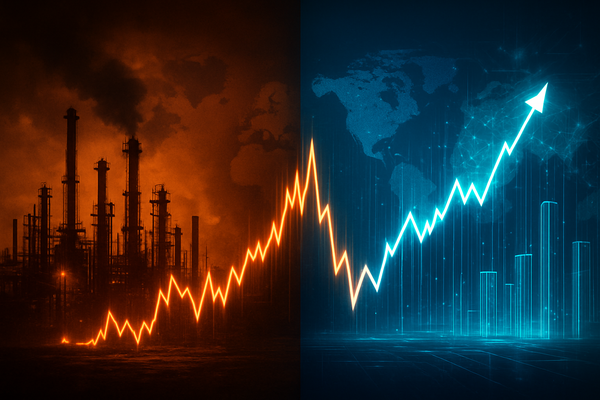
The "Hormuz shock" has created a dramatic divergence on Wall Street, rewarding companies with North American footprints while punishing those dependent on global fuel stability. Occidental Petroleum (NYSE:OXY) has emerged as the standout performer of 2026, with its stock up nearly 60% year-to-date. As a pure-play upstream producer with massive concentration in the Permian Basin, OXY’s unhedged production is capturing the full windfall of $100+ oil, leading to a massive upward revision in its annual earnings guidance.
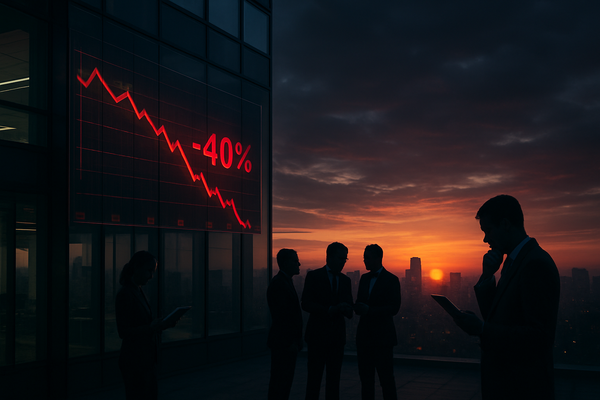
In the "safe-haven" energy category, ExxonMobil (NYSE:XOM) and Chevron (NYSE:CVX) have seen their shares climb 37% and 33% respectively. These integrated giants are viewed as essential hedges due to their vertical integration and significant offshore assets in Guyana and the U.S. Gulf Coast, which remain insulated from the Middle Eastern theater. Conversely, the airline sector has faced a "liquidity pincer." United Airlines (NASDAQ:UAL) saw a historic 35% decline as its zero-hedging policy left it fully exposed to jet fuel prices that have doubled since February. While Delta Air Lines (NYSE:DAL) has been more resilient due to its ownership of the Trainer refinery, it still reported a $400 million fuel expense hit for the month of March alone.
The petrochemical and agricultural sectors are also seeing a massive "energy spread" advantage. CF Industries (NYSE:CF) and Nutrien (NYSE:NTR) have hit all-time highs as global urea and potash prices soar. Because these companies use domestic North American natural gas as a feedstock—rather than the oil-linked naphtha used by Asian and European competitors—their margins have expanded to record levels. Similarly, chemical giants like Dow (NYSE:DOW) and LyondellBasell (NYSE:LYB) are benefitting from this structural cost advantage, even as their international peers are forced to declare force majeure.
Global Significance: The New Inflationary Paradigm
This event is more than a simple price spike; it represents a fundamental shift in global trade and monetary policy. The use of the Chinese yuan for "tolls" to pass through the Strait during the blockade suggests a fracturing of the petrodollar system that has underpinned energy markets for decades. Economists warn that the longer the disruption lasts, the more likely the world is to enter a period of "stagflation" similar to the 1970s. With headline inflation projections for the Asia-Pacific region rising to 4.6% and U.S. GDP growth slowing, the Federal Reserve’s anticipated rate cuts for late 2026 now appear to be off the table.
The ripple effects extend far beyond the gas station. The disruption in Gulf exports also includes 46% of global urea exports and significant portions of the world's methanol and aluminum supply. This has triggered a "grocery supply emergency" in parts of the Middle East and Africa, raising the specter of social unrest. Historically, energy shocks of this magnitude have served as catalysts for rapid policy shifts toward energy independence, and the 2026 crisis is already accelerating mandates for nuclear and renewable infrastructure in Europe and North America.
What Lies Ahead: The Tuesday Deadline
The immediate future of the oil market hinges on the next 24 hours. If the Tuesday deadline passes without a diplomatic breakthrough or a reopening of the Strait, analysts predict a "gap up" in prices that could see WTI challenge the $130 level. A failure of the 45-day ceasefire talks would likely force the U.S. and its allies into a more active role in escorting tankers, a move that carries significant escalatory risks but remains the only viable way to restore global supply chains.
In the long term, this crisis will likely necessitate a strategic pivot for global logistics. We are already seeing a surge in demand for trans-continental rail and pipeline projects that bypass the world’s maritime chokepoints. For investors, the challenge will be identifying which companies can adapt to a permanently higher energy cost environment. Strategic shifts toward "onshoring" and energy-efficient manufacturing are no longer optional but are now requirements for corporate survival in the post-Hormuz economy.
Summary and Investor Outlook
The oil market of April 2026 is defined by extreme volatility and a high-stakes game of geopolitical chicken. While WTI is currently testing the $100-110 range, the underlying supply-demand imbalance remains the most severe in modern history. The key takeaway for investors is that the "duration" of the disruption is far more important than the "depth." A short-lived blockade is a manageable shock; a prolonged siege of the Strait of Hormuz is a global recessionary event.
Moving forward, the market will remain hyper-sensitive to headlines regarding the 45-day ceasefire and the U.S. response to the Tuesday deadline. Investors should closely watch the upcoming April CPI data and the Q1 earnings calls from major energy and transport companies for signs of how deeply the "energy tax" is cutting into consumer spending. For now, the "Hormuz Premium" remains the dominant force in the market, and until the tankers begin moving freely again, volatility is the only certainty.
This content is intended for informational purposes only and is not financial advice.