Netflix’s Pricing Power Unleashed: Analysts Project $1.7 Billion Revenue Surge as Premium Tier Hits $26.99
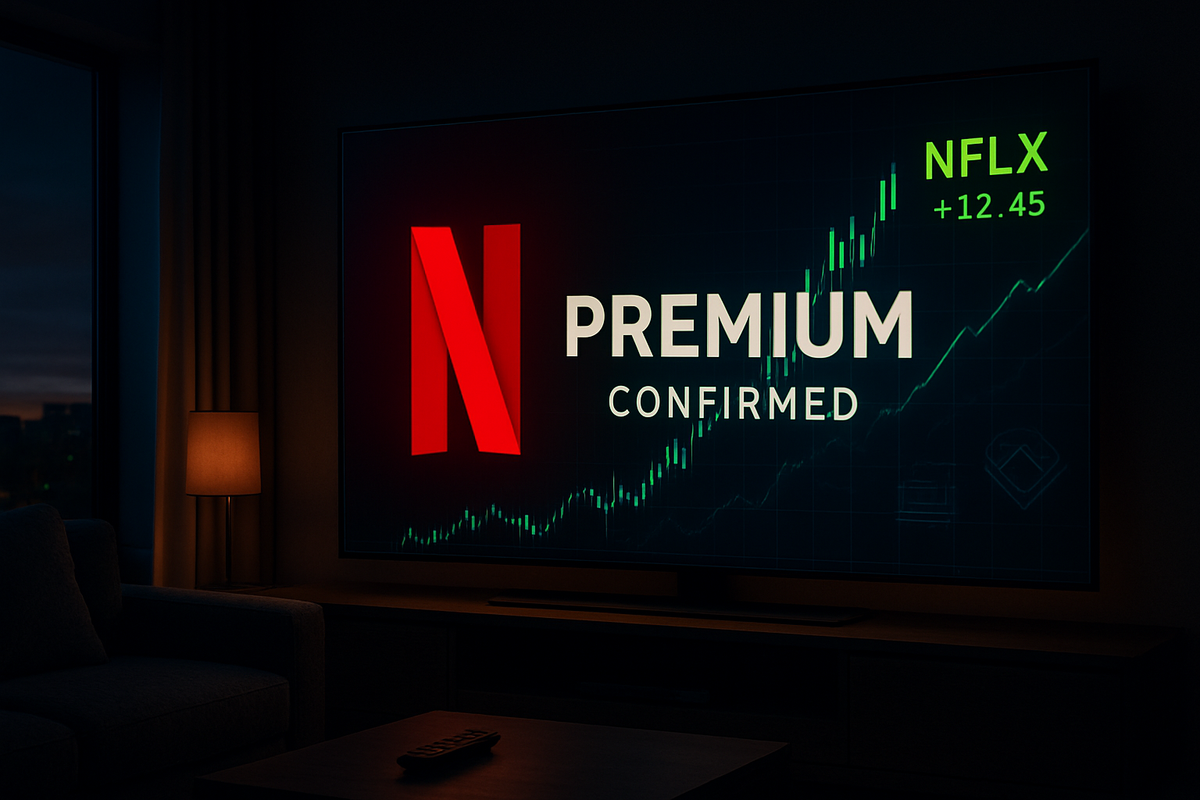
As of April 1, 2026, the streaming landscape has entered a new phase of monetization, led by the industry's undisputed heavyweight. Netflix (NASDAQ: NFLX) has recently implemented a sweeping series of price adjustments that have pushed its flagship Premium tier to a record $26.99 per month. While such a bold move might traditionally signal a risk of mass subscriber exodus, market experts suggest the company has built a "content moat" so deep that users are more likely to pay up than plug out.
The immediate implications of this pricing pivot are staggering. Analysts from JPMorgan and Citi have released updated models suggesting these hikes will catalyze a $1.7 billion boost to annualized revenue in 2026. This aggressive revenue optimization strategy marks a definitive end to the "growth at any cost" era, replaced by a sophisticated focus on Average Revenue Per User (ARPU) and the monetization of high-engagement live events.
The $26.99 Gamble: Breaking Down the 2026 Pricing Pivot
The latest price hike, which rolled out in March 2026, represents the second major adjustment in as many years. The new structure sees the Premium (4K) tier rising from $24.99 to $26.99, while the Standard (No Ads) plan jumped to $19.99. Even the entry-level Standard with Ads plan was not immune, increasing to $8.99. This timeline of events follows a smaller adjustment in early 2025, suggesting that Netflix has successfully transitioned to a near-annual price review cycle, similar to traditional cable or utility services.
The reaction from Wall Street has been overwhelmingly bullish. JPMorgan analyst Doug Anmuth noted that the $1.7 billion in projected annualized revenue is largely "protected" by the company’s increasing grip on live entertainment. Key stakeholders, including institutional investors who had been wary of the plateauing subscriber counts in North America, have rallied behind the move. Initial market data indicates that while "streamflation" is a growing concern for household budgets, Netflix’s engagement metrics—accounting for nearly 9% of total U.S. TV time—provide a buffer that competitors simply do not possess.
Winners and Losers in the New Premium Era
The primary winner in this scenario is undoubtedly Netflix (NASDAQ: NFLX), which is now projected to hit an annual revenue guidance of $50.7 billion to $51.7 billion for fiscal year 2026. By avoiding expensive acquisitions—such as the rumored interest in Warner Bros. Discovery (NASDAQ: WBD) earlier this decade—Netflix has maintained a lean balance sheet while expanding its operating margins toward a projected 31.5%.
However, the ripple effects are less favorable for rivals. The Walt Disney Co. (NYSE: DIS) and Paramount Global (NASDAQ: PARA) find themselves in a precarious position; if they follow Netflix’s lead and raise prices, they risk higher churn rates given their lower overall engagement hours. Conversely, if they hold prices steady to attract disgruntled Netflix users, they may struggle to fund the high-quality content necessary to compete. Meanwhile, Roku (NASDAQ: ROKU) and other ad-platform providers may see a short-term benefit as more price-sensitive consumers migrate to Netflix’s ad-supported tier, which is projected to generate $3 billion in revenue this year alone.
A "Streaming Utility": The Shift Toward Live-ification
This pricing strategy fits into a much broader industry trend: the "live-ification" of streaming. To justify a $26.99 monthly fee, Netflix has moved beyond bingeable dramas into "must-see" live events. The integration of exclusive WWE Raw rights and Major League Baseball (MLB) coverage has transformed the service from a luxury entertainment option into a daily utility. Historical precedents, such as the transition of HBO from a premium cable add-on to a standalone digital powerhouse, suggest that as long as the content is perceived as essential, the "ceiling" for pricing is much higher than previously thought.
The regulatory environment remains a quiet but potential hurdle. As Netflix and other giants like Amazon (NASDAQ: AMZN) consolidate their power over the digital living room, some policy experts have raised questions regarding "bundled" dominance and its impact on consumer choice. However, for the moment, the market's focus is squarely on the fact that Netflix has managed to decouple its pricing from the general rate of inflation, successfully commanding a premium for its unique content ecosystem.
The Path to 2027: Content Budgets and Strategic Pivots
Looking ahead, the next 12 to 18 months will be defined by how Netflix deploys its massive $20 billion content budget. Short-term, the company is expected to continue its aggressive expansion into the gaming sector and localized international content, which remains a key growth engine. A strategic pivot toward more interactive and shoppable advertisements within its ad-tier could further diversify revenue streams, making the company less dependent on pure subscription hikes in the future.
The primary challenge will be maintaining the quality of the "spectacle" programming that justifies the $26.99 price point. If the 2026 content slate—which includes several high-budget sequels and major live sporting events—fails to capture the cultural zeitgeist, the currently resilient churn rates could begin to soften. Investors should also watch for potential "tier fatigue," where users might downgrade from Premium to Standard en masse, potentially diluting the projected revenue gains.
Final Outlook: What Investors Should Watch
The key takeaway from the 2026 price hike is that Netflix has successfully identified its value proposition as a "top-of-mind" entertainment provider. The projected $1.7 billion revenue boost is a testament to the company’s ability to monetize its massive user base through both subscription fees and a burgeoning advertising business. Moving forward, the market will transition from watching subscriber additions to watching ARPU and margin expansion as the primary indicators of health.
For investors, the coming months will be critical to monitor churn data. If Netflix can maintain its sub-3% churn rate despite the $26.99 price tag, it will prove that the company has effectively "won" the streaming wars. Watch for the Q3 and Q4 2026 earnings reports to confirm if the JPMorgan and Citi projections manifest in the bottom line. For now, Netflix remains the pacesetter in an industry that is finally learning how to value engagement over sheer volume.
This content is intended for informational purposes only and is not financial advice.