MicroStrategy Leads Nasdaq Gains with a 25% Surge as Bitcoin Reclaims $70,000 Floor
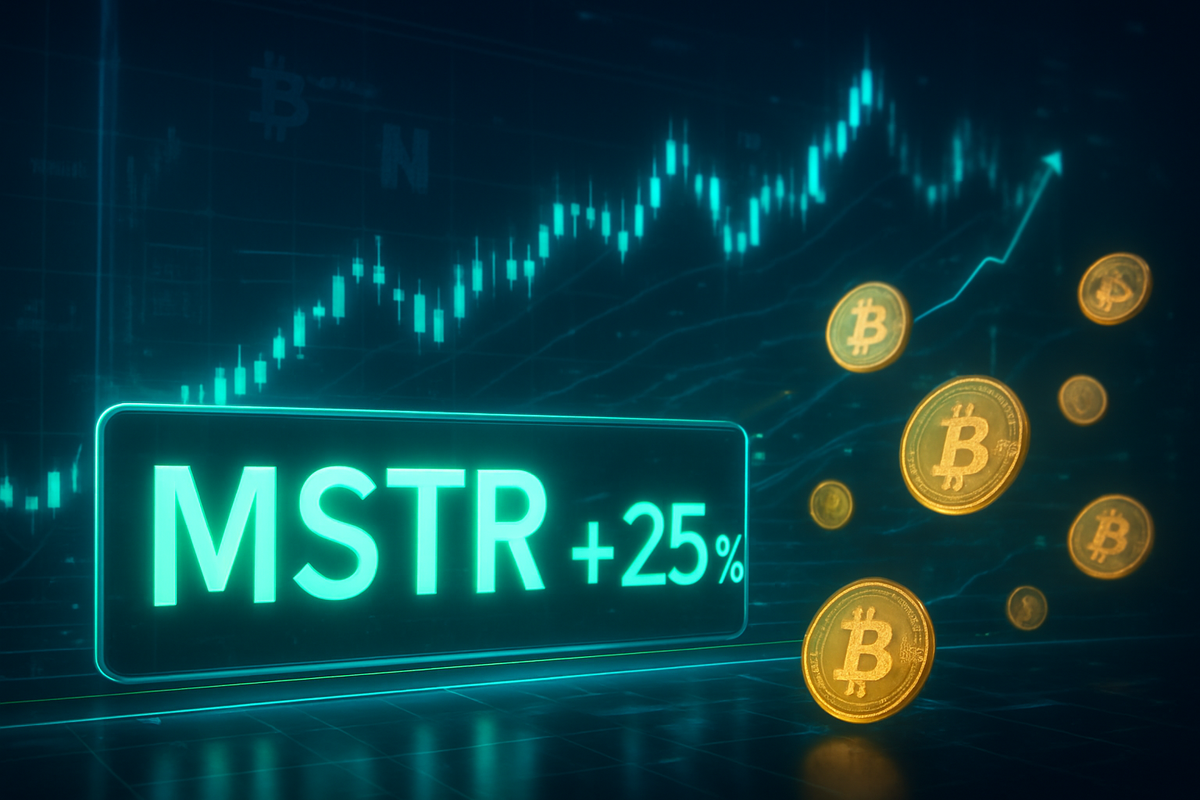
In a dramatic reversal of fortune for the digital asset sector, MicroStrategy Inc. (NASDAQ: MSTR) spearheaded a massive rally on the Nasdaq today, February 6, 2026, with its stock price surging 25%. The leap comes as Bitcoin (BTC) staged a historic "V-shaped" recovery, rebounding from a harrowing intraday low of $60,008 yesterday to reclaim the $71,000 level. This volatility has once again highlighted MicroStrategy’s unique position as a high-beta institutional proxy for the world's largest cryptocurrency.
The surge in MicroStrategy’s valuation wasn't just a byproduct of crypto price action; it was bolstered by the company’s recent Q4 2025 earnings report, which demonstrated a resilient core business and a strategic cash reserve designed to weather the very "leverage flush" the market experienced this week. As the broader markets celebrated the Dow Jones Industrial Average (DJIA) crossing the 50,000 milestone for the first time, MicroStrategy emerged as the day's standout performer, drawing intense interest from institutional investors who view the firm’s 713,502 BTC holdings as the ultimate treasury benchmark.
A "Perfect Storm" for Recovery: Earnings, Accounting, and a Leverage Flush
The path to today's 25% gain began with a period of intense market anxiety known among traders as the "Warsh Shock." The nomination of Kevin Warsh as the next Federal Reserve Chairman earlier this week sparked fears of a "higher-for-longer" interest rate regime, causing a massive deleveraging event across the crypto landscape. On February 5, over $2 billion in leveraged positions were liquidated, dragging Bitcoin down to its 15-month low of $60,000. MicroStrategy, which frequently trades at a premium or discount to its net asset value (NAV) based on market sentiment, saw its shares bottom out near a two-year low during the carnage.
However, the tide turned late yesterday and early this morning. MicroStrategy’s Q4 2025 earnings call, held on February 5, provided the fundamental floor the stock needed. While the company reported a massive $12.4 billion net loss—largely an "on-paper" figure due to the new FASB fair value accounting rules requiring companies to mark Bitcoin to market—the underlying metrics were robust. Subscription services revenue for the firm rose 62.1% year-over-year, and the company reported a "Bitcoin Yield" of 22.8% for the fiscal year 2025. This proprietary KPI, which measures the growth in BTC holdings relative to diluted shares, has become the "North Star" for the company's shareholders.
Crucially, management revealed a $2.25 billion USD cash reserve, specifically earmarked to cover interest and dividend obligations for the next 2.5 years. This move effectively silenced critics who had speculated about a potential liquidity crisis during the Bitcoin price dip. By the time the markets opened on February 6, institutional "dip-buying" had reached a fever pitch, with data showing that institutional demand for Bitcoin was outstripping new supply by a factor of six to one.
Winners and Losers in the Crypto Equities Rebound
MicroStrategy (NASDAQ: MSTR) was the clear victor of the session, closing at approximately $131.43, but it was far from the only beneficiary of the crypto-fueled euphoria. MARA Holdings (NASDAQ: MARA) saw its stock jump 21.03% to $8.14, recovering from a 52-week low set just 24 hours prior. MARA’s rally was supported by news that it had optimized its capital structure by moving significant Bitcoin tranches to institutional custody platforms like Coinbase Prime.
Coinbase Global (NASDAQ: COIN) also posted a strong session, climbing 11% as trading volumes surged during the volatility. The exchange has benefited from the massive "leverage flush," as the subsequent re-entry of traders provided a significant boost to transaction fees. Meanwhile, Riot Platforms (NASDAQ: RIOT) and TeraWulf (NASDAQ: WULF) saw gains of 16.5% and 19.6%, respectively, as the recovery in Bitcoin’s price improved the projected margins for mining operations that had been squeezed by the temporary dip to $60,000.
On the losing side of today’s trade were the short-sellers who had piled into "crypto-proxy" stocks during the mid-week crash. Data from the Nasdaq indicates that today’s move triggered a "short squeeze" in MSTR and MARA, as bears were forced to cover their positions at significantly higher prices. Furthermore, traditional "safety" assets like gold saw a slight cooling of interest as capital rotated back into the high-growth tech and crypto sectors during the "tsunami rally" that propelled the S&P 500 up 2%.
The "Atkins Era" and the Normalization of Digital Assets
The broader significance of today’s market action lies in the evolving regulatory and macro landscape of early 2026. For the first time in years, the SEC’s 2026 Examination Priorities—released this week under the leadership of Chairman Paul Atkins—omitted cryptocurrency as a standalone "special risk." This subtle but profound shift suggests that digital assets are being integrated into the standard financial fabric rather than being treated as a permanent outlier.
This normalization is reflected in how institutional investors are now using MicroStrategy. In late 2024, the stock was often viewed as a speculative gamble; by February 2026, it has become a staple for institutional portfolios like the North Dakota State Investment Board and iA Global Asset Management. These entities are leveraging the stock’s unique structure—essentially a "Bitcoin Treasury Company"—to gain exposure to the asset class without the complexities of direct custody.
Furthermore, the "Strategic Bitcoin Reserve" narrative continues to loom over the market. While Treasury Secretary Scott Bessent clarified that no immediate government bailout for crypto assets is planned, the mere presence of Bitcoin on corporate and state balance sheets has created a "psychological floor" for the market. The events of February 6 suggest that Bitcoin has entered a new phase of its lifecycle, where its price discovery is driven less by retail hype and more by institutional liquidity and corporate treasury strategies.
Looking Ahead: The Risks of Perpetual Leverage
In the short term, investors will be watching to see if Bitcoin can hold the $70,000 level and if MicroStrategy can maintain its momentum as it continues its "21/21 Plan"—the aggressive $42 billion capital raise strategy announced in late 2024 to fund further BTC acquisitions. The primary challenge for MSTR remains the risk of a prolonged "crypto winter." While the $2.25 billion cash reserve provides a buffer, the company’s massive debt load and reliance on equity issuance mean that a multi-year downturn in Bitcoin’s price would test the limits of its "Bitcoin Yield" model.
Strategically, MicroStrategy may need to further diversify its revenue streams within its software business to ensure it can service its debt if the premium on its stock begins to erode. However, in a market where the Dow is at 50,000 and the S&P 500 is led by AI giants like Nvidia, MicroStrategy’s role as the "high-alpha" alternative to traditional tech stocks appears secure for now.
The long-term possibility of Bitcoin becoming a sovereign reserve asset remains the "moonshot" scenario for MSTR. If more nations follow the lead of early adopters or if the U.S. eventually establishes a formal reserve, the current 713,502 BTC held by Strategy Inc. could be valued in the hundreds of billions, fundamentally re-rating the stock.
Conclusion: A Milestone Day for the Bitcoin Proxy
The events of February 6, 2026, mark a significant milestone for MicroStrategy and the broader crypto-equity market. The 25% surge in MSTR shares is a testament to the company’s successful pivot from a mid-sized software firm to a global financial powerhouse built on a Bitcoin standard. By surviving the "Warsh Shock" and leveraging a strong Q4 earnings report, the company has proven that it has the structural integrity to withstand extreme volatility.
Moving forward, the market appears to be entering a phase of renewed optimism, anchored by more neutral regulatory policies and strong institutional demand. For investors, the takeaway is clear: the "Bitcoin Proxy" trade is no longer just a trend—it is a sophisticated financial instrument that requires a deep understanding of both crypto macrocycles and traditional corporate finance.
In the coming months, all eyes will be on the Federal Reserve's interest rate decisions and any further "Strategic Reserve" announcements from the Treasury. If Bitcoin continues its upward trajectory toward the $100,000 mark, MicroStrategy’s performance today may be remembered as the starting gun for the next great leg of the digital asset bull market.
This content is intended for informational purposes only and is not financial advice.