Market Resilience: S&P 500 and Nasdaq Weather Mid-December Data Storm to Close Week Higher
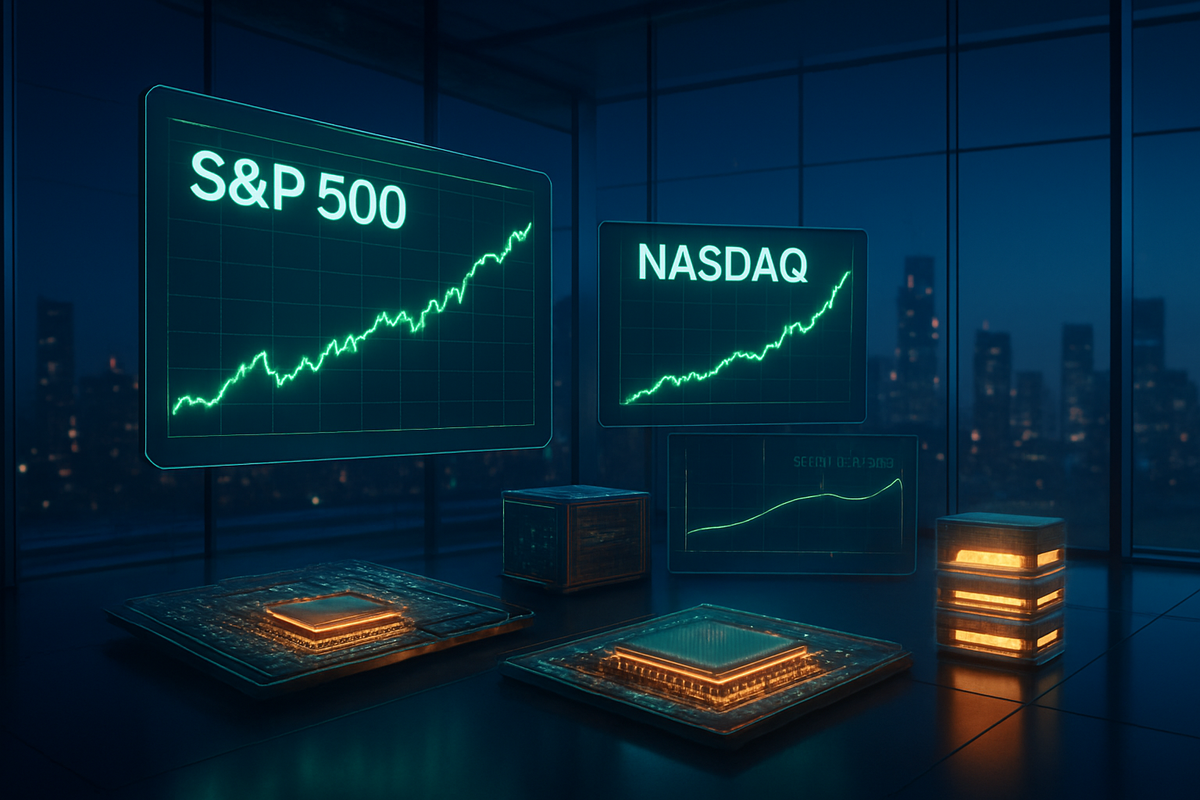
In a week defined by a deluge of delayed economic data and lingering questions about the Federal Reserve's final pivot, the U.S. stock markets demonstrated remarkable resilience. Despite a mid-week sell-off triggered by "catch-up" jobs and inflation reports that had been stalled by a fall government shutdown, both the S&P 500 and the Nasdaq Composite managed to carve out gains by the closing bell on Friday, December 19, 2025. The performance underscores a market that, while weary of volatility, remains fundamentally anchored by the "soft landing" narrative and the continued expansion of the artificial intelligence (AI) economy.
The week’s primary challenge was the sudden arrival of "catch-up" data—a massive release of employment and price index figures that had been delayed for weeks. While the numbers showed a cooling labor market, with unemployment ticking up to a four-year high of 4.6%, investors ultimately chose to view the glass as half-full. The data reinforced the Federal Reserve’s decision just nine days ago to cut interest rates by 25 basis points, signaling that the central bank is successfully navigating the economy away from the inflationary peaks of the previous year without triggering a deep recession.
A Volatile Path to Green: The Week in Review
The trading week began with a sense of trepidation as the Bureau of Labor Statistics released a consolidated "catch-up" report on Tuesday. The data revealed that non-farm payroll gains had averaged a modest 125,000 throughout the autumn, a sharper deceleration than many analysts had predicted. This initial "jobs shock" sent the S&P 500 down 1.2% in a single session, as fears of a broader economic slowdown briefly overshadowed the holiday spirit. By Wednesday, a secondary release of Consumer Price Index (CPI) data showed headline inflation at 2.7%, confirming that while prices are stabilizing, the path to the Fed's 2% target remains "sticky" in the services sector.
However, the narrative shifted on Thursday. Market participants began to digest the implications of the December 10 FOMC meeting, where Fed Chair Jerome Powell emphasized a "measured and data-dependent" approach to further cuts in 2026. The realization that the Fed has room to maneuver—coupled with a strong earnings beat from the semiconductor sector—sparked a late-week rally. By Friday afternoon, the Nasdaq was leading the charge, buoyed by a resurgence in "Agentic AI" stocks and high-performance hardware providers. The week ended with the S&P 500 up 0.8% and the Nasdaq gaining 1.4%, effectively erasing the losses from the Tuesday data dump.
Winners and Losers: Hardware and Infrastructure Take the Lead
The clear winners of the week were the companies providing the physical backbone for the next phase of the AI revolution. Nvidia Corp (NASDAQ: NVDA) continued its historic run, with its market capitalization hovering near the $4.5 trillion mark. Investors rallied around the company as it became clear that the demand for its Blackwell-2 chips remains insatiable, even as broader economic growth slows. Similarly, data storage giants like Micron Technology Inc (NASDAQ: MU) and Western Digital Corp (NASDAQ: WDC) saw significant gains this week, as the market recognized that the shift toward "Agentic AI"—autonomous systems requiring massive data throughput—is creating a new super-cycle for memory and storage hardware.
On the other side of the ledger, traditional Software-as-a-Service (SaaS) firms faced continued headwinds. Companies like Salesforce Inc (NYSE: CRM) and Adobe Inc (NASDAQ: ADBE) struggled to keep pace with the broader Nasdaq, as investors questioned whether autonomous AI agents would eventually disrupt their seat-based pricing models. Additionally, the banking sector saw mixed results; while JPMorgan Chase & Co (NYSE: JPM) benefited from a stabilization in bond yields, smaller regional banks felt the squeeze of the 4.6% unemployment rate, which raised concerns about potential credit normalization in the coming year.
The "Soft Landing" and the Shift to Agentic AI
The significance of this week's market action lies in the successful "stress test" of the soft landing thesis. For much of 2025, the market has bet that the Fed could lower rates (now sitting at a target range of 3.50%–3.75%) without losing control of inflation or crashing the labor market. This week’s "catch-up" data provided the most comprehensive look at that balance to date. The fact that the market recovered so quickly from the unemployment spike suggests that investors have moved past the "bad news is bad news" phase and are now focused on the benefits of a lower-rate environment.
Furthermore, the week highlighted a major shift in the tech industry’s internal dynamics. The transition from "Generative AI" (simple content creation) to "Agentic AI" (autonomous execution) is now the dominant theme for 2026. This trend is creating a "broadening" of the market, where the gains are no longer confined to a few software giants but are spreading to infrastructure, energy, and specialized hardware. This evolution mirrors historical precedents, such as the mid-1990s shift from internet infrastructure to e-commerce, suggesting that the current bull market may have more longevity than skeptics previously thought.
Looking Ahead: The 2026 Horizon
As we move into the final trading days of 2025, the focus will shift toward the first FOMC meeting of the new year, scheduled for January 27–28, 2026. Market participants are currently pricing in a 65% chance of another 25-basis-point cut in the first quarter. Short-term, the "Santa Claus Rally" appears to be in play, as the resolution of the "catch-up" data uncertainty has cleared a path for year-end window dressing by institutional fund managers.
However, challenges remain. The 4.6% unemployment rate is a metric that will be closely watched in January. If the labor market continues to soften too quickly, the Fed may be forced to accelerate its cutting cycle, which could introduce new volatility into the currency and bond markets. Investors should also keep a close eye on geopolitical developments, particularly regarding trade tariffs, which have been a recurring source of input-cost pressure for U.S. manufacturers throughout the latter half of 2025.
Closing Thoughts for the 2025 Investor
The week ending December 19, 2025, will likely be remembered as the moment the market finally "cleared the decks" of the data backlog and accepted the reality of a cooling but stable economy. The S&P 500 and Nasdaq’s ability to finish the week in the green, despite a four-year high in unemployment and sticky service inflation, is a testament to the underlying strength of corporate earnings and the transformative power of the AI sector.
Moving forward, the mantra for investors should be "quality and infrastructure." The speculative fervor of 2024 has been replaced by a more disciplined focus on companies with tangible AI utility and robust balance sheets. As we prepare to enter 2026, the primary question is no longer whether we will have a recession, but how high the "AI floor" can lift the broader economy. For now, the bulls remain in control, but the path ahead will require a keen eye on the labor market’s pulse.
This content is intended for informational purposes only and is not financial advice.