Lilly’s $47.8 Billion Bet: Why the Contessa Acquisition Redefines the Future of Medicine
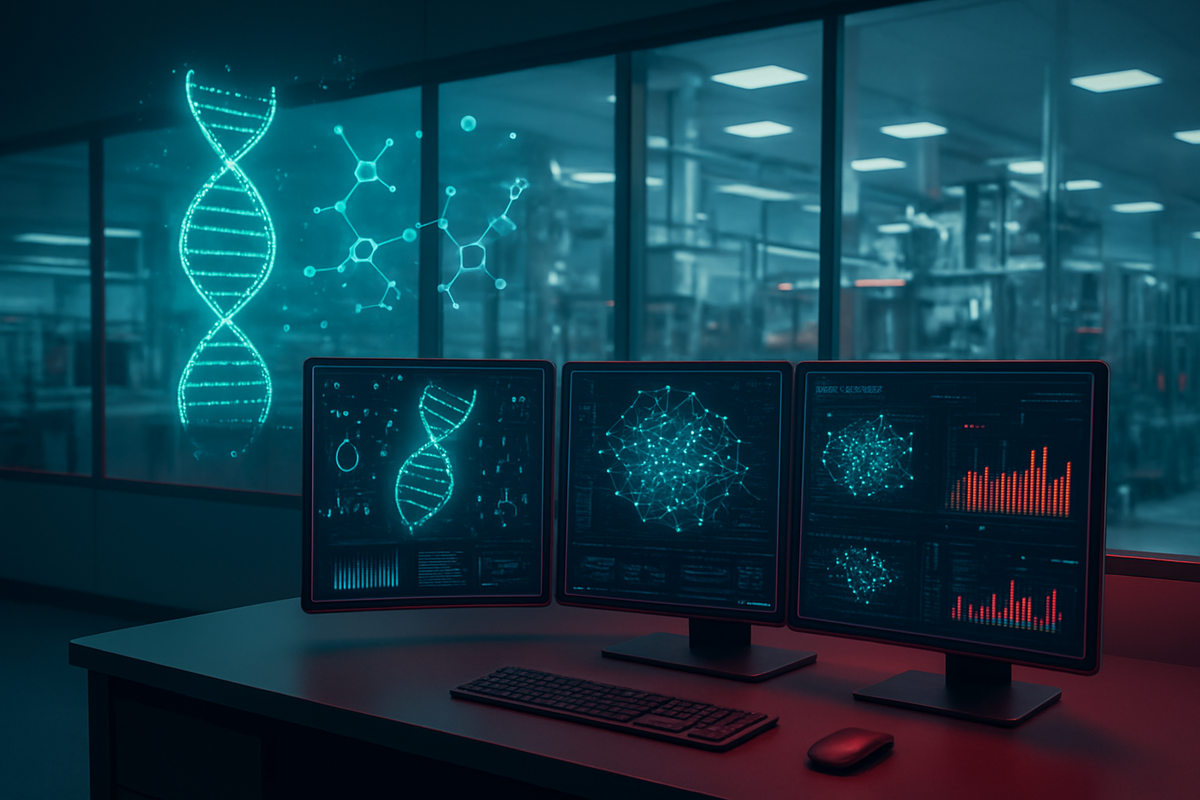
In a move that has sent shockwaves through both the pharmaceutical and technology sectors, Eli Lilly and Company (NYSE: LLY) announced today, April 6, 2026, the finalized acquisition of Contessa, a pioneer in AI-driven clinical research, for a staggering $47.8 billion. The deal represents the largest "Tech-Bio" merger in history, signaling a definitive pivot for the Indianapolis-based pharmaceutical giant. While Lilly has dominated the market over the last two years with its blockbuster GLP-1 treatments, Zepbound and Mounjaro, this acquisition marks a strategic expansion intended to industrialize drug discovery and dismantle the astronomical costs and timelines that have defined modern medicine for decades.
The immediate implications are profound. By integrating Contessa’s proprietary generative AI models and decentralized clinical trial infrastructure, Lilly aims to slash drug development timelines by as much as 50% and reduce the average cost of bringing a new drug to market from $2.6 billion to under $1 billion. For a company that recently became the first in healthcare to surpass a $1 trillion market capitalization, this move is not just about expanding a product portfolio; it is about owning the very engine of scientific discovery itself.
The Dawn of the 'AI-First' Pharma Giant
The $47.8 billion acquisition of Contessa is the culmination of a multi-year strategy orchestrated by Lilly CEO David Ricks to move the company beyond its metabolic "gold mine." The deal, which was fast-tracked following a series of successful pilot programs in late 2025, gives Lilly exclusive access to Contessa’s "Digital Twin" simulation engine. This technology allows researchers to run millions of virtual Phase I and Phase II trials in a cloud environment before a single human subject is ever enrolled. Industry insiders suggest that the timeline leading to this moment was accelerated by the massive cash reserves Lilly accumulated through its dominance in the obesity market, which provided the liquidity to outbid several big-tech competitors who were also eyeing the platform.
Key players in the deal include Lilly’s Chief AI Officer, Thomas Fuchs, who was instrumental in vetting Contessa’s algorithmic accuracy, and the leadership at NVIDIA (NASDAQ: NVDA), whose high-performance computing clusters power the Contessa engine. Initial market reaction has been cautiously optimistic, with Lilly’s stock (NYSE: LLY) rising 4.2% in early trading as analysts cheered the potential for "unprecedented R&D productivity." However, some skeptics question the nearly $48 billion valuation, noting that the integration of such a massive tech infrastructure into a 150-year-old pharmaceutical firm will be a monumental cultural and operational challenge.
Winners and Losers in the Tech-Bio Revolution
The ripple effects of this acquisition are creating a new hierarchy in the healthcare sector. The primary winner appears to be Eli Lilly (NYSE: LLY), which has effectively "in-sourced" a next-generation Contract Research Organization (CRO). By doing so, Lilly reduces its reliance on traditional clinical trial providers and creates a significant competitive moat. NVIDIA (NASDAQ: NVDA) also stands to benefit, as the deal solidifies the requirement for massive GPU-based compute power in the drug discovery process. Smaller "AI-native" biotech firms like Recursion Pharmaceuticals (NASDAQ: RXRX) and Centessa Pharmaceuticals (NASDAQ: CNTA)—the latter of which was also recently acquired by Lilly in a separate $7.8 billion deal—are seeing their valuations rise as the market realizes the strategic value of AI-optimized portfolios.
Conversely, traditional CROs such as IQVIA Holdings (NYSE: IQV) and Thermo Fisher Scientific (NYSE: TMO) may face significant headwinds. As Lilly proves that AI can automate protocol design and patient enrollment, the business model for traditional, labor-intensive clinical trials could be permanently disrupted. Furthermore, Lilly’s primary rival in the metabolic space, Novo Nordisk (NYSE: NVO), now faces immense pressure to make a similar technological leap. While Novo remains a leader in GLP-1 sales, Lilly’s move into AI-driven neuroscience and immunology via Contessa suggests a diversification strategy that could leave competitors playing catch-up for years.
Breaking Eroom’s Law: The Broader Significance
For decades, the pharmaceutical industry has been plagued by "Eroom’s Law"—the observation that drug discovery is becoming slower and more expensive over time, despite improvements in technology (the inverse of Moore's Law). The acquisition of Contessa is the most aggressive attempt yet to break this cycle. By shifting from a "trial-and-error" model of drug development to "intentional design," Lilly is betting that AI can predict molecular toxicity and efficacy with high precision before physical synthesis occurs. This fits into a broader industry trend where biology is increasingly being treated as a data science problem rather than purely a chemical one.
Regulatory implications are also looming large. The FDA has recently signaled a willingness to accept "In-silico" evidence (computer simulations) as part of drug applications, and Lilly’s new infrastructure is designed to provide exactly that. Historically, the closest comparison to this event was the 2019 acquisition of Celgene by Bristol Myers Squibb (NYSE: BMY), but while that was a consolidation of two traditional drug pipelines, the Contessa deal is a vertical integration of technology and biology. It signals to the market that the most valuable asset in pharma is no longer just a patented molecule, but the algorithmic platform that can find the next ten molecules.
The Road Ahead: What Comes Next for Lilly
In the short term, investors should look for Lilly to announce its first "AI-native" drug candidates—molecules that were discovered, optimized, and simulated entirely within the Contessa-Lilly ecosystem. A significant strategic pivot is already underway as the company shifts R&D resources toward complex diseases like Alzheimer’s and Parkinson’s, where traditional research has historically failed. The challenge will be the "human-in-the-loop" integration: ensuring that Lilly’s legacy scientists can effectively collaborate with Contessa’s machine learning engineers without bureaucratic friction.
Long-term, the success of this deal will be measured by the "cycle time" of Lilly's pipeline. If the company can consistently move from target identification to Phase III trials in under 24 months, it will force a total revaluation of the entire biotechnology sector. However, challenges remain. Regulatory agencies may slow the adoption of AI-generated data, and the high price of the acquisition means Lilly must maintain its GLP-1 dominance to continue funding this high-tech transition. Potential scenarios include the emergence of a "two-tier" pharma market: those with sovereign AI discovery engines and those forced to pay licensing fees to use them.
Final Thoughts for Investors
The $47.8 billion acquisition of Contessa is a watershed moment that officially marks the end of the "traditional" pharmaceutical era. Eli Lilly has used its once-in-a-generation windfall from the obesity market to buy a seat at the head of the AI table. For investors, the key takeaway is that Lilly is no longer just a play on weight-loss drugs; it is a play on the structural modernization of the entire life sciences industry.
Moving forward, the market should watch for the integration milestones of the Contessa platform and any upcoming FDA guidance regarding the use of generative AI in clinical submissions. While the valuation is high, the cost of being left behind in the AI race could be even higher. As David Ricks has hinted, the goal is to make the "impossible" drugs of today the "affordable" drugs of tomorrow. If Lilly succeeds, the Contessa deal will be remembered as the moment the pharmaceutical industry finally caught up with the digital age.
This content is intended for informational purposes only and is not financial advice.