KKR Lowers S&P 500 Target for 2026: The New Reality of 'Regime Change'
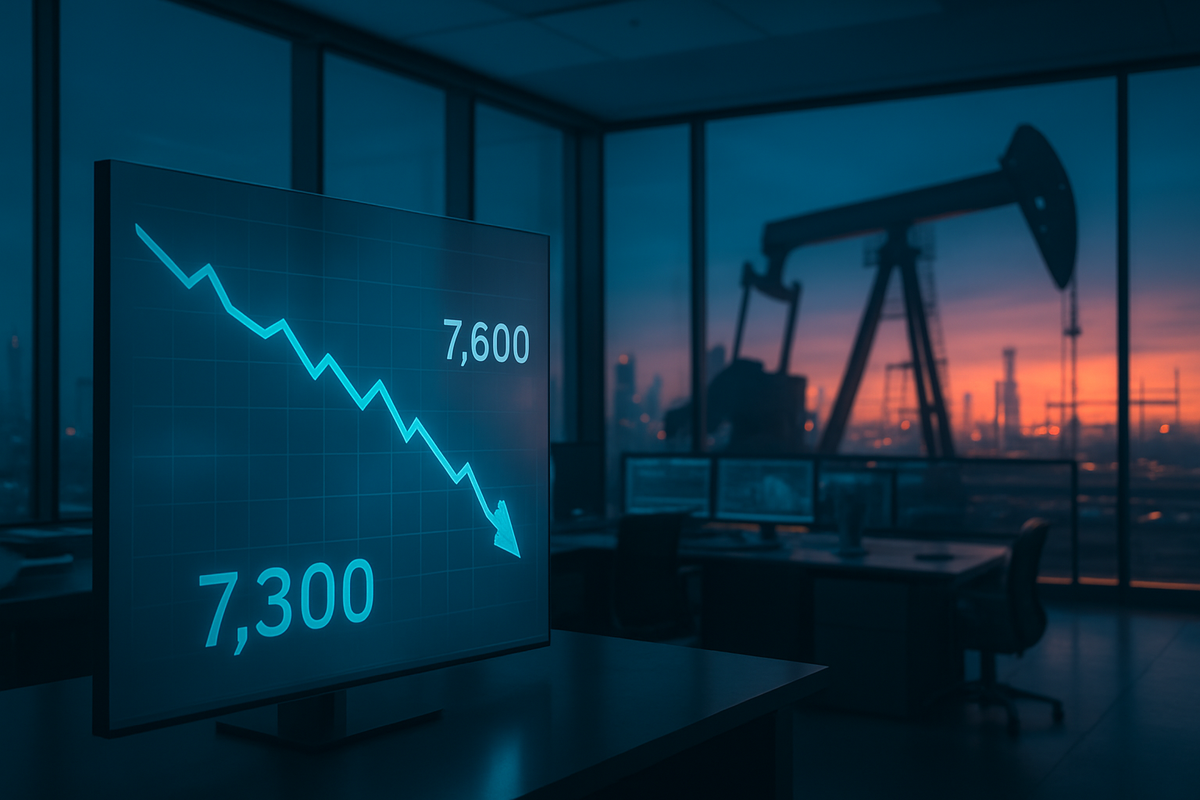
The era of unfettered optimism in the equity markets is facing a stern reality check from one of Wall Street's most influential macro thinkers. KKR & Co. Inc. (NYSE:KKR) has officially lowered its 2026 year-end target for the S&P 500, moving the needle down from 7,600 to 7,300. This 4% reduction signals a tactical retreat from the firm’s previously bullish stance, as the "Goldilocks" environment of early 2025 gives way to a more punishing landscape of high energy costs and structural inflation.
The revision, spearheaded by Henry McVey, KKR’s Head of Global Macro & Asset Allocation, serves as a clarion call for investors who have grown accustomed to double-digit earnings growth. By slashing the 2026 earnings-per-share (EPS) growth forecast from 11% to a more modest 8%, KKR is highlighting a fundamental shift in market dynamics. The immediate implications are clear: the rapid valuation expansion seen throughout late 2025 is likely over, replaced by a "show-me" market where companies must prove they can protect margins against a rising tide of operating expenses.
A Perfect Storm: From High Grading to Margin Compression
The shift in KKR’s outlook did not happen in a vacuum. It represents the culmination of several months of escalating macro pressures that came to a head in the firm's April 1, 2026, "Flash Macro" report. Throughout late 2025, KKR had maintained a "High Grading" strategy, suggesting that while the cycle was maturing, high-quality companies could still drive the S&P 500 toward the 7,600 mark. However, a "pure supply shock" in the energy sector has since upended those calculations.
The primary catalyst is the resurgence of oil prices, with West Texas Intermediate (WTI) crude now hovering near the $100 mark. This spike is not merely a transient fluctuation but a structural challenge driven by geopolitical instability and a "messy" energy transition. McVey’s analysis suggests that sustained $100 oil acts as a "de facto tax" on both corporate profitability and consumer discretionary spending. When combined with "structurally higher" labor costs and a headline CPI forecast revised upward to 3.8%, the narrative of 2026 has shifted from growth to resilience.
Initial market reactions to the KKR report were swift, with broad-based selling in the consumer discretionary and technology sectors. Investors are now re-evaluating the "AI-productivity miracle" narrative, questioning whether technology gains can offset the immediate pain of higher input costs. The timeline of KKR’s projections—moving from the foundational "Regime Change" thesis in 2024 to the tactical downgrade today—suggests that the firm believes we have reached a tipping point where macro headwinds are finally outpacing micro efficiencies.
Winners and Losers in the High-Cost Regime
In this revised 7,300-target environment, the divide between market winners and losers is widening. The most obvious beneficiaries are the integrated energy giants. Companies like Exxon Mobil Corporation (NYSE:XOM) and Chevron Corporation (NYSE:CVX) are positioned to capture the windfall of $100 oil, providing a hedge for portfolios otherwise sensitive to energy-driven inflation. KKR themselves have advocated for an increased allocation to "Real Assets," including infrastructure and energy, as these sectors offer direct exposure to nominal GDP growth and inflation protection.
Conversely, the "losers" in this scenario are sectors with high operational leverage and sensitive consumer bases. Retailers such as Target Corporation (NYSE:TGT) are facing a double-edged sword: rising logistics costs from higher fuel prices and a consumer base that is increasingly squeezed by the cost of living. Similarly, the high-flying technology sector, led by stalwarts like Microsoft (NASDAQ:MSFT) and Apple Inc. (NASDAQ:AAPL), is facing valuation pressure. As KKR forecasts 10-year Treasury yields to remain sticky around 4.5%, the "discount rate effect" continues to compress the multiples that these growth-dependent companies can command.
Private credit and alternative lenders are also emerging as winners. As traditional equity markets become more volatile and "regime change" keeps interest rates higher for longer, the yield offered by private credit becomes increasingly attractive relative to the risk-adjusted returns of the S&P 500.
The Broader Significance: Life After the 'Great Moderation'
The KKR revision is more than just a change in a spreadsheet; it is a formal acknowledgment that the "Great Moderation"—the decades-long period of low inflation and stable growth—is well and truly over. This "regime change" framework, which McVey has been developing since 2024, posits that we have entered a era defined by labor scarcity, geopolitical friction, and the "Security of Everything."
Historically, such pivots in market leadership and macro environments are rare. The current situation draws comparisons to the late 1970s, where supply-side shocks necessitated a total rethink of asset allocation. The broader industry trend is now shifting away from the traditional 60/40 portfolio toward what KKR calls a "40/30/30" model (40% Equities, 30% Credit, 30% Real Assets). This shift suggests that the ripple effects will be felt far beyond the S&P 500 target, influencing how pension funds, endowments, and retail investors allocate capital for the next decade.
Furthermore, there are significant policy implications. With inflation proving stickier than the Federal Reserve’s 2% target, the prospect of rate cuts in late 2026 is rapidly vanishing. KKR’s analysis implies that central banks may be forced to choose between supporting growth or fighting energy-led inflation, a "lose-lose" scenario that could lead to further market volatility.
Navigating the Road to 7,300
What comes next for the market will depend largely on corporate adaptability. In the short term, we should expect a wave of earnings revisions as other Wall Street firms follow KKR’s lead and adjust for margin compression. Companies will likely pivot their strategic focus from top-line expansion to "operating excellence"—a euphemism for cost-cutting and automated efficiency.
Strategic pivots are already underway in the private equity and infrastructure space, where "de-carbonization" and "digitization" are no longer just buzzwords but essential survival strategies. Market opportunities may emerge in "energy transition" metals and domestic manufacturing, as companies look to de-risk their supply chains from geopolitical shocks. However, the road to 7,300 will likely be characterized by "sideways" movement and high intra-sector correlation, requiring investors to be more surgical in their stock selection.
Potential scenarios range from a "controlled descent" to the 7,300 level to a more chaotic "hard landing" if oil prices breach the $130 tail-risk mark mentioned by McVey. For now, the market is in a holding pattern, waiting to see if the "tax" of $100 oil will break the back of the American consumer.
The Bottom Line for Investors
The takeaway from KKR’s latest move is clear: the margin of error for equity investors has shrunk. The transition from a target of 7,600 to 7,300 reflects a market that is finally pricing in the structural costs of the new macro regime. While 7,300 still represents a respectable level for the S&P 500, the path to get there will be fraught with challenges that haven't been seen in over a generation.
As we move through the second half of 2026, investors should watch for signs of "margin stabilization." If companies can successfully pass on costs without crushing demand, the floor of 7,300 may hold. However, if the "energy tax" begins to erode consumer confidence, further revisions may be necessary. For now, the KKR report serves as a sobering reminder that in a world of $100 oil and 4% inflation, the old rules of the bull market no longer apply.
This content is intended for informational purposes only and is not financial advice.