IMF Issues "Buoyant" 2026 U.S. Outlook but Warns of "Fiscal Fragility" and Tariff Headwinds
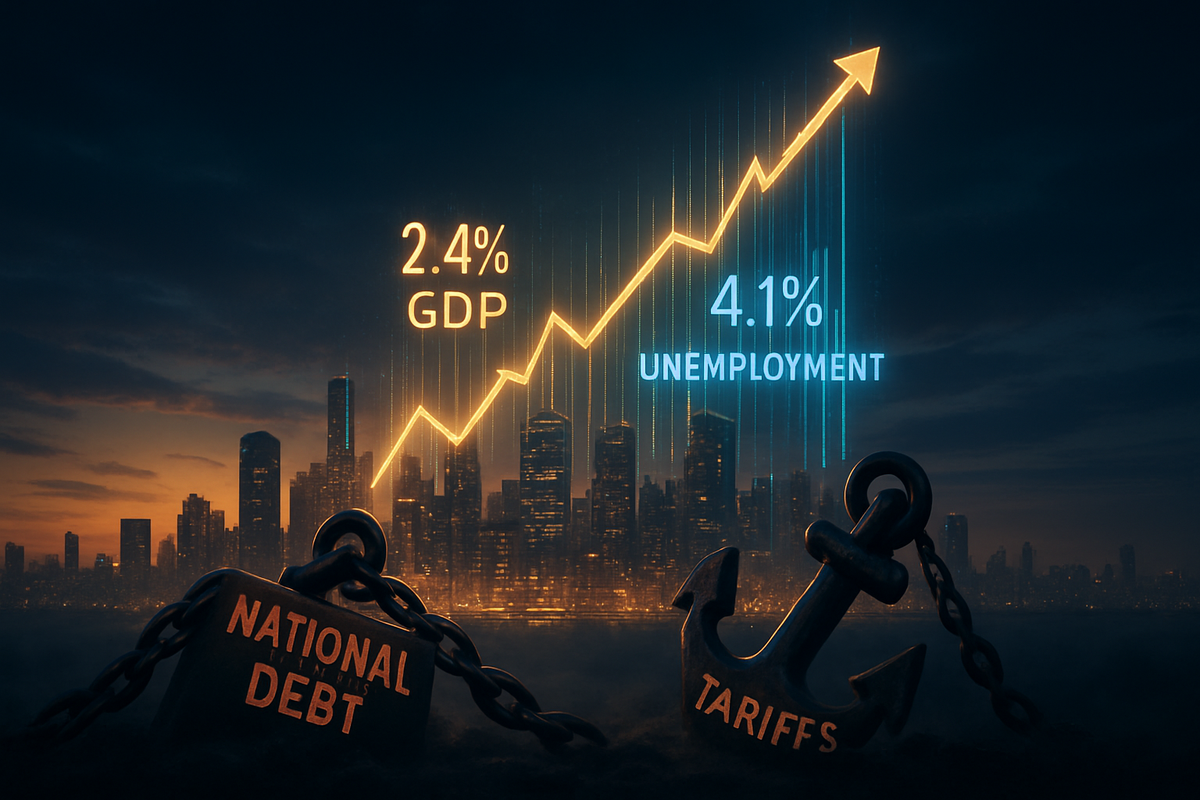
The International Monetary Fund (IMF) released its latest Article IV assessment of the United States economy today, February 26, 2026, painting a picture of a nation that has defied gravity despite a landscape of shifting trade policies and mounting debt. The global lender upgraded its 2026 GDP growth forecast to a "buoyant" 2.4%, a figure that underscores the persistent resilience of American consumers and a private sector that continues to find growth in a high-interest-rate environment.
  However, the IMF’s optimistic growth figures were tempered by sharp warnings regarding the structural health of the U.S. economy. While the headline numbers—including a drop in the unemployment rate to 4.1%—suggest a completed "soft landing," the report highlights that the twin pillars of American stability are being eroded by an escalating national debt and the long-term drag of protectionist trade tariffs. "The U.S. is currently the engine of global growth," noted an IMF spokesperson during the press conference in Washington, "but an engine running on high-octane debt and restricted trade routes eventually risks overheating or stalling."

  ## A Resilience Born of Productivity and Labor Tightness

  The IMF's updated assessment follows a series of turbulent fiscal years that saw the U.S. narrowly avoid a recession in late 2024 and navigate a contentious shift in trade policy throughout 2025. The 2.4% GDP growth forecast for 2026 represents a notable acceleration from the 2.2% seen in the latter half of 2025. This momentum is largely attributed to a surge in private sector productivity, driven by the maturing of AI-integrated business models and a robust services sector. Key stakeholders, including the U.S. Department of the Treasury and the Federal Reserve, have pointed to these figures as validation of the current monetary path, which saw the Fed lower interest rates to a range of 3.4%–3.6% earlier this year.

  The labor market has been a standout performer in this cycle. The drop in unemployment to 4.1% from a peak of 4.5% last year indicates that businesses are still hungry for workers, despite the IMF’s observation that hiring has begun to "ground to a halt" in manufacturing sectors sensitive to trade costs. This tightness in the labor market is providing a floor for consumer spending, even as inflation remains stubbornly near 2.9%—above the Fed's 2% target. The timeline of this recovery began in mid-2025 when a wave of corporate capital spending, incentivized by new tax provisions, offset the initial shock of universal baseline tariffs.

  ## Market Winners and Losers in the New Trade Era

  The IMF’s focus on tariffs and debt creates a bifurcated outlook for public companies. In the retail and consumer electronics sectors, the "tariff drag" mentioned by the IMF is becoming a significant margin killer. Apple Inc. (NASDAQ:AAPL) and Walmart Inc. (NYSE:WMT) have both signaled that while demand remains high, the 10% global levy—implemented after a 2025 legal battle over executive trade authority—is forcing a difficult choice between price hikes and reduced profitability. These "trade-sensitive" giants are seeing their margins squeezed, as the IMF warns that protectionist policies act as a "larger-than-expected drag on activity."

  Conversely, the "buoyant" growth environment is a boon for industrial and financial heavyweights. Caterpillar Inc. (NYSE:CAT) has benefited from continued domestic infrastructure investment and a resilient housing market, though it remains wary of retaliatory tariffs on its exports. In the financial sector, JPMorgan Chase & Co. (NYSE:JPM) and Goldman Sachs Group Inc. (NYSE:GS) are capitalizing on a "higher-for-longer" yield environment. With the IMF projecting that federal debt will exceed 110% of GDP in the near term, the resulting upward pressure on Treasury yields has boosted net interest margins for major banks, even as it raises concerns about the long-term sustainability of the U.S. fiscal position.

  ## The Global Stakes of U.S. Fiscal Imbalance

  The wider significance of the IMF’s report lies in its critique of U.S. fiscal policy. The global lender expressed "grave concern" that the U.S. federal deficit remains near 6% of GDP during a period of economic expansion. This contradicts standard economic theory, which suggests that governments should narrow deficits during periods of growth to prepare for future downturns. The IMF warned that the current path could lead the U.S. debt-to-GDP ratio toward 140% by 2032, a level that could destabilize global bond markets and crowd out private investment.

  This situation echoes the fiscal tensions of the late 1980s, but with the added complication of a fragmented global trade system. The "protectionist trade posture" mentioned by the IMF signifies a departure from the multi-decade trend of globalization. As the U.S. increasingly uses tariffs as a tool of statecraft, the IMF warns of a "negative supply shock" that could permanently raise the price level for consumers. This creates a challenging environment for the Federal Reserve, as it must balance the need to cool tariff-induced inflation with the need to support an economy burdened by high debt-servicing costs.

  ## Scenarios for 2027 and Beyond

  Looking ahead, the IMF suggests that the U.S. is at a strategic crossroads. In the short term, the 2.4% growth rate is likely to persist through the end of 2026, provided that no new geopolitical shocks emerge. However, the "inflationary ghost" of tariffs means that the Federal Reserve will likely have limited room for further rate cuts. Investors should prepare for a period of "sticky" interest rates that could pressure highly leveraged companies and the commercial real estate sector.

  The long-term scenario is more precarious. If the U.S. does not engage in what the IMF calls "front-loaded fiscal consolidation"—essentially cutting spending or raising taxes to lower the deficit—the risk of a "fiscal cliff" in 2027 or 2028 grows. Companies will need to pivot their supply chains even more aggressively to avoid the compounding costs of trade wars. Strategic adaptations, such as "near-shoring" production to Mexico or Canada, will become mandatory rather than optional for firms looking to preserve their 2026 gains.

  ## Final Assessment: A Golden Hour with Shadows

  The IMF’s 2026 assessment serves as a reminder that economic strength and economic health are not always the same thing. The U.S. economy is undeniably strong, characterized by a 2.4% GDP growth rate and a 4.1% unemployment rate that most developed nations would envy. Yet, the foundations of this strength are being tested by a debt load that continues to grow unchecked and a trade policy that risks isolating the world’s largest consumer market.

  For investors, the key takeaways are clear: watch the Core PCE (Personal Consumption Expenditures) data and the 10-year Treasury yield. These will be the primary indicators of whether the "buoyant" growth can survive the "fiscal fragility" identified by the IMF. Moving forward, the market’s focus will likely shift from "will we have a recession?" to "how long can we afford this growth?" As we move deeper into 2026, the resilience of the U.S. private sector remains the economy's greatest asset, but its endurance is being tested like never before.

  ---
  *This content is intended for informational purposes only and is not financial advice.*