Healthcare’s Renaissance: Sector Outshines Tech as Policy Clarity Sparks Q4 Surge
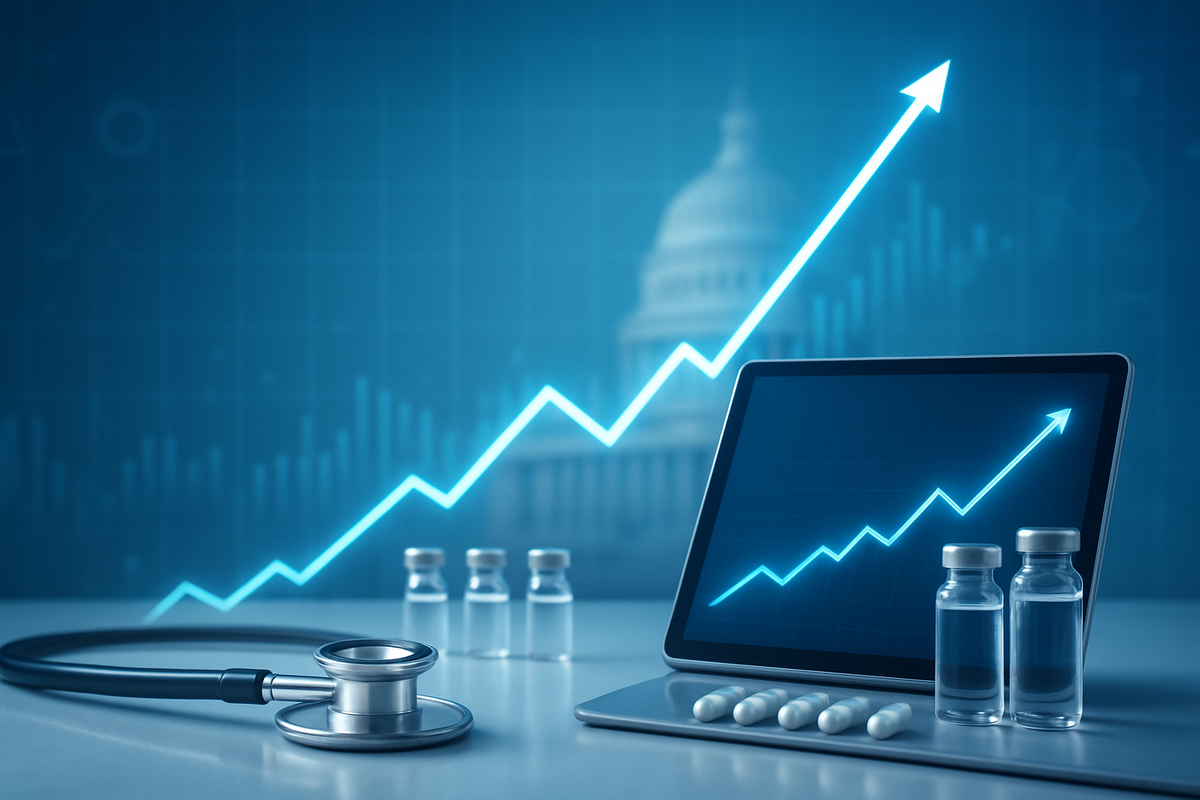
The healthcare sector has staged a dramatic structural breakout, ending a multi-year period of relative stagnation to lead the global markets into 2026. After a powerful 10% gain in the final quarter of 2025, the sector has officially surpassed technology and energy to become the top-performing segment of the S&P 500. This resurgence is being driven by a rare alignment of fundamental value, massive volume growth in new therapeutic classes, and most significantly, a long-awaited resolution to the regulatory uncertainty that has dogged the industry for years.
The shift signals a profound "Great Rotation" in investor sentiment. As the high-flying valuations of artificial intelligence technology stocks began to face scrutiny in late 2025, institutional capital flowed aggressively into healthcare "value plays." This movement was accelerated by landmark pricing agreements between the White House and pharmaceutical titans, which effectively "de-risked" the sector by providing a predictable roadmap for drug costs and reimbursement through the end of the decade.
A Landmark Accord: Negotiating the Future of Pharma
The primary catalyst for this rally was the resolution of a high-stakes standoff between the federal government and the world’s leading drugmakers. In late 2025, the White House announced a series of voluntary "Most Favored Nation" (MFN) drug pricing deals that provided the market with the one thing it craves most: certainty. Pfizer Inc. (NYSE: PFE) led the charge in September 2025, striking a comprehensive agreement that included its flagship treatments such as Lipitor and Paxlovid on a new federal platform. In exchange for offering substantial consumer savings—averaging 50% for specialty brands—Pfizer secured a three-year exemption from pharmaceutical tariffs and a reprieve from more aggressive, mandatory price-setting pilots.
Eli Lilly and Company (NYSE: LLY) followed shortly thereafter with a deal specifically targeting the massive demand for GLP-1 weight-loss medications. By late 2025, the "GLP-1 Supercycle" had moved into a new phase where volume outweighed margin concerns. Lilly agreed to cap out-of-pocket costs for Medicare beneficiaries at $50 per month for Zepbound, while simultaneously expanding its "LillyDirect" platform to offer multi-dose pens at a significant discount for self-pay patients. This strategic concession effectively silenced critics of drug pricing while opening the floodgates for millions of new patients who had previously been priced out of the market, leading to a projected revenue surge for 2026.
The timeline leading up to this breakout was marked by nearly two years of underperformance as the industry fought the implementation of the Inflation Reduction Act’s pricing provisions. However, the pivot to voluntary negotiations allowed companies to maintain control over their pipelines while offering the government a political victory. The market's reaction was swift; healthcare funds saw record inflows in December 2025, and by the time 2026 began, the sector had posted its strongest six-month performance in over a decade.
The Winners and Losers of the New Healthcare Order
In this new environment, the clear winners are the large-cap pharmaceutical companies that have successfully navigated the transition from "blockbuster" dependency to high-volume accessibility. Eli Lilly (NYSE: LLY) has seen its market capitalization soar as it transitions from an injectable-drug model to oral obesity treatments, with analysts expecting record-breaking earnings in 2026. Similarly, Pfizer (NYSE: PFE) has used its "de-risked" status to aggressively pursue M&A, acquiring mid-cap biotech firms to bolster its oncology pipeline without the fear of sudden regulatory intervention devaluing those assets.
Managed care organizations are also seeing a significant tailwind. UnitedHealth Group Inc. (NYSE: UNH) and CVS Health (NYSE: CVS) have benefited from the pricing deals as lower drug costs reduce the pressure on insurance premiums and improve medical loss ratios. Furthermore, the push for "AI efficiency" has favored companies like GE HealthCare Technologies Inc. (Nasdaq: GEHC), which has integrated artificial intelligence into diagnostic imaging and hospital workflows to drive cost savings that the market is now valuing more highly than the speculative growth of tech-only AI firms.
On the losing side are smaller biotech firms that lack the scale to participate in the "Most Favored Nation" agreements. These companies may find it harder to negotiate favorable terms with the White House and could become targets for acquisition by larger peers at depressed valuations. Additionally, specialty pharmacy benefit managers that relied on complex rebate schemes are facing margin compression as the shift toward transparent, direct-to-consumer models like LillyDirect gains momentum across the industry.
Shifting the Paradigm: From AI Hype to Healthcare Value
The broader significance of this breakout lies in the market's evolving definition of value. Throughout 2024 and early 2025, the "AI Gold Rush" saw tech stocks trade at multiples exceeding 30 times forward earnings. In contrast, the healthcare sector sat at a "deep value" level of 16x to 18x during the same period. By early 2026, the valuation gap became impossible for institutional investors to ignore. The move into healthcare represents a flight to quality, where earnings are backed by demographic necessity—an aging global population—rather than just the promise of future technological disruption.
This event also sets a historical precedent for how the private sector and the federal government may interact regarding essential services. By opting for voluntary, negotiated deals rather than protracted legal battles over the Inflation Reduction Act, the pharmaceutical industry has established a "cooperative pricing" model. This mirrors historical pivots in the telecommunications and utility sectors, where regulatory clarity paved the way for decades of steady dividend growth and institutional stability.
The ripple effects are already being felt across global markets. European pharmaceutical giants, seeing the success of the U.S. deals, are reportedly seeking similar "certainty agreements" with EU regulators. This global shift toward price-for-volume trade-offs is fundamentally altering the business model of global healthcare, moving it away from a luxury-priced model toward a high-utility, mass-market structure.
The 2026 Outlook: What Lies Ahead
Looking toward the remainder of 2026, the healthcare sector is poised to maintain its leadership. The most immediate strategic pivot will be the industry-wide move from injectable GLP-1s to oral "obesity pills." As these medications become easier to distribute and more affordable under the new White House deals, the total addressable market is expected to expand by 40% in the next 18 months. Companies that can scale production of these oral alternatives will likely see the greatest share of the "GLP-1 Supercycle" profits.
However, challenges remain. While the "Most Favored Nation" deals provide a three-year window of stability, the 2028 election cycle will eventually bring pricing back into the political crosshairs. Furthermore, as M&A activity heats up, the Federal Trade Commission (FTC) is expected to maintain a watchful eye on sector consolidation. Investors should expect a "medtech merger wave" as larger players look to use their fortified balance sheets to snap up innovative diagnostic and AI-driven healthcare startups.
The market may also see a resurgence in the "biotech IPO" window, which has been largely closed for the past few years. With interest rates stabilizing in early 2026 and the regulatory "overhang" lifted, venture capital is returning to the space. This could lead to a secondary breakout in the small-cap biotech space as risk appetite returns to the sector, potentially following the lead of the large-cap giants.
A New Era of Healthcare Leadership
The healthcare sector's 10% gain in Q4 2025 was not a fluke; it was the culmination of a fundamental shift in how the industry operates within a regulated framework. By resolving policy uncertainty through proactive negotiations with the White House, pharmaceutical leaders like Pfizer and Eli Lilly have cleared a path for sustainable growth. The rotation from speculative AI tech into healthcare value plays suggests that the market is once again prioritizing tangible earnings and defensive positioning in an era of economic transition.
Moving forward, the market’s focus will likely remain on the intersection of healthcare and technology—not as a speculative venture, but as a tool for operational efficiency and better patient outcomes. The "Great Rotation" has successfully repositioned healthcare as the backbone of a balanced portfolio, offering both the growth potential of a revolutionary therapeutic era and the stability of a regulated utility.
Investors should closely watch the quarterly earnings reports of major insurers and the volume metrics for new obesity treatments in the coming months. These data points will serve as the litmus test for whether the high-volume, lower-margin model can continue to drive the sector's outperformance. For now, the "healthcare renaissance" appears to be in its early stages, with the sector finally reclaimed its status as a market leader.
This content is intended for informational purposes only and is not financial advice.