Gold and Silver Soar to Record Highs as Fed Decision Looms: A Deep Dive into Precious Metals' Resurgence
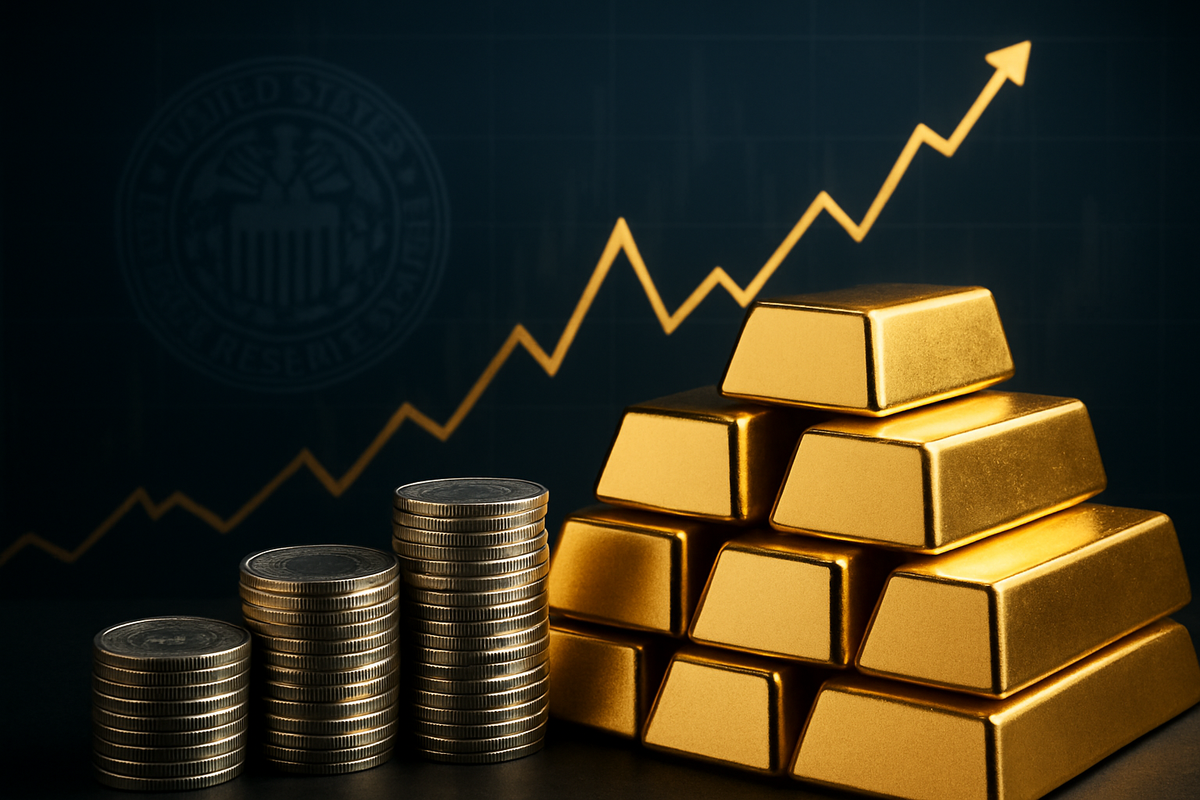
Gold and silver have recently experienced a remarkable surge, with both precious metals scaling unprecedented heights in late 2025. Gold breached the $4,100 per ounce mark, while silver surpassed $50 per ounce, reflecting a significant shift in investor sentiment amidst global economic uncertainties. This robust rally is not merely a fleeting market anomaly but rather a testament to the enduring appeal of precious metals as safe-haven assets, particularly as the market keenly anticipates the upcoming Federal Reserve decision.
The strong upswing has captured global attention, signaling a profound re-evaluation of portfolios and a collective search for stability in a volatile financial landscape. Driven by a confluence of factors including dovish Federal Reserve expectations, persistent inflation concerns, aggressive central bank gold buying, and heightened geopolitical tensions, the precious metals market is bracing for continued momentum. The imminent Fed decision on interest rates is now the focal point, with its outcome poised to significantly influence the trajectory of gold and silver in the coming months.
Precious Metals' Meteoric Rise: A Timeline of Record-Breaking Performance
The latter half of 2025 has witnessed a spectacular rally in both gold and silver, culminating in record-breaking prices that have sent ripples across global financial markets. This surge underscores a significant pivot in investor strategy, moving towards tangible assets amidst a landscape of economic fragility and geopolitical flux.
Gold's journey to new pinnacles has been particularly notable. In October 2025, the yellow metal shattered previous records, reaching an all-time high of approximately $4,380 per ounce. On October 10, spot gold surged past the psychological $4,000 mark, settling at a new record of $4,059 per ounce. The momentum continued into November, with spot gold prices breaching $4,100 per ounce on November 24 and climbing to $4,111.86 per ounce on November 25, marking a 1.2% daily increase. As of November 26, 2025, gold continued its ascent, trading at $4,162.54 USD per troy ounce, up 0.76% from the previous day. Year-to-date, gold has seen an astounding gain of approximately 54%, putting it on track for its strongest annual performance since 1979. Over the past 18 months, gold has risen by more than $1,280, or 62%, from its January 2024 price.
Silver, often referred to as "poor man's gold," has not only mirrored gold's bullish trend but has frequently amplified its gains due to its smaller market size and dual demand profile. In October 2025, silver climbed above $51 per ounce, pushing past its long-term historical resistance near the $50 level. The metal reached an intraday peak of $54.46 per troy ounce on October 17, 2025. By November 25, spot silver gained 1.7% to $50.84 per ounce, briefly touching $51.57 USD per troy ounce. On November 26, 2025, silver continued its robust performance, rising to $52.50 USD per troy ounce, up 2.00% from the previous day. Year-to-date, silver has surged by an impressive 77.92%, showcasing its significant growth potential.
The immediate market reaction to these soaring prices has been characterized by heightened volatility and a significant re-evaluation of investment portfolios. The mid-November period saw extreme intraday volatility for both metals, with rapid price swings creating shockwaves through global financial markets and leading to the liquidation of numerous leveraged positions. Investors are increasingly seeking refuge in these time-tested stores of value, bracing for continued economic uncertainty. After hitting their record highs, both metals have entered a consolidation phase, with these new price levels acting as strong resistance. While short-term retracements due to profit-taking have been observed, the overarching bullish trend remains firmly in place.
Several key factors are converging to fuel this powerful upswing. Foremost among them are the growing market expectations for a U.S. Federal Reserve interest rate cut in December 2025. Dovish commentary from Fed officials has significantly bolstered these expectations, with the CME FedWatch Tool indicating an over 80% probability of a rate reduction. Lower interest rates decrease the opportunity cost of holding non-yielding assets like gold and silver, making them considerably more attractive. Additionally, persistent concerns about inflation and the long-term erosion of purchasing power for fiat currencies continue to drive demand for gold and silver as traditional hedges against currency debasement. Global central banks are also accumulating gold at multi-decade highs, with surveys indicating that 77% of central banks plan to increase their gold holdings in the next 12 months, providing a structural price floor. Elevated geopolitical tensions, including renewed trade conflicts and ongoing military flashpoints, further enhance the appeal of safe-haven assets. Lastly, a weakening U.S. dollar makes dollar-denominated precious metals more affordable for international buyers, boosting demand. Silver also benefits from robust industrial demand in sectors like electronics, solar panels, and electric vehicle batteries, where supply challenges are contributing to price increases.
Winners and Losers: Corporate Fortunes Shift with Precious Metal Prices
The dramatic ascent of gold and silver prices has created a bifurcated landscape for public companies, ushering in a period of unprecedented prosperity for some while presenting significant headwinds for others. The operational leverage inherent in the mining sector means that even modest increases in metal prices can translate into disproportionately larger gains in profitability, making mining companies the most direct beneficiaries.
Leading the charge among the winners are the major gold and silver mining companies. For instance, Newmont Corporation (NYSE: NEM), the world's largest gold miner, stands to benefit immensely from stable exposure to gold's upside, leveraging its diversified operations to maximize returns. Similarly, Barrick Gold Corporation (NYSE: GOLD) is well-positioned, appealing to both value and growth investors with its disciplined approach to mining. Other significant gold producers like AngloGold Ashanti PLC (NYSE: AU), Alamos Gold (TSX: AGI), Kinross Gold (NYSE: KGC), and Agnico Eagle Mines Limited (NYSE: AEM) are all experiencing enhanced financial performance, characterized by surging free cash flow, increased earnings, and often, higher dividends. These companies can now boost production, invest more in exploration, and even consider reopening previously uneconomical mines, further solidifying their market positions.
In the silver sector, primary producers are seeing a substantial boost. Pan American Silver Corp. (NASDAQ: PAAS), one of the world's largest primary silver producers, is expected to report significant increases in free cash flow, fueling both exploration and expansion initiatives, and has recently boosted its dividends. First Majestic Silver Corp. (NYSE: AG), another company primarily focused on silver, has shown strong stock returns over the past year, reflecting the bullish sentiment surrounding the metal. Other key players such as Coeur Mining Inc. (NYSE: CDE), Hecla Mining Co. (NYSE: HL), and Fresnillo Plc (LSE: FRES), the largest primary silver producer worldwide, are all poised for enhanced financial performance. Royalty and streaming companies like Wheaton Precious Metals Corp. (NYSE: WPM), Triple Flag Precious Metals (NYSE: TFPM), and Franco-Nevada (NYSE: FNV) also emerge as significant winners. These firms provide upfront capital to miners in exchange for future metal production at fixed, low prices, meaning a rising market price for gold and silver dramatically widens their profit margins without the direct operational risks of mining.
Conversely, industries heavily reliant on silver as an industrial commodity are facing increasing cost pressures. Unlike gold, over 50% of silver's annual demand stems from industrial uses, making sectors such as solar panel manufacturing, electronics, and electric vehicle (EV) production particularly vulnerable. Companies like First Solar, Inc. (NASDAQ: FSLR), a major solar panel manufacturer, could see their input costs rise significantly, potentially squeezing profit margins if they cannot pass these costs on to consumers. Similarly, manufacturers of smartphones, laptops, and EV components, which utilize silver for its unmatched electrical conductivity, will grapple with escalating material expenses. Jewelry retailers and manufacturers, while dealing in a luxury good, may also experience reduced demand as sharply higher gold and silver prices deter consumers or prompt a shift towards lower-priced alternatives. Companies with poor hedging strategies or high production costs within the mining sector itself may also find themselves struggling, as rising operational expenses can erode the benefits of higher metal prices.
Wider Significance: A Reflection of Global Economic Shifts and Geopolitical Tensions
The current strong upswing in gold and silver prices is far more than a mere market fluctuation; it is a profound indicator of broader industry trends, significant shifts in global economic sentiment, and heightened geopolitical instability. This rally fits squarely into a narrative where traditional safe-haven assets regain prominence during periods of uncertainty, challenging the conventional wisdom of relying solely on equity markets or fiat currencies.
This event underscores a growing global distrust in the stability of traditional financial systems and a collective search for reliable stores of value. The persistent concerns over inflation, coupled with the long-term erosion of purchasing power for fiat currencies due to continuous debt accumulation, are driving investors towards assets that historically maintain their value. Gold and silver, with their intrinsic value and historical role as money, serve as powerful hedges against currency debasement. The sheer volume of central bank gold buying at multi-decade highs, even as prices reach record levels, is a testament to this trend. Surveys indicating that 77% of central banks plan to increase their gold holdings in the next year signal a sustained institutional demand that provides a structural price floor for the yellow metal.
The ripple effects on competitors and partners are substantial. For other commodity markets, the strength in precious metals could signal broader inflationary pressures or a flight to quality, potentially affecting industrial metals or energy prices. Mining service companies, equipment suppliers, and exploration firms are likely to see increased business as miners expand operations and invest in new projects. Conversely, industries that compete for investment capital might find themselves at a disadvantage as funds flow into precious metals. The weakening U.S. dollar, a key driver of the precious metals rally, has broader implications for international trade and investment, making U.S. exports cheaper but imports more expensive, and potentially shifting global capital flows.
From a regulatory and policy perspective, the sustained rally in precious metals could prompt increased scrutiny from financial regulators, particularly concerning market volatility and the activities of leveraged funds. Governments might also re-evaluate their own strategic reserves or consider policies that impact domestic mining operations, such as environmental regulations or taxation. Historically, significant precious metals rallies have often coincided with periods of economic turmoil or geopolitical crises. The current environment, marked by renewed trade conflicts, the ongoing Russia-Ukraine conflict, and instability in the Middle East, mirrors such historical precedents, reinforcing the metals' role as a hedge against global instability. The last time gold saw such a strong annual performance was in 1979, a period characterized by high inflation and geopolitical tensions, drawing clear parallels to the present situation. This historical context suggests that the current surge is not an isolated incident but rather a cyclical response to macroeconomic and geopolitical stressors.
What Comes Next: Navigating the Future of Precious Metals
The trajectory of gold and silver in the coming months will largely hinge on the highly anticipated Federal Reserve decision on interest rates, coupled with evolving global economic indicators and geopolitical developments. In the short term, market participants are bracing for potential volatility immediately following the Fed's announcement, as any deviation from expected dovish commentary could trigger profit-taking or further rallies. However, the overarching sentiment suggests continued bullish momentum for both metals, particularly if the Fed signals a clear path towards rate cuts in December 2025 and beyond.
Short-term possibilities include gold testing new resistance levels above $4,200 and silver potentially challenging the $55 per ounce mark, driven by continued safe-haven demand and a weakening dollar. Traders will closely monitor inflation data, employment figures, and central bank communications for cues on the pace and extent of future rate adjustments. Long-term possibilities are even more compelling. Should the global economy enter a sustained period of lower interest rates, persistent inflation, or increased geopolitical fragmentation, gold and silver could establish new, higher price floors, cementing their role as foundational assets in diversified portfolios. The ongoing trend of central bank gold accumulation also provides a strong structural support for prices, suggesting that institutional demand will remain robust irrespective of short-term market fluctuations.
For companies within the precious metals sector, strategic pivots and adaptations will be crucial. Mining companies will likely accelerate exploration and development projects, seeking to capitalize on higher metal prices and expand their reserve bases. Investments in technological advancements to lower extraction costs and improve efficiency will also become paramount. Royalty and streaming companies will continue to be attractive financing partners for miners, benefiting from the widening spread between their fixed acquisition costs and rising market prices. Conversely, industries reliant on silver as an industrial input may explore alternative materials or invest in efficiency improvements to mitigate the impact of higher costs.
Market opportunities will emerge for investors seeking exposure to tangible assets and inflation hedges. Beyond direct physical bullion, precious metals ETFs and carefully selected mining stocks offer leveraged plays on the metals' performance. Challenges may include increased market volatility, potential regulatory scrutiny, and the inherent risks associated with commodity price cycles. Potential scenarios range from a "goldilocks" environment where gradual rate cuts and contained inflation lead to a steady appreciation, to more extreme scenarios involving accelerating inflation or geopolitical crises, which could propel prices even higher. Investors should watch for further dovish signals from the Fed, any escalation in geopolitical tensions, and the continued strength of central bank buying as key indicators in the coming months.
Comprehensive Wrap-Up: A New Era for Precious Metals
The recent strong upswing in gold and silver prices marks a pivotal moment in the financial markets, signifying a profound re-evaluation of value in an increasingly uncertain world. The core takeaway from this event is the reassertion of precious metals as indispensable safe-haven assets and potent hedges against inflation and economic instability. Gold's surge past $4,100 per ounce and silver's breach of $50 per ounce are not merely numerical milestones but rather reflections of deep-seated shifts in investor sentiment and global macroeconomic realities.
Moving forward, the market for precious metals is poised for continued dynamism. The impending Federal Reserve decision looms as a critical catalyst, with expectations of interest rate cuts providing a significant tailwind for non-yielding assets. However, beyond the immediate impact of monetary policy, the structural drivers of this rally—persistent inflation, aggressive central bank buying, and geopolitical tensions—suggest a more enduring bullish trend. Gold and silver are increasingly viewed not just as tactical trades but as strategic components for long-term portfolio diversification and wealth preservation.
The lasting impact of this upswing will likely be a reinforced perception of precious metals as reliable anchors in volatile times. It underscores a fundamental truth: in an era of unprecedented debt, currency debasement, and global instability, tangible assets hold an inherent appeal that paper money often cannot match. This event also highlights the operational leverage within the mining sector, demonstrating how companies like Newmont Corporation (NYSE: NEM) and Pan American Silver Corp. (NASDAQ: PAAS) can significantly amplify returns during periods of rising metal prices.
For investors, the coming months will demand vigilance and strategic positioning. Key indicators to watch include the Fed's rhetoric and actions, particularly regarding the pace and magnitude of interest rate adjustments. Furthermore, any developments in global geopolitical flashpoints and the continued trajectory of inflation will be crucial. Monitoring central bank gold purchases and the performance of the U.S. dollar will also provide valuable insights into the ongoing health and direction of the precious metals market. While the current rally presents compelling opportunities, investors should approach the market with a clear understanding of its inherent volatility and the importance of diversification.
This content is intended for informational purposes only and is not financial advice