Gold and Silver Shine Bright: Precious Metals Extend Rally as Safe Havens Amidst Global Turmoil
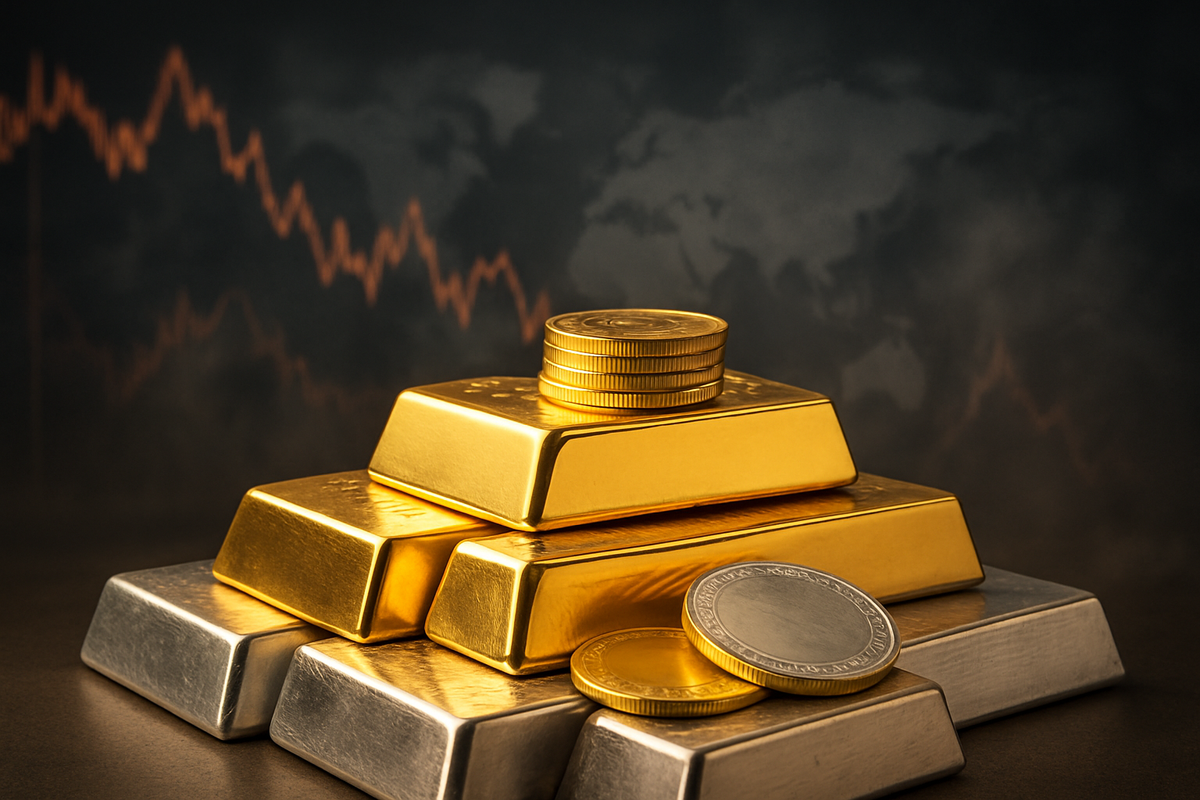
Gold and silver are experiencing a powerful and extended rally as of November 12, 2025, firmly cementing their traditional role as safe-haven assets in a world grappling with significant market volatility and economic uncertainty. This surge in precious metal prices is a clear indicator of investor apprehension, as global financial landscapes contend with a complex interplay of macroeconomic pressures, persistent geopolitical tensions, and shifting monetary policy expectations. The precious metals market is not merely reacting; it is proactively signaling a widespread flight to quality, as investors seek refuge from the turbulence impacting conventional equity and bond markets.
The robust performance of both gold and silver underscores a deep-seated desire among investors to preserve capital and hedge against inflation and currency devaluation. With gold prices hovering around $4,129 to $4,131 per ounce and silver reaching a three-week high of approximately $51 per ounce, these metals are not just holding their ground but are making significant gains. This sustained upward momentum suggests that the underlying drivers—from anticipated interest rate cuts by major central banks to escalating international conflicts—are deeply entrenched, signaling a prolonged period of elevated demand for these tangible stores of value.
The Unfolding Narrative: A Detailed Look at the Precious Metals Ascent
The current rally in gold and silver is a culmination of several intertwined events and market dynamics that have unfolded over the past year, intensifying in recent months. Gold prices have seen a remarkable year-to-date gain of 56-57% in 2025, even after a slight pullback from its all-time high of nearly $4,400 per ounce in October 2025. Silver's performance has been equally impressive, with a year-on-year increase exceeding 61%, despite some recent monthly corrections.
A significant catalyst for this surge is the growing anticipation of a US Federal Reserve interest rate cut. As of November 12, 2025, probabilities for a December 2025 rate cut are around 66-70%, with expectations rising to 87% by March 2026. Lower interest rates typically reduce the opportunity cost of holding non-yielding assets like gold and silver, making them more attractive. This expectation has been bolstered by recent weak US economic data, including a softening labor market and cooling private payroll growth, which have led to a decline in consumer sentiment to near record lows in November.
Beyond monetary policy, persistent geopolitical tensions globally continue to fuel safe-haven demand. Ongoing international conflicts, escalating trade wars, and energy supply shocks contribute to overall market instability. These tensions not only drive investors towards stability but also amplify inflationary pressures, further enhancing the appeal of gold and silver as inflation hedges. Additionally, concerns about a potential US government shutdown and rising US debt sustainability are prompting investors to seek refuge in precious metals, creating a "data vacuum" and heightening economic uncertainty. Central banks globally have also been key players, strategically accumulating over 1,500 tonnes of gold since 2023, diversifying away from dollar-denominated assets and signaling institutional confidence in gold's stability.
Winners and Losers: Corporate Impacts in a Golden Era
The extended rally in gold and silver naturally creates a distinct set of winners and losers across various sectors, with mining companies and financial institutions being particularly affected.
Winners:
- Gold and Silver Mining Companies: Companies heavily invested in gold and silver extraction are direct beneficiaries. Miners like Barrick Gold Corp. (NYSE: GOLD), Newmont Corporation (NYSE: NEM), Agnico Eagle Mines Limited (NYSE: AEM), and Pan American Silver Corp. (NASDAQ: PAAS) are seeing significant boosts to their revenues and profitability. Higher metal prices translate directly into increased margins, improved cash flows, and enhanced balance sheets. This allows for greater investment in exploration and development, debt reduction, or increased shareholder returns through dividends and buybacks. For silver miners, the dual demand from safe-haven buying and industrial applications (especially in solar and electronics) provides an additional layer of robust demand.
- Precious Metals ETFs and Funds: Exchange-Traded Funds (ETFs) such as the SPDR Gold Shares (NYSEARCA: GLD) and iShares Silver Trust (NYSEARCA: SLV) are experiencing increased inflows from investors looking for exposure to the metals without direct ownership. Fund managers specializing in precious metals are also seeing their portfolios outperform, attracting more capital.
- Refineries and Minting Companies: Businesses involved in refining, fabricating, and minting gold and silver products, from bullion bars to coins, are likely to see increased demand and activity.
- Jewelry Retailers (with a caveat): While higher gold prices can deter some consumers, luxury jewelry brands that cater to high-net-worth individuals might still see steady demand, as gold jewelry is often viewed as both a fashion statement and an investment. However, mass-market retailers might face challenges due to increased input costs.
Losers:
- Industries Reliant on Silver as an Input: While silver's industrial demand is a positive, certain manufacturers heavily reliant on silver as a key raw material might face increased production costs. Companies in electronics, solar panel manufacturing, and medical imaging, for instance, could see their margins squeezed if they cannot pass on the increased costs to consumers.
- Companies with High Exposure to a Weakening US Dollar: While a weaker dollar makes gold cheaper for international buyers, US-centric companies that primarily operate domestically and source materials internationally might face higher import costs, impacting their profitability.
- Investors Over-Allocated in Traditional Equities/Bonds: Investors who have not diversified into precious metals and are heavily invested in volatile stock markets or low-yielding bonds might see their portfolios underperform relative to those with safe-haven exposure.
- Central Banks (Indirectly): While central banks are buying gold, a rapidly weakening domestic currency (like the USD) that drives gold prices up can indicate underlying economic instability, which is a broader challenge for central banks to manage.
The overall impact is a reallocation of capital, favoring tangible assets and companies that provide exposure to them, at the expense of more speculative or growth-oriented investments in a risk-off environment.
Wider Significance: A Barometer of Global Economic Health
The extended rally in gold and silver transcends mere commodity price movements; it serves as a critical barometer of global economic health and investor confidence. This event fits squarely into a broader trend of de-dollarization and a global search for stable assets amidst an increasingly fragmented geopolitical and economic landscape.
Historically, gold and silver have always been sought after during times of crisis. The current situation echoes periods like the 2008 financial crisis, the dot-com bubble burst, or even the inflationary periods of the 1970s. In each instance, precious metals provided a hedge against systemic risk and currency debasement. The current rally, however, is unique in its multi-faceted drivers, combining the specter of persistent inflation, the anticipation of significant monetary policy shifts, and a heightened level of geopolitical instability not seen in decades. This suggests a more profound and possibly longer-lasting shift in investor sentiment than previous cycles.
The potential ripple effects are significant. For competitors in the investment space, particularly those pushing riskier assets, the sustained appeal of precious metals could divert capital away from their offerings. Financial advisors are likely to increasingly recommend a higher allocation to precious metals in diversified portfolios. Partners in the supply chain, from exploration companies to logistics providers, will see increased activity.
Regulatory bodies might also face pressure to ensure transparency and stability in the precious metals markets, especially if volatility increases. Discussions around the role of central bank digital currencies (CBDCs) and their potential impact on traditional safe havens could also intensify. The ongoing accumulation of gold by central banks, particularly from emerging economies, highlights a strategic shift away from over-reliance on the US dollar, potentially accelerating a move towards a more multipolar global financial system. This trend has significant geopolitical implications, as it could dilute the financial leverage of traditional reserve currencies.
What Comes Next: Navigating the Precious Metals Landscape
Looking ahead, the trajectory of gold and silver prices will largely depend on the evolution of the factors currently driving their rally. In the short term, the immediate focus will be on the US Federal Reserve's December 2025 meeting and subsequent announcements regarding interest rates. A confirmed rate cut, or even stronger indications of one, could provide another significant boost to precious metals, as the opportunity cost of holding non-yielding assets further diminishes. Additionally, any escalation in geopolitical tensions or further weakening of the US dollar would likely reinforce the safe-haven appeal. Technical analysis suggests gold could target $4,700 by 2026, with silver aiming for $65, indicating continued upward potential.
In the long term, the outlook for gold and silver remains bullish, contingent on persistent inflationary pressures, continued global economic uncertainty, and central bank demand. Should inflation prove stickier than anticipated, or if global economic growth remains subdued, the appeal of precious metals as a store of value will endure. Potential strategic pivots for investors include maintaining a diversified portfolio with a healthy allocation to precious metals, perhaps even increasing exposure during any temporary pullbacks. Mining companies may adapt by increasing production, investing in new technologies to lower extraction costs, and exploring new reserves to capitalize on higher prices.
Market opportunities may emerge in related sectors, such as companies providing mining equipment, precious metals storage solutions, or specialized financial products linked to commodities. Challenges include potential regulatory interventions if market volatility becomes excessive, or a sudden reversal in economic conditions that diminishes the need for safe-haven assets. However, given the current confluence of factors, a significant and sustained downturn in precious metal prices appears less likely in the immediate future. Potential scenarios range from a continued steady climb driven by consistent demand, to more rapid spikes if a major global economic or geopolitical shock occurs.
A Golden Future: Key Takeaways and Investor Outlook
The extended rally in gold and silver is a resounding testament to their enduring role as indispensable safe-haven assets in a world characterized by profound uncertainty and volatility. The key takeaways from this event are clear: precious metals are actively fulfilling their mandate as hedges against inflation, currency devaluation, and systemic risk, attracting both retail and institutional investors, including central banks. The market is signaling a deep-seated apprehension about the stability of traditional financial instruments and the broader economic outlook.
Moving forward, the market is poised for continued strength in gold and silver. The confluence of anticipated US Federal Reserve rate cuts, persistent geopolitical conflicts, concerns over US fiscal health, and sticky inflationary pressures creates a potent environment for precious metals to thrive. Investors should recognize that this is not merely a transient spike but potentially a sustained shift in asset allocation preferences, driven by fundamental global dynamics.
For investors, the coming months will be critical to watch. Key indicators include the Federal Reserve's monetary policy decisions, global inflation data, and the evolution of international geopolitical events. Any significant shifts in these areas will directly influence the trajectory of gold and silver. Furthermore, monitoring the supply-demand dynamics within the mining sector, as well as central bank purchasing patterns, will provide valuable insights. In essence, gold and silver are not just commodities; they are bellwethers of global sentiment, and their continued ascent suggests a cautious yet strategic outlook for capital preservation in an unpredictable world.
This content is intended for informational purposes only and is not financial advice