Geopolitical Shockwaves: Iranian Attacks on Middle East Smelters Send Aluminum Prices to 4-Year Highs, US Producers Surge
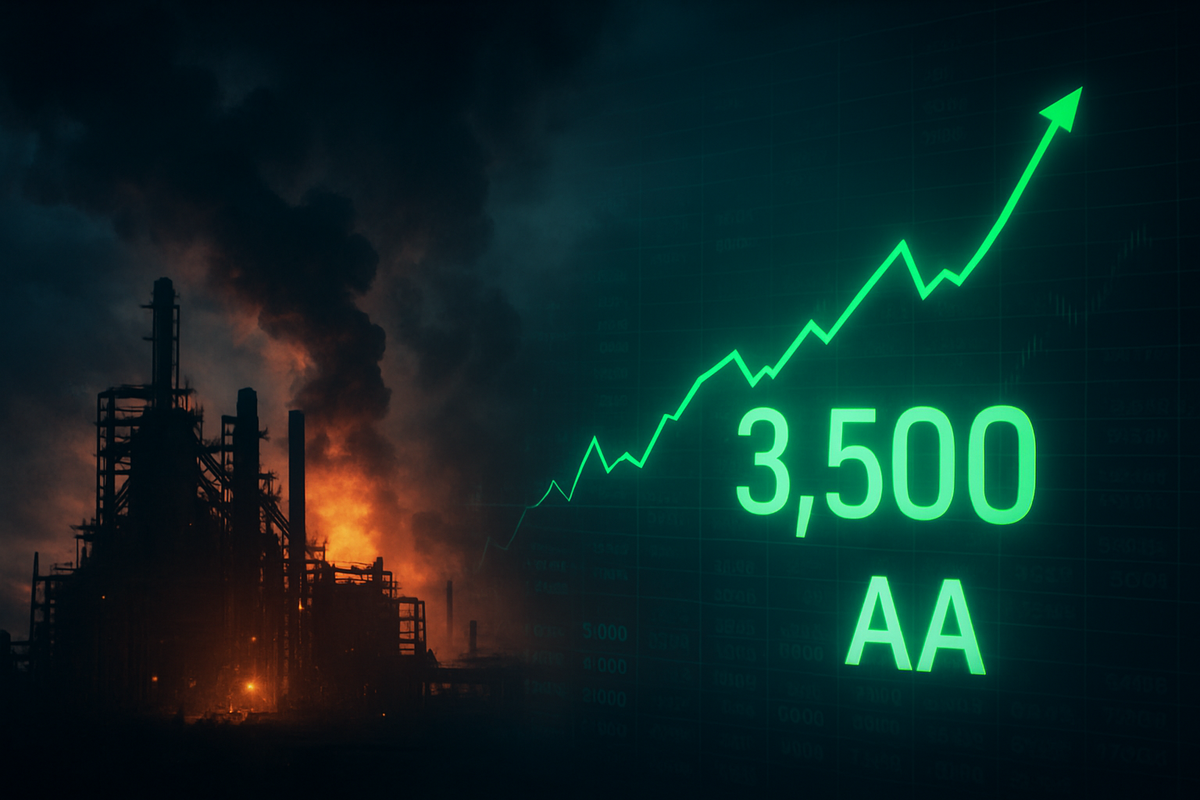
NEW YORK — Global commodities markets were thrown into a state of high-alert this week as a series of targeted Iranian missile and drone strikes struck the heart of the world’s aluminum production corridor. The attacks, which targeted the critical industrial infrastructure of Emirates Global Aluminium (EGA) and Aluminium Bahrain (Alba), have effectively neutralized a massive portion of the global supply chain, sending aluminum prices screaming to a four-year high of $3,500 per metric ton on the London Metal Exchange (LME).
The immediate implications for the global economy are severe. With the Middle East accounting for approximately 9% of global aluminum smelting capacity, the sudden disruption has triggered a "panic bid" in the markets. As traders scramble to secure physical delivery of the metal, domestic U.S. producers have become the primary beneficiaries of a flight-to-safety trade. In early Monday trading, shares of Alcoa Corporation (NYSE: AA) surged between 11% and 12%, while other North American smelting interests saw similar double-digit gains as the prospect of a prolonged supply vacuum in the Persian Gulf becomes a reality.
A Weekend of Fire: The Targeted Strikes on Global Smelting Hubs
The crisis began in the early hours of March 28, 2026, when a wave of precision-guided munitions and loitering drones launched from Iranian territory struck the Al Taweelah smelting complex in Abu Dhabi, operated by EGA. Simultaneous reports confirmed that the Aluminium Bahrain (Alba) facility, which houses the world’s largest single-site smelter, also sustained significant damage to its power infrastructure and potlines. Preliminary satellite imagery suggests that several of the highly sensitive electrolytic cells—the "pots" where alumina is converted into molten metal—have frozen, a catastrophic technical failure that can take months, if not years, to fully repair.
This escalation marks the culmination of weeks of rising tensions in the Persian Gulf, following a breakdown in maritime security protocols and a series of tit-for-tat skirmishes in the Strait of Hormuz. The strikes on March 28 were not merely symbolic; they targeted the "power islands" and alumina conveyor systems that are the lifeblood of these massive industrial sites. By targeting these specific bottlenecks, the attackers effectively paralyzed the production of millions of tons of premium-grade aluminum that the aerospace, automotive, and construction industries depend upon.
The market reaction was instantaneous. As news of the damage filtered through to the commodity desks in London and New York, the spot price for primary aluminum breached the $3,500 mark for the first time since the 2022 energy crisis. Industry analysts at the LME noted that the sudden removal of nearly 6 million metric tons of regional capacity has created a supply deficit that cannot be easily filled by other major producers like China or Russia, the latter of which remains largely under heavy Western sanctions.
The Domestic Advantage: Alcoa and Century Aluminum Lead the Rally
In the wake of the destruction in the Gulf, the spotlight has shifted toward domestic producers who are insulated from the regional conflict. Alcoa Corporation (NYSE: AA) emerged as the day's biggest winner, with its stock price jumping nearly 12% as investors bet on the company's ability to capitalize on record-high premiums. Alcoa, which has spent the last two years optimizing its portfolio and focusing on low-carbon "green" aluminum, now finds its North American and Australian assets at the center of a global bidding war.
Similarly, Century Aluminum Company (NASDAQ: CENX) saw its shares climb as the market recognized its strategic importance as one of the few remaining primary smelters in the United States. Century, which operates significant facilities in Kentucky and South Carolina, is now positioned to provide critical supply to the U.S. defense and automotive sectors, which are scrambling to find alternatives to Middle Eastern imports. For years, the U.S. has relied on the UAE and Bahrain for nearly 20% of its unwrought aluminum; with those channels now effectively blocked by a de facto naval blockade in the Strait of Hormuz, Century's domestic output has become a strategic asset of national importance.
The contrast in fortunes is stark. While EGA and Alba face months of forensic engineering and reconstruction under the threat of further military action, Alcoa and Century Aluminum are looking at a period of unprecedented "windfall" margins. The "Midwest Premium"—the surcharge paid to deliver aluminum to the U.S. heartland—is expected to double by the end of the week, adding further fuel to the revenue projections for these domestic giants.
Fragility Exposed: The Strategic Shift in Global Metal Sourcing
This event highlights the extreme fragility of the global aluminum supply chain, which has become increasingly concentrated in energy-rich but geopolitically volatile regions. The Middle East’s 9% share of global production was once seen as a stabilizing force due to low energy costs, but the events of March 2026 have flipped that narrative. This disruption mirrors the 2022 supply shock following the invasion of Ukraine, but with a more direct hit to the physical infrastructure of production rather than just the energy feedstock.
The ripple effects are already being felt across the industrial sector. Major automotive manufacturers, including Ford Motor Company (NYSE: F) and Tesla, Inc. (NASDAQ: TSLA), may face production slowdowns as they compete for the dwindling supply of primary aluminum used in vehicle frames and battery casings. This crisis is likely to accelerate a broader trend of "friend-shoring," where Western governments provide heavy subsidies to bring smelting capacity back to North America and Europe to avoid dependency on the Persian Gulf or China.
Regulatory bodies in Washington are also taking note. There are already discussions within the Department of Commerce regarding the implementation of emergency measures to prioritize aluminum supplies for the defense industrial base. The historical precedent of the 1980s, where domestic smelting was considered a pillar of national security, is returning to the forefront of economic policy.
The Long Road to Recovery and Market Volatility
In the short term, the market remains in a state of "backwardation," where the price for immediate delivery is significantly higher than the price for future delivery, indicating a desperate physical shortage. Analysts warn that if the Strait of Hormuz remains closed or if further attacks occur, aluminum could easily test the $4,000-per-ton level, a price point that would have a devastating inflationary impact on consumer goods and infrastructure projects worldwide.
For companies like Alcoa and Century Aluminum, the immediate challenge will be managing the surge in demand without over-leveraging for capacity restarts that may take months to materialize. The strategic pivot required now is one of resilience; investors will be looking for these companies to prove they can ramp up production safely while navigating a high-interest-rate environment that has plagued industrial expansion for the last year.
Strategic opportunities may emerge in the recycling sector as well. If primary aluminum remains at $3,500/ton, the value of "secondary" or recycled aluminum will skyrocket, potentially benefiting companies focused on the circular metal economy. However, the immediate focus remains on the "potlines" of the Middle East and whether they can ever return to their former glory in an era of heightened regional warfare.
Conclusion: A Turning Point for the Aluminum Industry
The attacks on March 28, 2026, have fundamentally altered the landscape of the global commodities market. The era of cheap, reliable aluminum from the Persian Gulf appears to be over, at least for the foreseeable future. The immediate jump in Alcoa’s stock and the record-high LME prices are not just temporary market blips; they are the signals of a structural shift in how the world values and sources industrial metals.
As we move forward, the market will be characterized by extreme volatility and a premium on domestic reliability. Investors should keep a close watch on the "repair timelines" coming out of Abu Dhabi and Bahrain, as well as any U.S. legislative moves to further subsidize the domestic smelting industry. The lesson of this week is clear: in a world of increasing geopolitical friction, the location of a smelter is just as important as the metal it produces.
Moving into April 2026, the primary focus for the market will be the "deliverability" of metal. With 9% of global capacity in the crosshairs, the aluminum industry has entered its most turbulent chapter in decades.
This content is intended for informational purposes only and is not financial advice.