Energy Iron Curtain: European Gas Prices Explode 85% as Hormuz Crisis Sidelines Qatar
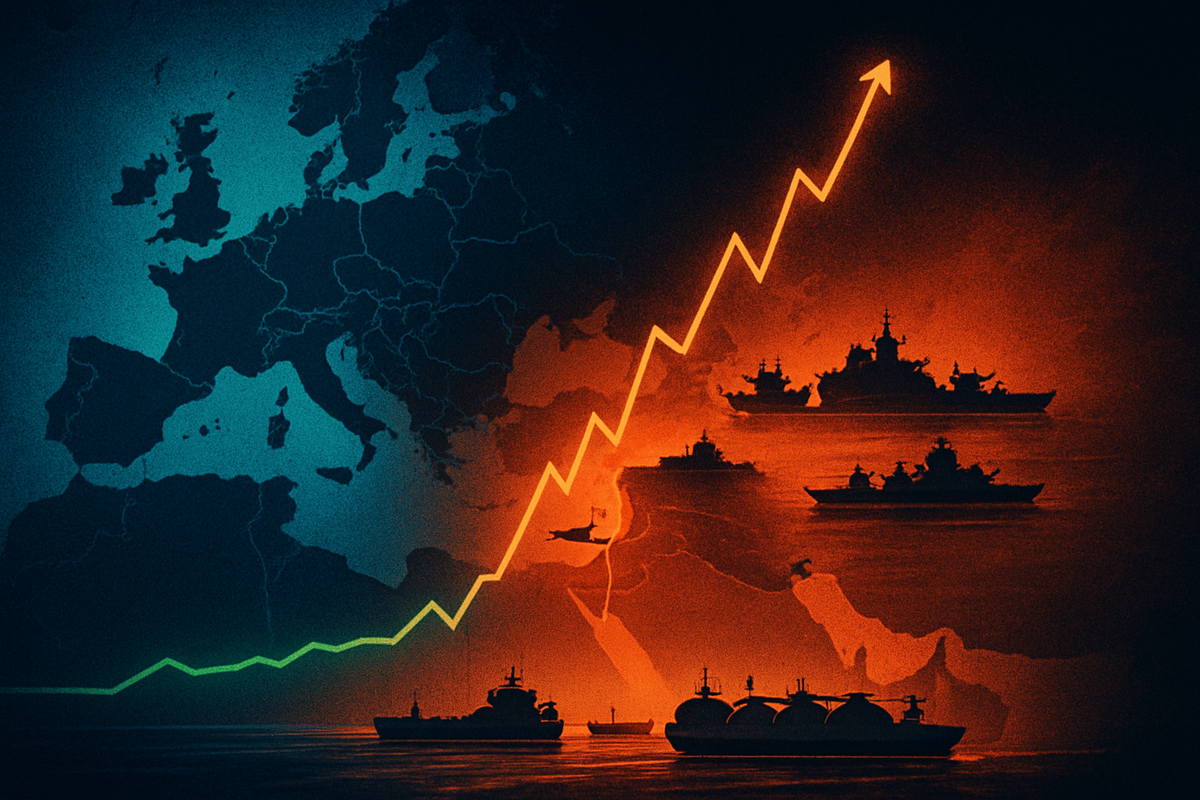
LONDON / NEW YORK — The global energy landscape has been fractured by a geopolitical earthquake. In just thirty days, European natural gas futures, benchmarked at the Dutch Title Transfer Facility (TTF), have skyrocketed by a staggering 85%, reaching €55 per megawatt-hour (MWh). The surge follows a rapid escalation in the Middle East that has effectively neutralized Qatar, the world’s leading liquefied natural gas (LNG) exporter, and sent shockwaves through the European continent’s fragile energy security architecture.
While Europe braces for a potential industrial hibernation, the United States remains a relative fortress of stability. The domestic U.S. benchmark, Henry Hub, has remained remarkably insulated, trading at approximately $3.91 per million British thermal units (MMBtu). This widening transatlantic price chasm highlights a new era of energy regionalism, where proximity to the Persian Gulf has become a liability, and the U.S. Gulf Coast has become the world’s ultimate safe haven for fuel.
The Hormuz Blockade: A Timeline of the March Crisis
The current crisis traces back to February 28, 2026, when coordinated military strikes by U.S. and allied forces against Iranian strategic assets triggered an immediate and asymmetric response from Tehran. On March 2, the Iranian Revolutionary Guard Corps (IRGC) declared the Strait of Hormuz—the 21-mile-wide artery through which 20% of the world’s seaborne energy flows—a "closed military zone." The impact was instantaneous. Qatar, which relies on the Strait for 93% of its LNG exports, saw its massive tanker fleet effectively locked behind a naval blockade.
By mid-March, the "Hormuz Gap" had removed nearly 10 billion cubic feet per day (Bcf/d) of gas from the global market. European utilities, which had spent the last two years pivoting toward Qatari long-term contracts to replace Russian pipeline gas, found themselves staring at empty berths at their import terminals. The panic was compounded by a late-season "Polar Vortex" that swept across Germany and Poland, draining storage levels to critical lows. As of March 31, 2026, European gas storage sits at just 5.8% capacity, forcing the TTF benchmark to its current €55/MWh peak as traders scramble to secure any available molecule of "non-Hormuz" gas.
The Corporate Divide: Who Profits and Who Pays
The crisis has created a stark divergence in the fortunes of the world’s energy titans. Among the primary beneficiaries is Equinor (NYSE: EQNR). As Europe’s largest provider of pipeline gas from the North Sea, Equinor’s supply carries zero "Strait risk." The company’s stock has outperformed the broader market by 40% this month as it captures the massive premiums of the TTF spike without the logistical nightmares facing its peers. Similarly, Cheniere Energy (NYSE: LNG) has seen its valuation surge as its Corpus Christi Stage 3 expansion reached full capacity just as the crisis hit, making it the primary alternative for European buyers desperate for Atlantic-sourced LNG.
On the other side of the ledger, the fallout is severe. Shell (NYSE: SHEL) and BP (NYSE: BP), both of which have multi-decade partnerships with QatarEnergy, have been forced to declare force majeure on several cargoes. Shell’s Pearl GTL plant in Qatar has reportedly curtailed operations due to shipping constraints. Meanwhile, European industrial giants are buckling; fertilizer producer Yara International (OTC: YARIY) and steelmaker ArcelorMittal (NYSE: MT) have announced temporary shutdowns of their European smelting and production facilities, citing energy costs that have made operations "economically unfeasible."
One notable outlier is ExxonMobil (NYSE: XOM). While its global portfolio is exposed to the Middle East, its 70/30 joint venture with QatarEnergy, the Golden Pass LNG facility in Texas, achieved a miracle of timing by producing its first LNG on March 30, 2026. This "Hormuz-free" Qatari gas is now the most valuable commodity in the world, allowing Exxon and its Qatari partners to fulfill at least a portion of their global commitments from the safety of the U.S. Gulf Coast.
A Structural Decoupling: The New Energy Geography
The 85% surge in TTF prices compared to the $3.91 Henry Hub price marks a definitive decoupling of the global gas market. For years, analysts predicted that the rise of LNG would lead to a "globalized" gas price, similar to Brent crude. The events of March 2026 have proven the opposite: energy security is now defined by the "geometry of the journey." The U.S. market, shielded by massive domestic production from the Permian and Haynesville basins, is currently enjoying a competitive advantage that is drawing European capital across the Atlantic at an unprecedented rate.
This event mirrors the 1973 oil embargo in its scale, but with a modern twist. In 1973, the world was dependent on crude; in 2026, the world’s high-tech power grids and heating systems are dependent on the high-velocity "just-in-time" delivery of LNG. The failure of the Strait of Hormuz has exposed the fragility of this model. Regulatory bodies in the EU are already drafting "Emergency Energy Sovereignty" acts, which will likely mandate even higher storage minimums and subsidize the construction of more regasification terminals specifically dedicated to North American and West African supply.
The Road Ahead: Rationing or Realignment?
In the short term, the outlook for Europe remains grim. If the blockade of the Strait of Hormuz persists into April, EU governments may be forced to implement Stage 3 energy rationing, prioritizing residential heating over industrial production. The market is currently pricing in a "conflict premium" that shows no signs of abating until a diplomatic corridor is established in the Persian Gulf.
Longer-term, this crisis will accelerate the "Atlantic Shift." Expect to see a flurry of Final Investment Decisions (FIDs) on U.S. LNG projects that were previously stalled by environmental regulations or financing hurdles. Companies like Chevron (NYSE: CVX), which is currently dealing with its own supply disruptions in Australia due to Cyclone Narelle, will likely pivot even more aggressively toward U.S. Gulf Coast exports to mitigate their exposure to the increasingly volatile "Eastern Route."
Conclusion: Lessons from a Month of Chaos
The March 2026 gas crisis is a stark reminder that in the energy markets, geography is destiny. The 85% surge in Dutch TTF to €55/MWh is not just a price spike; it is a signal that the era of relying on the Persian Gulf as a stable "gas station for the world" may be over. While the U.S. Henry Hub at $3.91 offers a glimpse of what energy independence looks like, the rest of the world is learning a painful lesson about the costs of logistical vulnerability.
Investors should closely watch the insurance markets for LNG tankers and the progress of de-escalation talks in the Middle East. However, even if the Strait of Hormuz reopens tomorrow, the psychological scar on the market will remain. The premium for "safe-transit gas" is here to stay, and the corporate winners of 2026 will be those who can move molecules without crossing the world’s most dangerous chokepoints.
This content is intended for informational purposes only and is not financial advice.