Copper Fever: Is Lundin Mining’s 130% Surge a Fundamental Breakthrough or a Speculative Bubble?
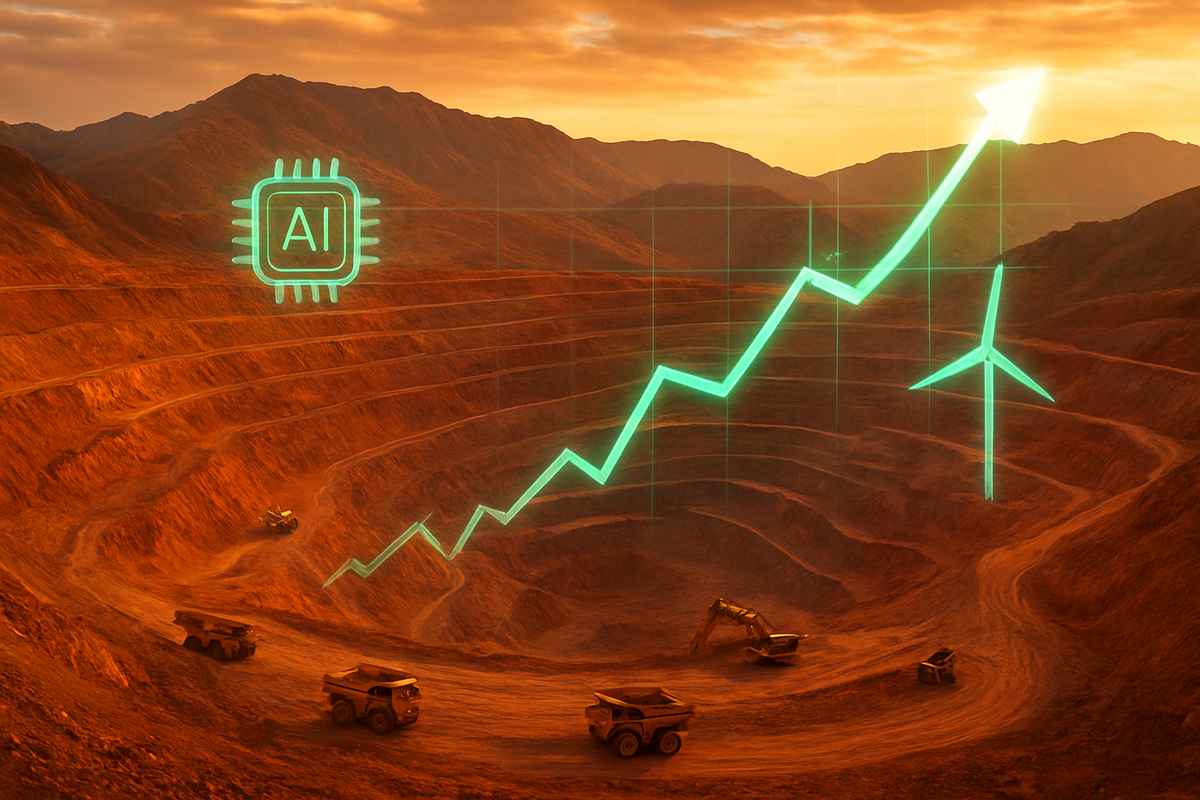
As of December 23, 2025, the global industrial metals market is witnessing a historic rally, with copper prices shattering records to trade near $12,000 per tonne. At the center of this whirlwind is Lundin Mining (TSX: LUN), a company that has transformed from a mid-tier producer into a market darling, seeing its stock price skyrocket by over 130% in the last year alone. This meteoric rise has ignited a fierce debate among Wall Street analysts and industry experts: is this the beginning of a multi-decade supercycle driven by Artificial Intelligence and the green energy transition, or are we witnessing a classic case of "commodity pricing exuberance" that is due for a painful correction?
The implications of this surge extend far beyond Lundin’s balance sheet. With copper acting as the literal and figurative wiring of the modern economy, its price trajectory is a bellwether for global industrial health. As investors pour capital into the sector, the pressure is mounting to determine whether current valuations are backed by the reality of a "generational supply gap" or if the market is ignoring the risks of high interest rates and a potential cooling of the Chinese economy. For Lundin, the stakes are particularly high as it navigates a massive joint venture with the world’s largest miner and a strategic pivot toward South American copper dominance.
The Path to $28: A Timeline of Strategic Dominance
Lundin Mining’s ascent to its current 52-week high of C$28.73 was not an overnight phenomenon but the result of a calculated series of aggressive maneuvers that began in late 2023. The catalyst for the rally was the company’s decisive shift toward high-margin South American assets. In July 2024, Lundin exercised an option to increase its ownership in the Caserones mine in Chile to 70%, a move that immediately added 130,000 tonnes of annual copper production to its portfolio. This was followed by a strategic "house cleaning" in April 2025, where the company sold its aging European assets, Neves-Corvo and Zinkgruvan, to Boliden for $1.4 billion. This divestiture allowed Lundin to pay down its term loans and enter the final quarter of 2025 virtually net-debt free.
However, the crowning achievement of the year was the joint acquisition of Filo Corp with BHP Group (NYSE: BHP), finalized in January 2025. This $4.1 billion deal created a 50/50 joint venture known as Vicuña Corp, aimed at developing the Vicuña District—a massive mineral belt spanning the border of Argentina and Chile. By mid-2025, the JV released a resource estimate highlighting a staggering 13 million tonnes of copper, effectively validating the district as one of the most significant copper finds in decades. The partnership with BHP provided Lundin with not only the capital but the technical pedigree to tackle what is arguably the most ambitious mining project on the planet today.
Market reaction to these moves has been overwhelmingly bullish, though not without caution. In the fourth quarter of 2025, Lundin reported record quarterly revenues exceeding $1 billion, driven by copper prices that have remained stubbornly above $10,500 per tonne. While institutional investors have cheered the company's focus on "pure-play" copper, some contrarian voices, including analysts at Seeking Alpha, have pointed out that Lundin’s price-to-earnings ratio is now nearly double its 20-year historical average. This has led to concerns that the stock is "extremely stretched," leaving no margin for error should operational issues arise or copper prices dip.
Winners, Losers, and the Two-Tier Market
The current copper heat has created a clear divide between the "haves" and the "have-nots" in the mining sector. Freeport-McMoRan (NYSE: FCX) has emerged as a primary winner, particularly in the United States. Following the implementation of a 50% US import tariff on copper in August 2025, a two-tier market emerged where COMEX prices in the US traded at a significant premium over the London Metal Exchange (LME). With 40% of its production based in the US, Freeport has enjoyed a multi-billion dollar profit boost, shielding it from operational disasters like the September 2025 mud rush at its Grasberg mine in Indonesia.
Conversely, companies like Southern Copper (NYSE: SCCO) and First Quantum Minerals (TSX: FM) face a more complex landscape. Southern Copper remains the industry’s low-cost leader, boasting cash costs of just $0.42 per pound, but it continues to grapple with political friction and permitting delays in Peru. First Quantum is currently the sector's biggest wildcard; while it has successfully commissioned its Kansanshi S3 expansion in Zambia, its total recovery hinges on the ongoing, high-stakes negotiations to restart the Cobre Panama mine, which has been idled since 2023. For these companies, record-high prices are an "operational insurance policy" that keeps them afloat while they navigate localized crises.
AI, Energy, and the New Geopolitics of Copper
The wider significance of Lundin’s surge is rooted in a fundamental shift in how the world consumes copper. As of late 2025, the narrative has moved beyond electric vehicles (EVs) to the explosive growth of AI data centers. Analysts at Macquarie now project that AI-related infrastructure will require 1.1 million tonnes of copper annually by 2030. High-density AI chips require advanced liquid cooling and massive power distribution systems, which are incredibly copper-intensive—estimated at roughly 27 tonnes of copper per megawatt of capacity. This new demand source is stacking on top of the already voracious needs of the global energy transition.
Furthermore, the regulatory landscape is shifting in favor of investment in previously "risky" jurisdictions. Argentina has become the new frontier for copper thanks to its "RIGI" (Large Investment Incentive Regime), which provides 30-year fiscal stability and reduced tax rates. This policy was the driving force behind the BHP-Lundin JV and has attracted other giants like Rio Tinto (NYSE: RIO) and Glencore (LSE: GLEN) to the region. Meanwhile, in Chile, the upcoming 2026 presidential transition is expected to usher in a more pro-market administration, potentially easing the permitting bottlenecks that have plagued the industry for the last five years.
The Road Ahead: 2026 and Beyond
Looking toward 2026, the primary question for investors is whether the supply-demand deficit can truly support prices above $11,000 per tonne. Short-term, the market remains vulnerable to macro-economic shifts. If the Federal Reserve maintains a "higher for longer" interest rate stance, the cost of financing massive projects like the Vicuña District could weigh on even the strongest balance sheets. However, the long-term outlook remains underpinned by a structural supply gap that the International Copper Study Group warns could reach 6 million tonnes by 2035.
Strategic pivots will be required. As easily accessible deposits are depleted, miners are being forced to explore deeper and in more remote areas, increasing capital expenditure. We may see a wave of further consolidation as majors like BHP and Rio Tinto look to acquire mid-tier producers like Lundin to secure their pipelines. For Lundin, the next 18 months will be about execution—specifically, hitting production targets at Caserones and making tangible progress on the Josemaria project in Argentina to prove to the market that its valuation is justified by more than just high commodity prices.
Conclusion: A Market at a Crossroads
Lundin Mining’s 130% surge is a testament to the company’s successful transformation and the unprecedented demand for the "red metal." The key takeaway for investors is that while the fundamentals of copper—driven by AI and decarbonization—are stronger than ever, the current price levels have baked in a significant amount of optimism. The "commodity pricing exuberance" described by skeptics is a real risk, and any softening in global industrial demand could lead to a sharp, albeit perhaps temporary, rotation out of mining stocks.
In the coming months, the market should closely watch for two things: the resolution of the Cobre Panama dispute and the first production reports from the newly formed Vicuña Corp. These events will serve as the litmus test for the sector’s health. For now, Lundin Mining stands as a case study for the rewards of aggressive growth in a supply-constrained world, but as prices hit record highs, the margin between a visionary investment and a speculative bubble has never been thinner.
This content is intended for informational purposes only and is not financial advice