Cooling Prices, Warming Markets: Easing CPI Data Paves the Way for 2026 Rate Cuts
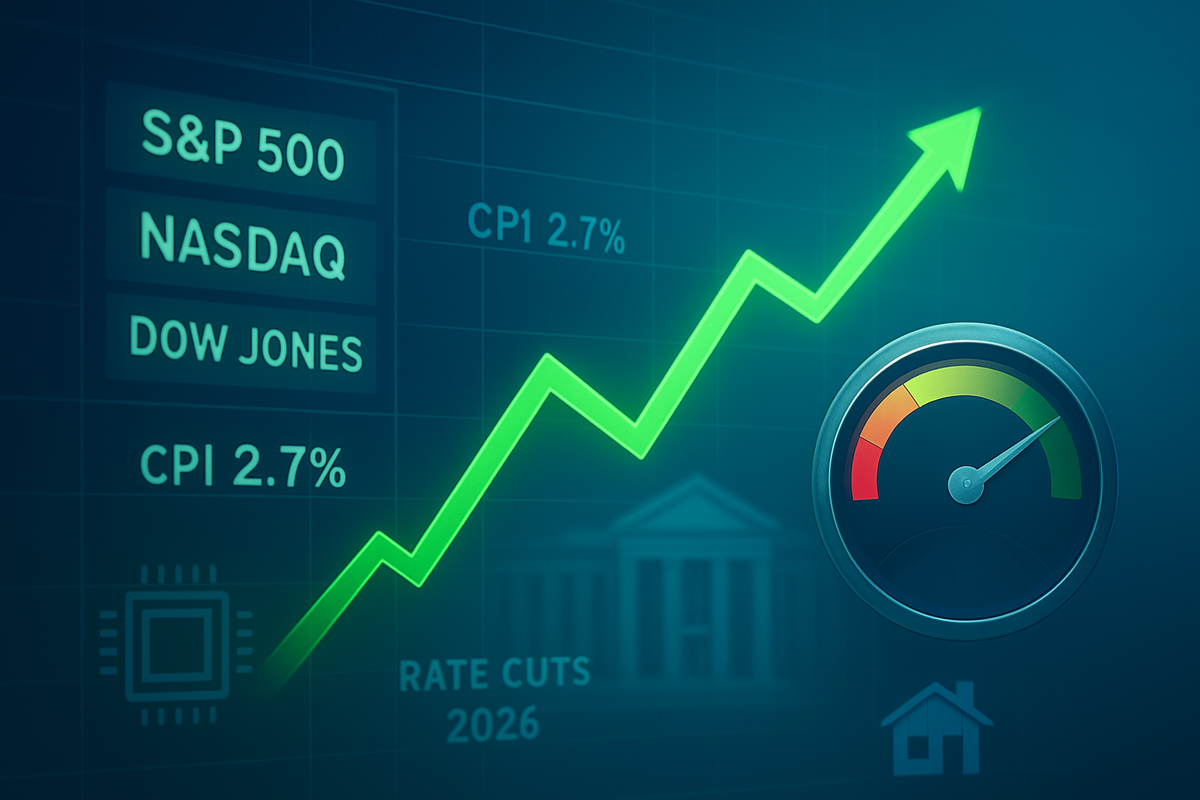
The United States economy received a significant boost on December 18, 2025, as the Bureau of Labor Statistics released a pivotal inflation report that suggests the long battle against rising prices is entering its final stages. The November Consumer Price Index (CPI) showed headline inflation slowing to 2.7% year-over-year, a sharp decline from the 3.0% recorded in September and well below the 3.1% consensus forecast. This cooling trend has sparked a massive relief rally across Wall Street, as investors bet that the Federal Reserve will pivot from a stance of cautious restraint to a more aggressive series of interest rate cuts throughout 2026.
The immediate market reaction was swift and decisive. The Nasdaq Composite (INDEXNASDAQ: .IXIC) surged 1.9%, while the S&P 500 (INDEXSP: .INX) climbed 1.3%, and the Dow Jones Industrial Average (INDEXDJX: .DJI) rose by 0.9%. This surge reflects a growing confidence that the "Goldilocks" scenario—where inflation returns to target without a recession—is finally within reach. With the federal funds rate currently sitting at 3.50%–3.75% following a December 10th cut, the stage is now set for a transformative 2026 for the financial markets.
A Breakthrough in the "Data Fog"
The November CPI report was one of the most highly anticipated economic releases in recent history, primarily due to the "data fog" created by a 43-day federal government shutdown earlier in the autumn. Because October data was never formally collected, the November report served as the first comprehensive look at the economy in months. The results were a pleasant surprise to policymakers: Core CPI, which excludes volatile food and energy costs, fell to 2.6% year-over-year, its lowest level since early 2021. Monthly price increases for the combined September-to-November period averaged a modest 0.2%, signaling that the underlying inflationary pressures are dissipating faster than many analysts had predicted.
This breakthrough comes on the heels of the Federal Reserve's December 10, 2025, meeting, where Chairman Jerome Powell and the Federal Open Market Committee (FOMC) delivered a 25-basis-point rate cut. While the Fed has maintained a cautious tone—signaling a likely pause in January 2026 to further assess the impact of the shutdown and potential new trade tariffs—the November data provides the "clean" evidence needed to justify a more dovish path. The timeline of 2025 has been defined by a slow but steady descent in prices, and this latest print confirms that the peak-inflation era is firmly in the rearview mirror.
Winners and Losers in a Low-Rate Environment
The prospect of falling rates in 2026 has created a clear divide between the winners and losers in the equity market. High-growth technology stocks, which are sensitive to interest rates because their future earnings are discounted at current yields, were the primary beneficiaries of today’s news. NVIDIA Corporation (NASDAQ: NVDA) and Micron Technology, Inc. (NASDAQ: MU) saw significant gains, with Micron receiving an extra boost from strong earnings guidance that suggests the AI infrastructure boom remains resilient. As borrowing costs fall, the capital-intensive nature of AI development becomes more manageable, fueling further investment in the sector.
The real estate and housing sectors also saw a dramatic upswing as the 10-year Treasury yield plummeted below 3.8%. Homebuilders such as D.R. Horton, Inc. (NYSE: DHI) and Lennar Corporation (NYSE: LEN) surged on the news, as lower mortgage rates are expected to unlock pent-up demand from homebuyers who have been sidelined by high borrowing costs for years. Conversely, the banking sector, including giants like The Goldman Sachs Group, Inc. (NYSE: GS), faces a more complex outlook. While lower rates can stimulate loan volume and deal-making, they also tend to compress net interest margins—the difference between what banks earn on loans and what they pay on deposits—potentially weighing on profitability in the short term.
The Shift Toward a 2% Reality
The broader significance of the November CPI data lies in its alignment with long-term industry trends and the Federal Reserve’s ultimate 2% inflation target. For the past three years, the market has been dominated by the "higher for longer" interest rate narrative. Today's data suggests that narrative is officially dead. Analysts now expect 2026 to be a "transition year," where the Fed moves toward a "terminal rate" of approximately 3.0%–3.25% by mid-year. This shift is expected to have a ripple effect across global markets, as other central banks may feel empowered to follow the U.S. lead in easing monetary policy.
Historically, periods of cooling inflation following a tightening cycle have led to sustained bull markets, provided the economy avoids a hard landing. The current situation draws comparisons to the mid-1990s, where a series of timely Fed cuts successfully extended the economic cycle. However, regulatory and policy implications remain a wild card; potential changes in trade policy or fiscal spending in early 2026 could introduce new inflationary shocks that the Fed will have to navigate carefully. For now, the trend of disinflation appears durable, with gasoline prices falling below $3 per gallon nationally, providing a "hidden stimulus" to consumer spending.
Navigating the 2026 Outlook
Looking ahead, the road to 2026 appears paved with both opportunity and strategic pivots. While a pause in rate cuts is expected for the January 2026 FOMC meeting, the market is already pricing in a resumption of easing by March and June. Investors should prepare for a shift in leadership within the stock market. While "Magnificent Seven" tech stocks have led the charge, a lower-rate environment often allows small-cap stocks and cyclical industries to catch up. Companies that have spent 2024 and 2025 shoring up their balance sheets and reducing debt will be best positioned to capitalize on cheaper credit.
The primary challenge for the coming months will be "data noise." As the government works to normalize economic reporting after the shutdown, volatility may persist. Strategic adaptations will be required for fixed-income investors, as the era of 5% yields on cash and money market funds is rapidly coming to a close. Reallocating toward longer-duration bonds or dividend-paying equities may become the preferred strategy for those seeking yield in a declining-rate environment.
A New Chapter for Investors
The November 2025 CPI report marks a definitive turning point in the post-pandemic economic recovery. With headline inflation at 2.7% and core prices at 2.6%, the Federal Reserve has been given the green light to prioritize economic growth over price suppression. The positive reaction from the Dow, S&P 500, and Nasdaq underscores a market that is ready to move past the anxieties of the last two years and embrace a more stable, low-inflation environment.
As we move into 2026, investors should keep a close eye on labor market data and the January 13th release of the December CPI figures. While the inflation dragon has not been completely slain, it is certainly in retreat. The key takeaway for the market is clear: the era of restrictive monetary policy is ending, and the "Great Easing" of 2026 is about to begin. Success in the coming months will depend on the ability to identify sectors that thrive on lower rates while remaining vigilant against any unexpected spikes in volatility.
This content is intended for informational purposes only and is not financial advice.