Constitutional Crisis at the Fed: DOJ Investigation of Jerome Powell Sends Shockwaves Through Wall Street
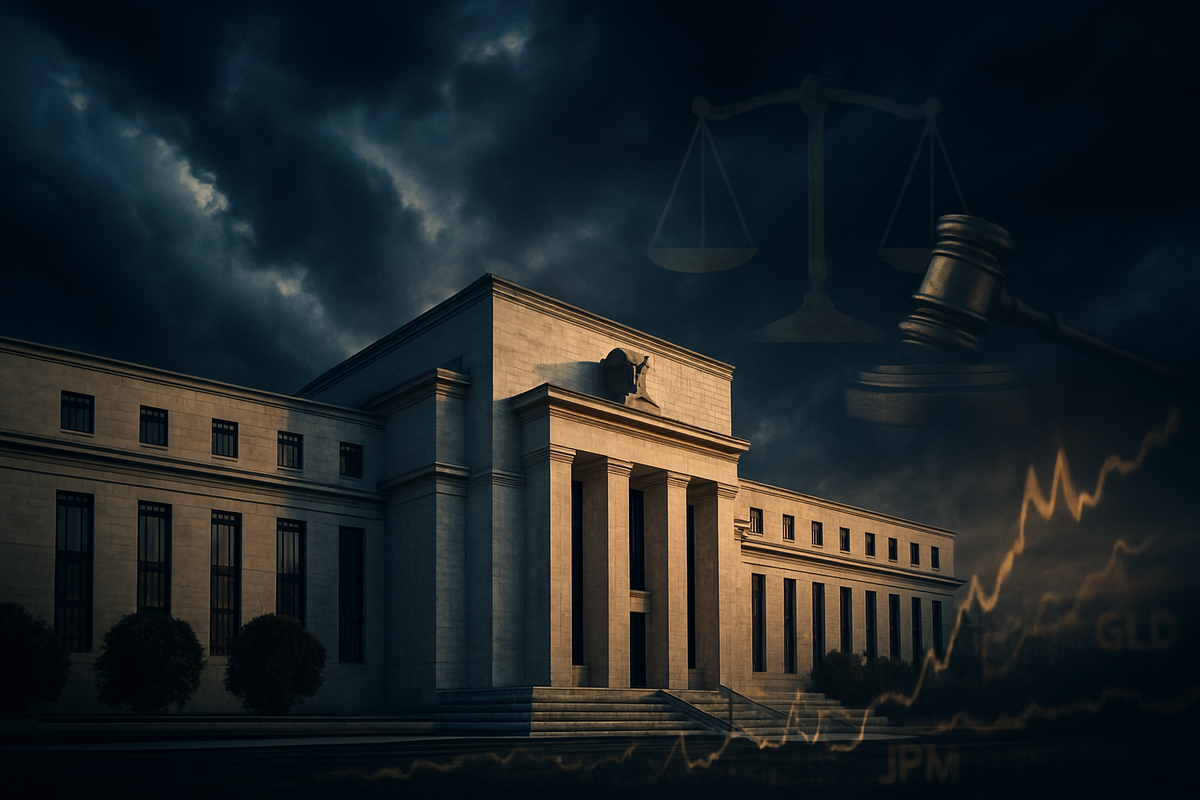
In a move that has ignited a firestorm of constitutional and economic debate, the Department of Justice (DOJ) under the Trump administration has officially launched a criminal investigation into Federal Reserve Chair Jerome Powell. The escalation, characterized by many on Wall Street as a frontal assault on the independence of the nation’s central bank, centers on allegations that Powell misled Congress regarding the costs of a multi-billion dollar renovation project at the Fed’s headquarters.
The timing of the investigation—landing as it does in early 2026—has triggered immediate volatility across global markets. While the administration maintains the probe is a matter of fiscal accountability, market participants and legal experts largely view it as a "pretext" designed to coerce the Fed into aggressive interest rate cuts. As the standoff intensifies, the core pillar of central bank autonomy is being tested as never before, raising questions about the long-term stability of the U.S. dollar and the integrity of the Federal Reserve System.
The Renovation Probe: A Timeline of Escalation
The current crisis began in earnest on January 9, 2026, when the DOJ, reportedly led by U.S. Attorney for D.C. Jeanine Pirro, served the Federal Reserve with a series of grand jury subpoenas. The investigation targets testimony provided by Powell in June 2025 regarding a $2.5 billion renovation of the Eccles Building. Critics within the administration allege that Powell intentionally obscured the true scope of the project's budget overruns, a charge Powell has vehemently denied.
In an unprecedented video statement released on January 11, Powell broke the central bank’s usual silence on legal matters, characterizing the investigation as a politically motivated attempt to undermine the Fed's dual mandate. Powell’s defiant stance—vowing to remain in his post to defend the institution’s independence—has set the stage for a dramatic showdown. Just two days later, President Trump, speaking at the Detroit Economic Club, exacerbated tensions by labeling Powell a "stiff" and suggesting that the Fed was "stealing the joy" of the American economy by refusing to slash rates despite a booming stock market.
The political backlash has been swift and bipartisan. Senator Thom Tillis has publicly condemned the DOJ’s tactics as "weaponization," while former Fed Chair and Treasury Secretary Janet Yellen noted that such pressure is more characteristic of "emerging markets with weak institutions" than of a developed economy. Meanwhile, a parallel legal battle regarding the removal of Fed Governor Lisa Cook has already reached the Supreme Court, with oral arguments set to determine the limits of executive power over independent agencies.
Winners and Losers: Market Reaction and Institutional Fallout
The immediate market reaction has been a classic "flight to safety," with gold prices hitting record highs. The SPDR Gold Shares (NYSEArca:GLD) and other precious metal vehicles saw massive inflows as investors sought hedges against potential institutional instability. While the broader equity markets, represented by the SPDR S&P 500 ETF Trust (NYSEArca:SPY), initially dipped, they recovered surprisingly quickly, closing at record highs just days after the subpoenas were issued. This suggests that some investors are betting that the legal "for cause" protections for Fed officials will ultimately shield Powell from removal.
However, the banking sector has faced increased pressure due to the uncertainty surrounding monetary policy. Major financial institutions like JPMorgan Chase & Co. (NYSE:JPM) and The Goldman Sachs Group, Inc. (NYSE:GS) are grappling with the possibility of a "headless" Fed or a period of erratic policy shifts. If the administration successfully forces Powell’s hand, the resulting "de-anchoring" of inflation expectations could lead to a sharp sell-off in long-term debt. Consequently, the iShares 20+ Year Treasury Bond ETF (NASDAQ:TLT) has become a focus for traders concerned about a rising risk premium on U.S. sovereign debt.
Tech-heavy growth stocks, often tracked via the Invesco QQQ Trust (NASDAQ:QQQ), have remained resilient, fueled by the hope that the administration's pressure will eventually force interest rates lower. Yet, the risk remains that if the Fed’s credibility is permanently damaged, the "inflation tax" on future earnings could outweigh the benefits of cheaper borrowing. For companies like Apple Inc. (NASDAQ:AAPL), which maintain massive cash reserves and rely on stable global currency markets, the threat of dollar volatility remains a significant headwind.
A Precarious Precedent for Central Bank Independence
The current conflict is more than just a clash of personalities; it represents a significant departure from the norms that have governed the relationship between the White House and the Federal Reserve since the Accord of 1951. Historically, even when presidents were frustrated with high interest rates—as was the case with Richard Nixon and Arthur Burns—the formal independence of the Fed was largely respected in public to maintain global confidence in the U.S. financial system.
By using the DOJ to investigate a sitting Fed Chair, the administration has introduced a new and potentially destabilizing tool into the political arena. Analysts argue that this could lead to a "politicized" interest rate environment where policy decisions are viewed through a partisan lens rather than an economic one. This shift risks higher long-term borrowing costs for the U.S. government, as foreign investors may demand a "political risk premium" to hold Treasuries, similar to the dynamics seen in developing economies.
The broader significance also extends to the global stage. As the U.S. dollar serves as the world's primary reserve currency, any perception that the Fed is no longer insulated from political pressure could accelerate "de-dollarization" efforts by rival economies. The ripple effects could impact everything from global trade settlements to the cost of servicing dollar-denominated debt in emerging markets, making this a global systemic concern rather than a domestic legal dispute.
The Road Ahead: Scenarios and Strategic Pivots
Looking forward, the immediate focus is on May 2026, when Powell’s term as Chair is set to expire. While his term as a Governor runs until 2028, there is mounting speculation that he may choose to stay on the Board even if he is not re-appointed as Chair. This would create a "Shadow Fed" scenario, where two rival centers of influence—one led by a Trump-appointed Chair and the other by the ousted Powell—could create unprecedented confusion in the FOMC’s decision-making process and communications.
Strategic pivots will be required from both policymakers and private sector leaders. Corporations may need to adjust their capital expenditure plans to account for a more volatile interest rate environment. Investors will likely continue to favor "hard assets" and diversified global portfolios as a hedge against domestic institutional erosion. The Supreme Court's upcoming rulings on the "for cause" removal of independent regulators will be the most critical legal milestone to watch, as they will define the boundaries of executive authority for a generation.
Potential outcomes range from a negotiated "truce," where Powell finishes his term in exchange for minor concessions, to a full-blown constitutional crisis if the administration attempts to forcibly remove him via an executive order. In either case, the aura of "Fed invincibility" has been cracked, and the market will likely be pricing in a higher degree of uncertainty for the foreseeable future.
Conclusion: A Turning Point for the U.S. Economy
The DOJ’s targeting of Jerome Powell marks a watershed moment for the American economy. While the short-term market impact has been mitigated by a resilient private sector, the long-term implications for the credibility of the Federal Reserve and the U.S. dollar are profound. The independence of the central bank is not merely a bureaucratic tradition; it is a fundamental pillar of the global financial architecture that ensures long-term price stability and economic growth.
Moving forward, the market will remain hyper-sensitive to any further signals of executive overreach or institutional defiance. Investors should closely monitor the DOJ's legal filings, the Supreme Court's stance on executive power, and any shifts in Treasury yields that might indicate a loss of confidence in the Fed’s mandate. The next few months will determine whether the Federal Reserve can remain an independent arbiter of the economy or if it will be drawn irrevocably into the theater of partisan politics.
This content is intended for informational purposes only and is not financial advice.