Apple Defies Global Slump with Record $143.8B Holiday Quarter; Bullish 2026 Forecast Sets Stage for AI Dominance
CUPERTINO, Calif. — Apple Inc. (NASDAQ: AAPL) has once again silenced skeptics, reporting a "prolific" start to fiscal 2026 that has redefined expectations for the mega-cap tech sector. As of February 2, 2026, the company’s latest financial disclosures reveal a juggernaut hitting its stride, fueled by a record-breaking holiday quarter and a strategic pivot into generative AI that is finally beginning to pay dividends. Despite a volatile macroeconomic backdrop and intensifying trade headwinds, Apple’s ability to command premium pricing has propelled it to a dominant 25% global smartphone market share.
The immediate implications of these results are profound. Apple’s guidance for the remainder of 2026 suggests a sustained "super-cycle" driven by the iPhone 17 and an upcoming overhaul of its Services ecosystem. For investors, the message is clear: Apple is not just navigating the current environment; it is reshaping it. With a massive $143.8 billion in revenue for the December quarter alone, the company has effectively decoupled its performance from the broader sluggishness seen in the consumer electronics market, cementing its status as the "flight-to-quality" play for 2026.
A Record-Breaking Quarter Driven by Premiumization and China's Surge
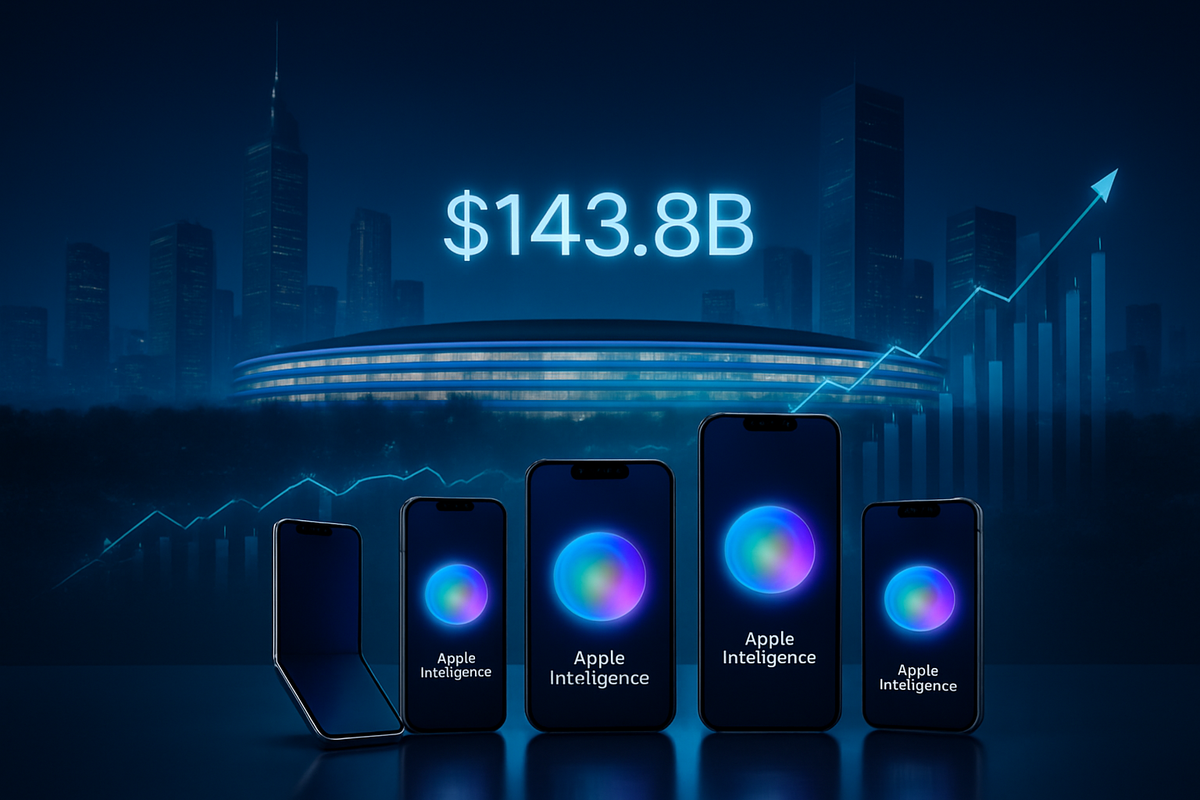
The details of Apple’s Q1 2026 performance—covering the crucial 2025 holiday window—highlight a company operating at peak efficiency. Revenue reached an all-time high of $143.8 billion, a 16% year-over-year increase that comfortably cleared Wall Street's consensus of $138.4 billion. Earnings per share (EPS) followed suit, jumping 19% to $2.84. This "prolific" quarter was underpinned by a staggering $85.3 billion in iPhone revenue, a 23% surge that analysts attribute to a significant shift in consumer preference toward high-end hardware.
The timeline leading to this moment was defined by the massive success of the iPhone 17 lineup. In a notable departure from previous years, the higher-end "Pro" and "Pro Max" models accounted for 52% of all sales, up from 39% in the prior generation. This mix shift was particularly evident in Greater China, where Apple saw a 38% revenue surge ($25.53 billion), reclaiming its throne from local competitors. CEO Tim Cook pointed to "Apple Intelligence" and the requirement for higher RAM (12GB) in new models as a primary catalyst, effectively forcing a hardware upgrade cycle among even the most hesitant consumers.
Initial market reactions were overwhelmingly positive, with Apple’s stock climbing 4.5% in after-hours trading following the announcement. Investors were particularly buoyed by the Services division, which crossed the $30 billion quarterly revenue threshold for the first time. This ecosystem growth, supported by a global installed base of over 2.5 billion active devices, provides a high-margin buffer that few other companies can replicate.
Winners and Losers: The Shifting AI and Hardware Landscape
The fallout from Apple’s dominant quarter has created a clear divide in the technology sector. The primary winner, naturally, is Apple Inc. (NASDAQ: AAPL), which has successfully translated its "walled garden" strategy into an AI fortress. However, a surprising secondary winner is Alphabet Inc. (NASDAQ: GOOGL). In January 2026, Apple confirmed a multi-year, $1 billion annual partnership to integrate Google’s Gemini models into the Apple Foundation Models, powering a more capable Siri. This deal validates Google’s AI prowess while securing a massive distribution channel for its Gemini ecosystem.
Conversely, Samsung Electronics (KRX: 005930) faces an uphill battle. Despite its own upcoming Galaxy S26 launch, Samsung has seen its premium market share eroded by the iPhone 17's momentum. While Samsung remains a leader in the nascent foldable market, Apple’s looming entry into that segment later this year is already casting a shadow. Within Apple’s own product lineup, the experimental "iPhone Air" has emerged as a rare "loser," capturing only 6% of early sales and failing to replace the volume lost by the discontinued Plus models.
Suppliers such as Taiwan Semiconductor Manufacturing Company (NYSE: TSM) continue to win on volume, but they are navigating a complex "DRAM Crisis." Skyrocketing memory prices, caused by a global shortage of components diverted to AI data centers, are pressuring margins across the board. While Apple’s scale allows it to absorb these costs better than smaller rivals like Xiaomi or Oppo, the company warned of a potential $1.4 billion impact from tariffs and supply constraints in the coming months.
Macro Resilience and the "Agentic AI" Trend
Apple’s performance fits into a broader industry trend of "Agentic AI"—the move from simple chatbots to proactive digital assistants. By integrating Gemini and its own in-house models, Apple is preparing for a March 2026 rollout of a revamped Siri (iOS 26.4) that features deeper app integration. This move sets a historical precedent; rather than being first to market with generative AI, Apple has waited to offer a more "personalized" and "private" experience, a strategy that appears to be winning over a privacy-conscious public.
The wider significance also extends to regulatory and geopolitical spheres. To mitigate the $1.4 billion tariff hit reported in Q1, Apple has accelerated its $100 billion investment in U.S. manufacturing. This shift represents a significant ripple effect for its global supply chain, signaling a gradual "de-risking" from traditional manufacturing hubs. As competitors like Google (NASDAQ: GOOGL) and Samsung struggle with similar supply chain pressures, Apple’s massive cash reserves and vertically integrated chip design (the M-series and A-series) provide a competitive moat that is deeper than ever.
The Road Ahead: Foldables and the "Split Launch" Strategy
Looking toward the rest of 2026, Apple is preparing for a historic break from tradition. Rumors and supply chain data suggest a "Split Launch" strategy for the iPhone 18. Apple is expected to focus its Fall 2026 release exclusively on the iPhone 18 Pro, Pro Max, and its first-ever foldable device, dubbed the "iPhone Fold." The standard iPhone 18 is reportedly being delayed until Spring 2027. This move is designed to maximize the sales window for high-margin premium models and alleviate supply chain pressure during the holiday rush.
Short-term opportunities also include the launch of a new "HomePad" smart home hub and a budget-friendly $599 MacBook, aimed at capturing the student market. However, challenges remain. The aforementioned "DRAM Crisis" and the volatility of global trade policies could still squeeze gross margins, which Apple currently projects will hold steady between 48% and 49% for the March quarter. Investors should also watch for the full public rollout of the Siri overhaul in April, which will be the ultimate test of Apple’s AI ambitions.
A Final Assessment of the Apple Juggernaut
In summary, Apple’s Q1 2026 results represent a "prolific" masterclass in navigating a mature market. By leaning into premiumization and leveraging a strategic partnership with Google, Apple has turned the potential threat of generative AI into a primary driver of hardware upgrades. The company’s 2026 growth forecast, predicting revenue growth in the low teens and an EPS of roughly $8.17 for the full year, suggests that the "Apple super-cycle" is far from over.
For investors, the coming months will be defined by three key factors: the adoption rate of the new AI-powered Siri, the official unveiling of the "iPhone Fold," and the company’s ability to manage rising component costs. While the macroeconomic environment remains unpredictable, Apple’s record $143.8 billion holiday quarter proves that its ecosystem remains the most resilient and profitable in the world.
This content is intended for informational purposes only and is not financial advice.