Albemarle Pulls the Plug: Kemerton Idling Signals a Strategic Retreat from Western Lithium Refining
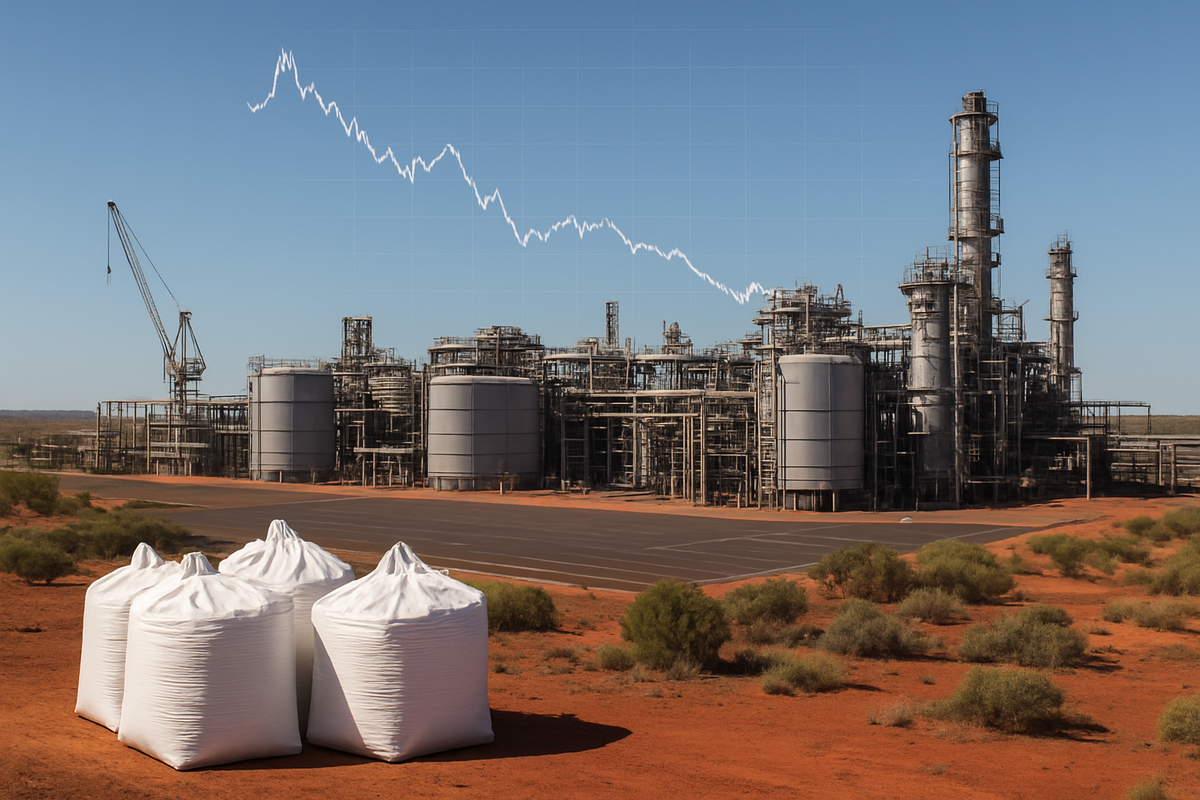
In a move that has sent shockwaves through the critical minerals sector, Albemarle Corporation (NYSE:ALB) announced on February 11, 2026, that it would idle the remaining operational unit at its Kemerton lithium hydroxide plant in Western Australia. The decision to place the facility into "care and maintenance" marks the end of an ambitious attempt to build a massive, integrated downstream processing hub outside of China. While the move aims to preserve the company’s balance sheet following years of lithium price volatility, it also serves as a stark admission that Western refining costs remain uncompetitive in the current global landscape.
The immediate implications for the market are twofold: a significant reduction in the expected "non-Chinese" supply of battery-grade lithium hydroxide and a renewed focus on cost discipline over geographic diversification. By removing tens of thousands of tonnes of potential supply from the market, Albemarle is effectively tightening the medium-term supply-demand balance. Analysts suggest this move could provide a "floor" for lithium prices, which have struggled to regain their 2022 record highs, as the industry begins to realize that high-cost Western projects will not come online without significant price premiums or government intervention.
A Retrenchment Years in the Making
The decision to shutter Kemerton did not happen in a vacuum. It follows a multi-year timeline of downsizing that began in late 2024. At that time, Albemarle (NYSE:ALB) was grappling with a collapse in lithium prices, which had plummeted nearly 80% from their peak. The company initially responded by idling "Train 2" of the Kemerton facility and canceling the construction of Trains 3 and 4, resulting in a $1.3 billion impairment. Throughout 2025, the company attempted to stabilize operations at Train 1, but persistently high Australian labor and energy costs, combined with technical commissioning hurdles, made the facility a persistent drag on earnings.
The "bombshell" announcement this week—idling the final operational train—results in the loss of approximately 250 jobs, adding to the hundreds of roles already eliminated during the 2024 restructuring. Albemarle CEO Kent Masters noted that while lithium demand continues to grow at a healthy clip of 25-30% annually, the "economics of Western hard-rock conversion" simply do not compete with the company’s existing assets in China. This strategic pivot ensures that Albemarle will now meet its customer obligations through its more cost-efficient Chinese processing plants, effectively abandoning the goal of a localized Western Australian supply chain for the foreseeable future.
The reaction from the Western Australian government and federal ministers has been one of deep disappointment. Federal Resources Minister Madeleine King characterized the idling as a setback for Australia’s "Value-Add" ambitions, noting that competing against opaque and subsidized global supply chains is proving more difficult than anticipated. However, market investors initially reacted with cautious optimism, as the move demonstrates a commitment to capital discipline—a trait that shareholders have been demanding since the lithium market's "Great Correction" of 2023-2024.
Identifying the Winners and Losers in a Tightening Market
The primary "losers" in this scenario are the stakeholders of the Western Australian downstream industry and the local workforce. Beyond Albemarle, the move casts a shadow over other domestic players like IGO Limited (ASX:IGO), which has also struggled to bring its Kwinana lithium hydroxide refinery—a joint venture with Tianqi Lithium (SHE:002466)—to nameplate capacity. The idling of Kemerton confirms a trend of "de-integration" in Australia, where the dream of a "pit-to-product" lithium industry is being deferred in favor of simpler, higher-margin mining operations.
Conversely, the "winners" appear to be the dominant Chinese refiners who maintain a structural cost advantage. Companies like Ganfeng Lithium (SHE:002460) and Tianqi Lithium (SHE:002466) continue to expand their processing footprints, often using Australian spodumene (raw lithium ore) processed in lower-cost Chinese facilities. By retreating from Western refining, Albemarle has effectively handed market share back to these incumbents. Furthermore, pure-play miners like Pilbara Minerals (ASX:PLS) may benefit; they have remained focused on upstream expansion and offtake deals with Chinese converters, avoiding the capital-intensive "refining trap" that has hampered Albemarle and IGO.
Electric vehicle (EV) manufacturers and battery makers may also find themselves in a difficult position. While lithium prices have stabilized around $12,000 per tonne in early 2026, the idling of a major Western source of hydroxide makes it harder for automakers to claim a "China-free" supply chain. Companies seeking to take advantage of U.S. Inflation Reduction Act (IRA) tax credits or similar European incentives may face a tighter market for compliant, Western-processed materials, potentially leading to a "green premium" for the few remaining Western refiners, such as the SQM (NYSE:SQM) and Wesfarmers (ASX:WES) Covalent Lithium project.
Broader Industry Trends and the "Western Discount"
Albemarle’s retreat highlights a critical trend in the 2026 energy transition: capital discipline is trumping geopolitical idealism. The industry has moved away from the "growth at all costs" mentality of 2021-2022 toward a focus on sustainable margins. This event mirrors previous cycles in other commodities, such as nickel and aluminum, where Western producers were forced to idle high-cost smelting and refining capacity in the face of lower-cost competition from Southeast Asia or China.
The ripple effect on competitors and partners is profound. It serves as a warning to other critical mineral projects in the U.S. and EU that geographical proximity to end-markets is not enough to offset massive operational cost disadvantages. Without a "bifurcated market" where Western-refined lithium is sold at a guaranteed premium over Chinese material, the financial incentive to build these plants remains weak. This realization is likely to trigger a wave of regulatory lobbying, as industry leaders call for more aggressive subsidies or trade barriers to protect nascent Western processing industries.
Historical comparisons can be drawn to the "Lithium Winter" of 2018-2020, where a supply glut forced many juniors out of the market. However, the 2024-2026 cycle is different; the demand is clearly there, but the location of the processing is being consolidated rather than diversified. The move by Albemarle suggests that even the world’s largest lithium producer cannot force a Western refining market into existence through sheer will and capital alone when the underlying economics are skewed.
Looking Ahead: The Road to 2027 and Beyond
In the short term, the market will likely see a modest uptick in lithium hydroxide prices as the 2026 supply-demand balance tightens. Albemarle will focus on optimizing its remaining assets and potentially look for strategic partnerships to eventually restart Kemerton if, and only if, market conditions drastically improve. The facility will remain in "care and maintenance," meaning it can be brought back online, but such a process would take 12 to 18 months and require a significant shift in either lithium prices or Australian operating costs.
Long-term, this event may force a strategic pivot among Western governments. If they are serious about a "China-independent" battery supply chain, the current model of tax credits and small grants may be insufficient. We may see the emergence of "government-backed offtake" or price-floor guarantees to de-risk future refining projects. For investors, the focus will remain on companies with the lowest position on the cost curve, regardless of where they sit in the value chain.
Market opportunities may emerge for technological innovators who can lower the cost of hydroxide production. Direct Lithium Extraction (DLE) and other novel processing methods are being watched closely as potential "game changers" that could bypass the expensive and labor-intensive hard-rock conversion process that plagued the Kemerton plant.
Closing Thoughts on a Shifting Lithium Landscape
The idling of the Kemerton plant is a landmark event that defines the lithium market in early 2026. It underscores the harsh reality that the energy transition will be dictated by economic feasibility as much as by climate goals. Albemarle (NYSE:ALB) has chosen to prioritize financial health and its competitive advantages in China over its ambitious Australian expansion, a move that likely prevents further shareholder value destruction but complicates the West's energy security narrative.
Moving forward, the market appears headed for a structural tightening. With major supply additions like Kemerton being sidelined, the supply deficit projected for the late 2020s remains a very real threat. Investors should watch for any signs of a "bifurcated" pricing system where Western-sourced materials finally command a premium, as this would be the only realistic catalyst for a restart of idled Western capacity.
For now, the lithium industry's "center of gravity" remains firmly in Asia. While the raw material may come from the mines of Western Australia, the path to a finished battery still largely runs through Chinese refineries. Albemarle’s decision is a pragmatic acknowledgement of this reality, signaling that until the "Western Discount" is addressed, the global lithium market will remain a story of two very different cost structures.
This content is intended for informational purposes only and is not financial advice.